


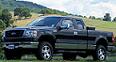


Fx4 version

Posting Guru
Joined: Jul 2005
Posts: 1,617
Likes: 4
From: Denver, Co

Depending on the truck configuration, you could be looking at a difference between 8,200 lbs vs. 9,200 lbs max trailer weight. From the math perspective, that's just over a 12% increase in weight. Taller gears (numerically lower) lower you overall or effective gear ratio. This, in turn, increases the strain on the transmission. Strain can become evident through additional wear & tear or outright failure of some component on the transmission.
While I am sure that Ford's mechanical engineers have underrated many aspects of any given vehicle, I see no reason to test those limits...especially given the size of some repair bills. Besides, if you are towing/hauling that close to the published vehicle limitations, it may be a good sign that it is time to look at a more capable vehicle (Ranger -> F-150 -> F-250 -> etc.). Besides providing higher payload & towing ratings, you will also gain a larger, more capable vehicle for the work load that you are subjecting the vehicle to....and that makes the roads safer for all of us.
Just my opinion...
While I am sure that Ford's mechanical engineers have underrated many aspects of any given vehicle, I see no reason to test those limits...especially given the size of some repair bills. Besides, if you are towing/hauling that close to the published vehicle limitations, it may be a good sign that it is time to look at a more capable vehicle (Ranger -> F-150 -> F-250 -> etc.). Besides providing higher payload & towing ratings, you will also gain a larger, more capable vehicle for the work load that you are subjecting the vehicle to....and that makes the roads safer for all of us.
Just my opinion...

Freshman User
Joined: Mar 2005
Posts: 30
Likes: 0
Originally Posted by Deluxe05
Depending on the truck configuration, you could be looking at a difference between 8,200 lbs vs. 9,200 lbs max trailer weight. From the math perspective, that's just over a 12% increase in weight. Taller gears (numerically lower) lower you overall or effective gear ratio. This, in turn, increases the strain on the transmission. Strain can become evident through additional wear & tear or outright failure of some component on the transmission.
While I am sure that Ford's mechanical engineers have underrated many aspects of any given vehicle, I see no reason to test those limits...especially given the size of some repair bills. Besides, if you are towing/hauling that close to the published vehicle limitations, it may be a good sign that it is time to look at a more capable vehicle (Ranger -> F-150 -> F-250 -> etc.). Besides providing higher payload & towing ratings, you will also gain a larger, more capable vehicle for the work load that you are subjecting the vehicle to....and that makes the roads safer for all of us.
Just my opinion...
While I am sure that Ford's mechanical engineers have underrated many aspects of any given vehicle, I see no reason to test those limits...especially given the size of some repair bills. Besides, if you are towing/hauling that close to the published vehicle limitations, it may be a good sign that it is time to look at a more capable vehicle (Ranger -> F-150 -> F-250 -> etc.). Besides providing higher payload & towing ratings, you will also gain a larger, more capable vehicle for the work load that you are subjecting the vehicle to....and that makes the roads safer for all of us.
Just my opinion...
Reguardless, my trailer weight loaded is in the 6,500 lbs range.
Freshman User
Joined: Mar 2005
Posts: 30
Likes: 0

Originally Posted by obxredneck
FX4 comes standard with 3.73's unless something has changed. You should not have a problem with the 6,500 pounds.
Posting Guru
Joined: Jul 2005
Posts: 1,617
Likes: 4
From: Denver, Co
Per my earlier post (#28) in this thread...
All cab configurations with P275/65Rx18 OWL A/T tires come with 3.73 limited-slip gears
OR
SuperCab & SuperCrew configurations with P275/55R20 OWL A/T tires come with 3.55 limited-slip gears
Those are the standards. Options can obviously change them.
All cab configurations with P275/65Rx18 OWL A/T tires come with 3.73 limited-slip gears
OR
SuperCab & SuperCrew configurations with P275/55R20 OWL A/T tires come with 3.55 limited-slip gears
Those are the standards. Options can obviously change them.
Posting Guru
Joined: Jul 2005
Posts: 1,617
Likes: 4
From: Denver, Co
At first glance the tires seem pretty different, but in all actuality, they are remarkably similar. Granted, each manufacturer can measure their tires a bit differently, but after converting the metric tire sizes over, one can see how similarly sized the factory tires are to each other:
Metric tire size - Height x Width x Sidewall height
P275/65Rx18 - 32.1" x 10.8" x 7"
P275/55R20 - 31.9" x 10.8" x 5.9"
I figured that I would mention it because the motor companies generally only change the gears based on tire size. A taller tire will get lower gears (higher numerically) in order to keep the overall, or effective, gear ratio of the vehicle within a certain range set forth by their fleet of mechanical engineers. This is not the case here. Not that 3.73 to 3.55 is much of a gear change, but it is kind of curious why they would change the "standard" gears between a couple of tires that are very similar in height & weight (per Tire Rack's tire specs).
Side note: The "standard" gears often get changed with optional payload packages, but as we are talking about what comes standard on the vehicle, I left the whole payload vs. gearing discussion out of the equation.
Metric tire size - Height x Width x Sidewall height
P275/65Rx18 - 32.1" x 10.8" x 7"
P275/55R20 - 31.9" x 10.8" x 5.9"
I figured that I would mention it because the motor companies generally only change the gears based on tire size. A taller tire will get lower gears (higher numerically) in order to keep the overall, or effective, gear ratio of the vehicle within a certain range set forth by their fleet of mechanical engineers. This is not the case here. Not that 3.73 to 3.55 is much of a gear change, but it is kind of curious why they would change the "standard" gears between a couple of tires that are very similar in height & weight (per Tire Rack's tire specs).
Side note: The "standard" gears often get changed with optional payload packages, but as we are talking about what comes standard on the vehicle, I left the whole payload vs. gearing discussion out of the equation.
Last edited by Deluxe05; Feb 17, 2008 at 06:03 AM.
FTE Stories
Ford Trucks for Ford Truck Enthusiasts

3 Best / 3 Worst Parts of Modern Ford Ownership
Brett Foote
10 Amazing Upgrades That Solve Common Ford Truck Owner Headaches
Pouria Savadkouei
Every 2026 Ford Engine Explained
Brett Foote
10 Ugly Ford Trucks That We Still Kinda Love
Joe Kucinski
10 Things Every Truck Owner NEEDS (2026 Edition)
Michael S. Palmer
Rezvani's Latest Post-Apocalyptic Monster Is a Ford F-150 Raptor Underneath
Verdad Gallardo
Top 10 Most Expensive Ford Trucks Ever Sold on Bring a Trailer
Joe Kucinski
2027 Ford Super Duty Buyer's Guide (Every Model, Engine, & Package)
Brett Foote
Top 10 Ford Truck Tragedies
Joe Kucinski
Junior User
Joined: Jan 2005
Posts: 92
Likes: 2
From: Black Hills, SD
Another thing that is different between the FX4 and the Lariat is the audio and heater controls in the steering wheel. These contols are standard on the Lariat. Don't know about 2008 but in 2007 the only way to get this option in the FX4 was by purchasing the FX4 Luxury Package.
That package includes:
Heated seats with power adjustable pedals
Self dimming rear view mirror
Electronic Automatic Temperature Control (AETC)
Black Leather Steering wheel with Audio and Climate controls
Captains chairs with flo thru console
That package includes:
Heated seats with power adjustable pedals
Self dimming rear view mirror
Electronic Automatic Temperature Control (AETC)
Black Leather Steering wheel with Audio and Climate controls
Captains chairs with flo thru console
Posting Guru
Joined: Jul 2005
Posts: 1,617
Likes: 4
From: Denver, Co
Yeah, there are a number of differences between the FX4 & Lariat. The FX4 fits between XLT & Lariat, and each trim level builds on the previous trim level.
XL is, obviously, the entry level
STX contains all XL content plus a couple items
XLT contains all STX content plus a couple items
FX4 contains all XLT content plus a couple items
and, Lariat contains all FX4 content plus a couple items
While this thread is really biased towards what the standard features were in the FX4 trim level, the Lariat includes the following (in addition to all previous trim levels):
EDIT: Hmm...looks like I posted while you were editting your post!!
XL is, obviously, the entry level
STX contains all XL content plus a couple items
XLT contains all STX content plus a couple items
FX4 contains all XLT content plus a couple items
and, Lariat contains all FX4 content plus a couple items
While this thread is really biased towards what the standard features were in the FX4 trim level, the Lariat includes the following (in addition to all previous trim levels):
- Chrome bumpers
- Chrome grill surround
- Driver side self-dimming mirror
- "honeycomb" grill insert
- Power, heated side mirrors w/external mirror mounted turn signal indicators
- Pueblo Gold front & rear step bumpers (w/two-tone paint)
- Additional steering wheel controls (the aforementioned audio & climate controls)
- Color-coordinated floor mats
- Electronic Automatic Temperature Control (EATC)
- Leather-trimmed 40/20/40 front seat w/manual driver & passenger lumbar
- Leather-wrapped, color-coordinated steering wheel
- Message center w/trip computer
- Power driver seat
- Rear window w/fixed privacy glass & defroster
- Self-dimming rearview mirror
- Visors w/driver & passenger lighted, covered mirrors
EDIT: Hmm...looks like I posted while you were editting your post!!
Hotshot


Joined: Feb 2004
Posts: 10,837
Likes: 2,612
From: The Shenandoah Valley
At first glance the tires seem pretty different, but in all actuality, they are remarkably similar. Granted, each manufacturer can measure their tires a bit differently, but after converting the metric tire sizes over, one can see how similarly sized the factory tires are to each other:
Metric tire size - Height x Width x Sidewall height
P275/65Rx18 - 32.1" x 10.8" x 7"
P275/55R20 - 31.9" x 10.8" x 5.9"
I figured that I would mention it because the motor companies generally only change the gears based on tire size. A taller tire will get lower gears (higher numerically) in order to keep the overall, or effective, gear ratio of the vehicle within a certain range set forth by their fleet of mechanical engineers. This is not the case here. Not that 3.73 to 3.55 is much of a gear change, but it is kind of curious why they would change the "standard" gears between a couple of tires that are very similar in height & weight (per Tire Rack's tire specs).
Side note: The "standard" gears often get changed with optional payload packages, but as we are talking about what comes standard on the vehicle, I left the whole payload vs. gearing discussion out of the equation.
Metric tire size - Height x Width x Sidewall height
P275/65Rx18 - 32.1" x 10.8" x 7"
P275/55R20 - 31.9" x 10.8" x 5.9"
I figured that I would mention it because the motor companies generally only change the gears based on tire size. A taller tire will get lower gears (higher numerically) in order to keep the overall, or effective, gear ratio of the vehicle within a certain range set forth by their fleet of mechanical engineers. This is not the case here. Not that 3.73 to 3.55 is much of a gear change, but it is kind of curious why they would change the "standard" gears between a couple of tires that are very similar in height & weight (per Tire Rack's tire specs).
Side note: The "standard" gears often get changed with optional payload packages, but as we are talking about what comes standard on the vehicle, I left the whole payload vs. gearing discussion out of the equation.
Also, with taller sidewalls, more forgiving of pavement defects, etc when loaded heavily, thus imparting softer shocks to the truck.
Just guessing as to why one gets higher gearing and greater tow rating.


Thread
Thread Starter
Forum
Replies
Last Post
Super Dirty Greg
1999 - 2016 Super Duty
35
Mar 11, 2016 11:21 AM
chapdaddy33
1983 - 2012 Ranger & B-Series
7
Mar 1, 2016 06:52 AM
