


Tire Pressure


Fleet Mechanic
Joined: Jan 2007
Posts: 1,741
Likes: 3
Originally Posted by firehawk198
When you are running near maximum air pressure, Check it with a couple of different gauges. Also take into consideration Summer heat. A cold 80# can go up over 90 when running a hot highway in the summer. Pavement on a turnpike can probably get close to 200*.
Most pavement temps run 110-120 in "normal" temps, and between 140 and 170 in the desert southwest where air temps are in the 110's and 120's. Again, tires are usually designed to run at this temp, as long as they're not overloaded or dry-rotted or otherwise damaged.
I would submit that if you're smoking/melting/burning/blowing tires in Maine, you've either got other problems elsewhere (bad brakes? bearings? alignment?) or you someone who didn't know what they were talking about sold you an incorrectly-rated tire -- perhaps a P-metric tire in a C-load range, but the correct size.
Something else to keep in mind is that many manufacturers have a maximum speed rating on their tires, and I've seen many RV tires that are rated at unrealistically low speeds (like 45 or 55 MPH). If you're routinely pulling down the road at speeds in excess of 65-70 MPH, you may want to investigate the purchase of (assuming) E load-range truck/car (as opposed to trailer) tires that are at least H or S rated for speed(130 MPH). They'll likely be nearly twice the cost up front, but it'll save you more headaches of this type in the future.
(As an aside to this, I'll never run anything but Bridgestone or Yokohama tires on the Freightliner; they're the only G- or H-load range tires rated to run at 75 MPH; every other one is only rated at 65 MPH.)
-blaine

Laughing Gas


Joined: Aug 2005
Posts: 1,156
Likes: 10
From: Drain Oregon and Sacramen
Originally Posted by Frankenbiker
Last I knew anything, tires were designed to be able to handle the pressure increase from the normal heat of running; indeed, most tire manufacturers will expressly warn against de-pressuring a hot tire. (I seem to recall that the standard figure was that for every 10 degree increase in COLD inflation temp, you'd add 1 PSI of tire pressure.)
Most pavement temps run 110-120 in "normal" temps, and between 140 and 170 in the desert southwest where air temps are in the 110's and 120's. Again, tires are usually designed to run at this temp, as long as they're not overloaded or dry-rotted or otherwise damaged.
I would submit that if you're smoking/melting/burning/blowing tires in Maine, you've either got other problems elsewhere (bad brakes? bearings? alignment?) or you someone who didn't know what they were talking about sold you an incorrectly-rated tire -- perhaps a P-metric tire in a C-load range, but the correct size.
Something else to keep in mind is that many manufacturers have a maximum speed rating on their tires, and I've seen many RV tires that are rated at unrealistically low speeds (like 45 or 55 MPH). If you're routinely pulling down the road at speeds in excess of 65-70 MPH, you may want to investigate the purchase of (assuming) E load-range truck/car (as opposed to trailer) tires that are at least H or S rated for speed(130 MPH). They'll likely be nearly twice the cost up front, but it'll save you more headaches of this type in the future.
(As an aside to this, I'll never run anything but Bridgestone or Yokohama tires on the Freightliner; they're the only G- or H-load range tires rated to run at 75 MPH; every other one is only rated at 65 MPH.)
-blaine
Most pavement temps run 110-120 in "normal" temps, and between 140 and 170 in the desert southwest where air temps are in the 110's and 120's. Again, tires are usually designed to run at this temp, as long as they're not overloaded or dry-rotted or otherwise damaged.
I would submit that if you're smoking/melting/burning/blowing tires in Maine, you've either got other problems elsewhere (bad brakes? bearings? alignment?) or you someone who didn't know what they were talking about sold you an incorrectly-rated tire -- perhaps a P-metric tire in a C-load range, but the correct size.
Something else to keep in mind is that many manufacturers have a maximum speed rating on their tires, and I've seen many RV tires that are rated at unrealistically low speeds (like 45 or 55 MPH). If you're routinely pulling down the road at speeds in excess of 65-70 MPH, you may want to investigate the purchase of (assuming) E load-range truck/car (as opposed to trailer) tires that are at least H or S rated for speed(130 MPH). They'll likely be nearly twice the cost up front, but it'll save you more headaches of this type in the future.
(As an aside to this, I'll never run anything but Bridgestone or Yokohama tires on the Freightliner; they're the only G- or H-load range tires rated to run at 75 MPH; every other one is only rated at 65 MPH.)
-blaine

Freshman User
Joined: Feb 2007
Posts: 49
Likes: 0
From: Alberta, Canada
This debate has gone on in my family forever. Recently my brother inlaw started working for a major tire distribution company and he was sent for some Track time down in Arizona for a day of testing with Bridgestone. While he was there he asked the Tire Design Engineer what was proper (55 in the front and back, 70 when loaded.....). This was the reply from the Engineer. "Run your tires at the recommended inflation pres on the tire sidewall. If you do not you are damaging the tires sidewall and may experience failure when under load". Have been running that way ever since. Just my $0.02.
Post Fiend
Joined: Dec 2002
Posts: 6,245
Likes: 1
From: IL, USA
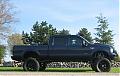
In my 07 with 325/60R18 Goodyear Silent Armors (65psi max on the sidewall) I run 60 psi all the way around. Rides better than 65psi and good nice, even wear. The rears would ride better unloaded at a lower psi.....but I often have 1500-2300lbs in the bed or towing ~10,000lbs so the 60 psi works out the best.
On my 01 with 38/15.50R20 Dick Cepek Mud Country tires (50psi max) I run 45 psi front and 40 psi rear.....truck never tows or hauls a lot of weight.
As for damaging the sidwall with too low a psi.....while it is possible in truck tires if you run waaaaayyyy low, it's more of an issue in car tires that have a rec. inflation psi on the sidewall.
Truck tires are rated fo X number of lbs of weight at X psi.
On my 01 with 38/15.50R20 Dick Cepek Mud Country tires (50psi max) I run 45 psi front and 40 psi rear.....truck never tows or hauls a lot of weight.
As for damaging the sidwall with too low a psi.....while it is possible in truck tires if you run waaaaayyyy low, it's more of an issue in car tires that have a rec. inflation psi on the sidewall.
Truck tires are rated fo X number of lbs of weight at X psi.
Laughing Gas
Joined: Aug 2005
Posts: 1,156
Likes: 10
From: Drain Oregon and Sacramen
Originally Posted by fxstdi
This debate has gone on in my family forever. Recently my brother inlaw started working for a major tire distribution company and he was sent for some Track time down in Arizona for a day of testing with Bridgestone. While he was there he asked the Tire Design Engineer what was proper (55 in the front and back, 70 when loaded.....). This was the reply from the Engineer. "Run your tires at the recommended inflation pres on the tire sidewall. If you do not you are damaging the tires sidewall and may experience failure when under load". Have been running that way ever since. Just my $0.02.

Thread
Thread Starter
Forum
Replies
Last Post
Broncocustom1219
Brakes, Steering, Suspension, Tires, & Wheels
1
Feb 10, 2005 07:03 PM


