


interesting truck

Thread Starter
|
Senior User
Joined: Dec 2003
Posts: 221
Likes: 0
From: Grosse Ile Mi.
interesting truck
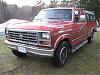
Take a look at this one if your wanting to get away from your IDI
http://sfbay.craigslist.org/sby/car/284901736.html
http://sfbay.craigslist.org/sby/car/284901736.html
Lead Driver

Joined: Nov 2003
Posts: 6,900
Likes: 3
From: Campbell River, B.C.
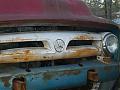
Who ever converted that truck was WAY ahead of his time. Converting a truck to diesel is an ordeal on it's own (recently converted my sister's ranger to a 2.3 TD), but to build a twin turbo while your at it--very cool.
If those Hp numbers are true than that old beater could eat a powerstroke for breakfast! Newer is not always better. Could probably give the new 08's a run for there money too....how cool would that be.
If those Hp numbers are true than that old beater could eat a powerstroke for breakfast! Newer is not always better. Could probably give the new 08's a run for there money too....how cool would that be.
Logistics Pro


Joined: Dec 2005
Posts: 4,644
Likes: 55
From: Moro Bay, AR

65 MPH at 2500 RPMs means that is top speed. At that RPM the Detroit will be screaming too! I love the old Detroits, but wouldn't want that one. Another problem would be weight, that engine weighs about 1500 lbs. No wonder the brakes need work.
Lead Driver
Joined: Nov 2003
Posts: 6,900
Likes: 3
From: Campbell River, B.C.
Good point. I wouldn't want one in my truck, but you have to admit it is still impressive. A twin turbo setup for the 6.9/7.3s has been floated around before, but it looks like no one's cazy enough to try it (myself included).

Posting Guru
Joined: Mar 2005
Posts: 1,701
Likes: 0
From: KY
You have to keep the rpms up on those two strokes. They don't make much roque but will show some good hp. They have such a short effective stroke.
One thing about that ten speed, you could over drive the front box and change the back box to make it a thirteen speed. Well I say over drive the front box but with those old eaton fuller transmissions you can't change gear positions to over drive them but you can give it more gears.
Plus it must have an air compressor so you can fix a tire easier.
One thing about that ten speed, you could over drive the front box and change the back box to make it a thirteen speed. Well I say over drive the front box but with those old eaton fuller transmissions you can't change gear positions to over drive them but you can give it more gears.
Plus it must have an air compressor so you can fix a tire easier.
Last edited by catfish101; Feb 27, 2007 at 10:51 PM.
Lead Driver
Joined: Nov 2003
Posts: 6,900
Likes: 3
From: Campbell River, B.C.
Two stroke????!  . Now you got me curious. Are there any advantages/disadvantages for this type of motor in that type of vehicle? I'll bet the emissions are going to be worse, but Ive read that they can be very efficient. I'm pretty sure most of the big cargo ships use them, except those are low speed.
. Now you got me curious. Are there any advantages/disadvantages for this type of motor in that type of vehicle? I'll bet the emissions are going to be worse, but Ive read that they can be very efficient. I'm pretty sure most of the big cargo ships use them, except those are low speed.
Trending Topics
Posting Guru
Joined: Mar 2005
Posts: 1,701
Likes: 0
From: KY
They are a two stroke engine like a Stihl chain saw. They have no intake valves and fire on every stroke. They have holes in the liners about 3/4 of they way down that is why they didn't make alot of torque and what torque they made didn't last long. With the holes in the liner the effective stroke was shorter. They have two sets of rings. One for compression and one set below the wrist pins to keep the crank case from being charged with air. They have a roots type blower on them. They are a pretty good ole motor and could be bolted together to make a bigger engine. Bolt to 6V53's together and make a V12.
They was also a Cleveland Diesel that was the exact same engine but it was built in Cleveland so therefore it was a Cleveland. I have only ever seen one of these on cargo ships for generators and they were inline 6's.
They are fast reving motors and might not do to bad in a pick-up. Hard to say.
They was also a Cleveland Diesel that was the exact same engine but it was built in Cleveland so therefore it was a Cleveland. I have only ever seen one of these on cargo ships for generators and they were inline 6's.
They are fast reving motors and might not do to bad in a pick-up. Hard to say.
FTE Stories
Ford Trucks for Ford Truck Enthusiasts

Rezvani's Latest Post-Apocalytic Monster Is a Ford F-150 Raptor Underneath
Verdad Gallardo
Top 10 Most Expensive Ford Trucks Ever Sold on Bring a Trailer
Joe Kucinski
2027 Ford Super Duty Buyer's Guide (Every Model, Engine, & Package)
Brett Foote
Top 10 Ford Truck Tragedies
Joe Kucinski
AEV FXL Super Duty - the Super Duty Raptor Ford Doesn't Make
Brett Foote
Lobo Vs Lobo: Proof the F-150 Lobo Should Be Even Lower!
Michael S. Palmer
Ford's 2001 Explorer Sportsman Concept Looks For a New Home
Verdad Gallardo
10 Best Ford Truck Engines We Miss the Most!
Joe Kucinski
2026 Shelby F-150 Off-Road: Better Than a Raptor R?
Brett Foote
i ain't rite
Joined: Mar 2005
Posts: 65,507
Likes: 5,563
From: Marlboro Mental Hospital.
fast revers, and high revers also. a 2 stroke Detroit will purr down the road at 3200 all day long.
but you will need a really good set of ear muffs over a set of really good ear plugs if you want to hear anything after the day is done.
but you will need a really good set of ear muffs over a set of really good ear plugs if you want to hear anything after the day is done.

Senior User
Joined: Jul 2006
Posts: 400
Likes: 0
From: Hesperia, So Cal
heres another interesting truck, even though it has a GM motor in it.........
http://cgi.ebay.com/ebaymotors/1974-...QQcmdZViewItem
http://cgi.ebay.com/ebaymotors/1974-...QQcmdZViewItem
Lead Driver
Joined: Nov 2003
Posts: 6,900
Likes: 3
From: Campbell River, B.C.
Just did some quick reserch on that engine. GM called it the Toro-Flow engine, its a V6, and it is a conversion. Found one site that has an old brochure picture that shows it with an avalable twin turbo setup??? Same site says the Hp ranges from 130-220. I would definatly prefer agood ol 6.9 (lighter, faster, stronger, better) but again, I still can't help but admire the work that went into converting that truck. Back in 1980, there probably wasn't much of a selection of sutable engines (the chev 350 does not even count!) Something else I don't like about this paticular engine is that it is well under square. Although I have to admit, those stacks look kindof cool, even if that smoke is aufully blue....
Some day when the grass is greener, I'm gettin' myself a 76 camper special dropping the baddest 6.9 I can build in it .
.
Some day when the grass is greener, I'm gettin' myself a 76 camper special dropping the baddest 6.9 I can build in it
.

Elder User
Joined: Oct 2006
Posts: 597
Likes: 0
Originally Posted by David85
Two stroke????! . Now you got me curious. Are there any advantages/disadvantages for this type of motor in that type of vehicle? I'll bet the emissions are going to be worse, but Ive read that they can be very efficient. I'm pretty sure most of the big cargo ships use them, except those are low speed.
. Now you got me curious. Are there any advantages/disadvantages for this type of motor in that type of vehicle? I'll bet the emissions are going to be worse, but Ive read that they can be very efficient. I'm pretty sure most of the big cargo ships use them, except those are low speed.
Tuned
Joined: Dec 2006
Posts: 291
Likes: 4
From: houston,tx
Originally Posted by tbone91
A lot of locomotives use 2-strokers. They pretty much need to be supercharged or they won't make any power (or even run).
Elelectro Motive Diesel
maybe i should getout more. LOL
 . Now that would be a cool drivetrain
  .
.
Elder User
Joined: Oct 2006
Posts: 597
Likes: 0
Diesel-electric hybrid would be way cool. Probably they will become popular once production diesels can meet California emission standards for gas motors.
I was just talking to the old man a few days ago ... this is his 50th year as an Engineer (not and Electrical Engineer like me, but a real train Engineer). Locomotives are different than diesel-electric hybrids. I was around them a lot as a kid, but that was a few years ago, I think they are still pretty similar to the old days.
Supercharded two stroke (or four stroke) diesel engine driving a generator which drives traction motors on the axles. No transmission, no clutch, just relays of some kind and a "throttle" controlling fuel into the engine. No batteries like a hybrid, except to start the diesel engines when they are shut down.
This type of drive train is quite heavy. Good for getting good traction on rails, but not so good for the 1/4 mile...
I was just talking to the old man a few days ago ... this is his 50th year as an Engineer (not and Electrical Engineer like me, but a real train Engineer). Locomotives are different than diesel-electric hybrids. I was around them a lot as a kid, but that was a few years ago, I think they are still pretty similar to the old days.
Supercharded two stroke (or four stroke) diesel engine driving a generator which drives traction motors on the axles. No transmission, no clutch, just relays of some kind and a "throttle" controlling fuel into the engine. No batteries like a hybrid, except to start the diesel engines when they are shut down.
This type of drive train is quite heavy. Good for getting good traction on rails, but not so good for the 1/4 mile...