


to many vacum lines
Thread Starter
|
More Turbo

Joined: Aug 2005
Posts: 683
Likes: 6
From: North Georgia
to many vacum lines
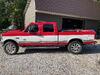
I am sure this has been asked before but here goes. I have a f-350 with a 460 I want to get rid of as much clutter as I can under the hood. There are as many of you know vacum lines going everywhere and what I think is 2 vacum pumps on the front of the truck. I want to know if I can get rid of all these pieces and have it more simple under my hood. I have had all fords over the years and the older ones had 2 or 3 vacum lines and that is what I am after here.Will this possibly help on miles per gallon and what about those 2 pumps I spoke of is that what they are. my truck is a 86 model 4x4. thanks for the help. scott
Last edited by scottddove; Aug 27, 2006 at 05:05 PM.

Postmaster
Joined: Jul 2003
Posts: 2,711
Likes: 2
From: Pittsburgh
Allright, then you have it easy. You really only need three vacuum lines to be fully functional and get the best driveability and economy, but with no regards for actual emissions.
You need a ported vacuum line from the carburetor to the vacuum advance, a manifold vacuum line to the brake booster, and a line that goes from manifold vacuum to a temperature switch (normally on the waterneck or radiator) and then to the EGR (if so equipped). One other you ::may:: need is one from manifold vacuum to the intake air temp sensor (located in the aircleaner housing) to the thermostatic airflap.
The last two aren't absolutely necessary, but will definitely help with cruise economy and cold weather driveability.
Justin
You need a ported vacuum line from the carburetor to the vacuum advance, a manifold vacuum line to the brake booster, and a line that goes from manifold vacuum to a temperature switch (normally on the waterneck or radiator) and then to the EGR (if so equipped). One other you ::may:: need is one from manifold vacuum to the intake air temp sensor (located in the aircleaner housing) to the thermostatic airflap.
The last two aren't absolutely necessary, but will definitely help with cruise economy and cold weather driveability.
Justin
Postmaster
Joined: Jul 2003
Posts: 2,711
Likes: 2
From: Pittsburgh
Yeah, those too  (oops, i got "absolute minimum" stuck in my head)
If you have an Auto you need a manifold vacuum signal to the modulator, if you have cruise it also needs a manifold vacuum signal
Justin
(oops, i got "absolute minimum" stuck in my head)If you have an Auto you need a manifold vacuum signal to the modulator, if you have cruise it also needs a manifold vacuum signal
Justin

Posting Guru
Joined: Jun 2004
Posts: 1,635
Likes: 0
From: Niceville, FL.
I'd leave the EGR valve and its electric/vacuum controls operational. If you don't there's a pretty good chance your mixture will be too rich. Or you can disable it and experiment with reducing the carburetor main jet sizes to lean it out. If you have a catylic converter you better get rid of it too before it overheats, plugs up, or both.
Trending Topics

Senior User
Joined: Jun 2005
Posts: 144
Likes: 0
manifold vac to brake boost
A bit of a tangent here and don't mean to hi-jak....if the manifold vacuum to the brake booster is not hooked up correctly would that create a soft brake pedal?
FTE Stories
Ford Trucks for Ford Truck Enthusiasts

Rezvani's Latest Post-Apocalytic Monster Is a Ford F-150 Raptor Underneath
Verdad Gallardo
Top 10 Most Expensive Ford Trucks Ever Sold on Bring a Trailer
Joe Kucinski
2027 Ford Super Duty Buyer's Guide (Every Model, Engine, & Package)
Brett Foote
Top 10 Ford Truck Tragedies
Joe Kucinski
AEV FXL Super Duty - the Super Duty Raptor Ford Doesn't Make
Brett Foote
Lobo Vs Lobo: Proof the F-150 Lobo Should Be Even Lower!
Michael S. Palmer
Ford's 2001 Explorer Sportsman Concept Looks For a New Home
Verdad Gallardo
10 Best Ford Truck Engines We Miss the Most!
Joe Kucinski
2026 Shelby F-150 Off-Road: Better Than a Raptor R?
Brett Foote
Posting Guru
Joined: Nov 2004
Posts: 1,137
Likes: 2
From: Asheville, NC
Remember to hook up the vacuum lines to your heater controls!
On my truck, when the brake booster was attached to the same vacuum as the PCV valve, (you guys should have seen that mess,) I had a very hard pedal. A soft pedal could easily mean you have some air in your brake lines.
On my truck, when the brake booster was attached to the same vacuum as the PCV valve, (you guys should have seen that mess,) I had a very hard pedal. A soft pedal could easily mean you have some air in your brake lines.
Postmaster
Joined: Jul 2003
Posts: 2,711
Likes: 2
From: Pittsburgh
Improper vacuum reference to the booster will always create a hard pedal. For a soft but solid pedal, check the adjustment of your rear brakes. If you have a soft pedal that slowly creeps down after you apply it, then you have air in the system.
Justin
Justin

FTE Sponsor
Joined: Aug 2006
Posts: 755
Likes: 0
Try direct vacuum first, because this will give you extra vacuum advance at idle, keeping your spark plugs cleaner over time; however, some motors tend to idle too rough or too fast hooked up direct, in which case, you should run ported vacuum.
__________________
FTE Sponsor
Performance Distributors
www.PerformanceDistributors.com
FTE Sponsor
Performance Distributors
www.PerformanceDistributors.com