


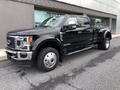


How much can I pull?
Senior User
Joined: Dec 2008
Posts: 121
Likes: 1
From: In the Airstream
Yes!
The limitation of GCVWR (Gross Combined Vehicle Weight Rating), which was discussed early on in this thread. Not talking about it will not make it go away. The ENTIRE rig needs to be weighed and only after a weigh of each individual axle with everything hooked up and ready to roll can a "safe" or "not safe" determination be made. This is ESPECIALLY important if a conventional tongue pulled trailer is dropped on a long rear overhang tow vehicle. Enough weight could be lifted off of the steering axle to compromise the safe handling of the vehicle
A vehicle manufacturer will set a max load rating for each axle, the entire loaded vehicle (usually a bit less than the additive total of each individual axle) AND the combined weight of the loaded vehicle AND any trailer the owner may want to pull with it.
The manufacturers obviously want to maximize the GCVWR to bolster their sales, so they must have a really good reason to publish a legitimate not to exceed weight. There are many reasons for a maximum limit - might be the brakes, might be the frame, might be the tranny, coulod even be the U-joints. The point is, we, the public, do not know just what the limiting item for a particular maximum GCVWR rating is, and the various manufacturers do not seem too anxious to discuss it.
In the absence of knowing what can be done to increase an individual velhicles rating we are stuck with the rating put on it by the manufacturer. These max ratings (GCVWR) are the MAXIMUM weight that the manufacturer says the vehicle can handle, and these weights should never be exceeded.
Here is a listing of some GCVWR as published by "Trailer Life":
Trailer Life Magazine: Follow the Road to Adventure
and also here is a better definition:
RV Towing Regulations

Hotshot
Joined: Jan 2010
Posts: 10,060
Likes: 491
From: Bristol, TN.
Yes!
The limitation of GCVWR (Gross Combined Vehicle Weight Rating), which was discussed early on in this thread. Not talking about it will not make it go away. The ENTIRE rig needs to be weighed and only after a weigh of each individual axle with everything hooked up and ready to roll can a "safe" or "not safe" determination be made. This is ESPECIALLY important if a conventional tongue pulled trailer is dropped on a long rear overhang tow vehicle. Enough weight could be lifted off of the steering axle to compromise the safe handling of the vehicle
A vehicle manufacturer will set a max load rating for each axle, the entire loaded vehicle (usually a bit less than the additive total of each individual axle) AND the combined weight of the loaded vehicle AND any trailer the owner may want to pull with it.
The manufacturers obviously want to maximize the GCVWR to bolster their sales, so they must have a really good reason to publish a legitimate not to exceed weight. There are many reasons for a maximum limit - might be the brakes, might be the frame, might be the tranny, coulod even be the U-joints. The point is, we, the public, do not know just what the limiting item for a particular maximum GCVWR rating is, and the various manufacturers do not seem too anxious to discuss it.
In the absence of knowing what can be done to increase an individual velhicles rating we are stuck with the rating put on it by the manufacturer. These max ratings (GCVWR) are the MAXIMUM weight that the manufacturer says the vehicle can handle, and these weights should never be exceeded.
Here is a listing of some GCVWR as published by "Trailer Life":
Trailer Life Magazine: Follow the Road to Adventure
and also here is a better definition:
RV Towing Regulations
The limitation of GCVWR (Gross Combined Vehicle Weight Rating), which was discussed early on in this thread. Not talking about it will not make it go away. The ENTIRE rig needs to be weighed and only after a weigh of each individual axle with everything hooked up and ready to roll can a "safe" or "not safe" determination be made. This is ESPECIALLY important if a conventional tongue pulled trailer is dropped on a long rear overhang tow vehicle. Enough weight could be lifted off of the steering axle to compromise the safe handling of the vehicle
A vehicle manufacturer will set a max load rating for each axle, the entire loaded vehicle (usually a bit less than the additive total of each individual axle) AND the combined weight of the loaded vehicle AND any trailer the owner may want to pull with it.
The manufacturers obviously want to maximize the GCVWR to bolster their sales, so they must have a really good reason to publish a legitimate not to exceed weight. There are many reasons for a maximum limit - might be the brakes, might be the frame, might be the tranny, coulod even be the U-joints. The point is, we, the public, do not know just what the limiting item for a particular maximum GCVWR rating is, and the various manufacturers do not seem too anxious to discuss it.
In the absence of knowing what can be done to increase an individual velhicles rating we are stuck with the rating put on it by the manufacturer. These max ratings (GCVWR) are the MAXIMUM weight that the manufacturer says the vehicle can handle, and these weights should never be exceeded.
Here is a listing of some GCVWR as published by "Trailer Life":
Trailer Life Magazine: Follow the Road to Adventure
and also here is a better definition:
RV Towing Regulations
Here, as I see it the problem. Many questions of this nature are generated in the absence of actual weighs. Historically, when I have conducted consumer seminars on weight, it has been very simple, we take it to the scale and weigh it. When someone paid me to attend a delivery with them, before we signed the papers, we took it down the road and weighed the entire rig. That is the only way I know to actually answer the "can I tow it question".
The issue of safety is a tougher one to answer as there are additional factors since the manufacturers specifically state their trucks can only stop the GVW, not the CVW. That often leaves us with combined weights that have more to do with warranty coverage in terms of not breaking things the manufacturer has to pay for e.g. the current situation with Workhorse chassis. The manufacturer does not care if you break the transmission. They only care if they have to pay for it.
In the end, you just gotta weigh it, if you want to know what you actually have and what you can really tow!
Steve
Hotshot
Joined: Jan 2010
Posts: 10,060
Likes: 491
From: Bristol, TN.
All you do is pull up onto the scale. Your front (steer wheels) go over the first divider. Your rear wheels will sit on the next section and your trailer will sit on the last section. There is speaker near the scale usually mounted quite high and someone normally comes on. When they do just say you are a private hauler. When you get the green light, drive off, go inside and give them your money and you will be handed a slip with three weights, your front axle, rear axle, and trailer. Add the front and rear axle for your GVW and all the weights for your combined. If you are uneasy about doing this, go to the desk inside and tell them what you are doing ahead of time. I have never had a harsh response. I think most folks will be surprised to see how easy this is to do.
Of course there are braking and hitch rating issues, but weighing is still the best way I know to resolve anything to do with weight.
Best of luck,
Steve

Cargo Master

Joined: Jun 2008
Posts: 2,752
Likes: 5
From: Stillwater, OK
In the absence of knowing what can be done to increase an individual velhicles rating we are stuck with the rating put on it by the manufacturer. These max ratings (GCVWR) are the MAXIMUM weight that the manufacturer says the vehicle can handle, and these weights should never be exceeded.
The GVWR is the only actual rating. The GCVWR has more to do with the trailer than the truck. The GCVWR is also set according to the toughest route expected to take... so if you're pulling in hills/mountains, sure, stick to it. Pulling in the plains, keep a safe tounge weight, and good trailer brakes, and you're good to pull whatever your GVWR limits you to.
Hotshot
Joined: Jan 2010
Posts: 10,060
Likes: 491
From: Bristol, TN.
Hi Rebel,
I was waiting for you to post in. I think folks who ask how much can I tow, often don't realize how many aspects there are to their question.
Do they mean, how much weight can I put on my truck, do they mean how much weight can I pull with my truck without breaking something, or do they mean how much weight can I safely tow? Those questions all can have different answers and I am glad to see folks asking before they buy.
Terrain and intended use play a major role in the answers, as you point out. I currently own two 3/4 tons and just acquired a one ton. Although I know my 3/4 tons can pull anything I need to hook on, I also pull some very steep grades at times and tend to believe I have an elevated liability risk given the nature of what I do. Given those factors, I tend to stay very conservative.
How much can I tow sounds simple enough. I wish the answer was always so simple.
As always,
Steve
I was waiting for you to post in. I think folks who ask how much can I tow, often don't realize how many aspects there are to their question.
Do they mean, how much weight can I put on my truck, do they mean how much weight can I pull with my truck without breaking something, or do they mean how much weight can I safely tow? Those questions all can have different answers and I am glad to see folks asking before they buy.
Terrain and intended use play a major role in the answers, as you point out. I currently own two 3/4 tons and just acquired a one ton. Although I know my 3/4 tons can pull anything I need to hook on, I also pull some very steep grades at times and tend to believe I have an elevated liability risk given the nature of what I do. Given those factors, I tend to stay very conservative.
How much can I tow sounds simple enough. I wish the answer was always so simple.
As always,
Steve

New User
Joined: Apr 2013
Posts: 7
Likes: 0
I know for a fact that a F-250 will handle 25k to 30k. I have one i do it just about everyday. I haul 14 big round bales on a 30' gooseneck alot. I'm from Missouri i got 30,000 local plates on my truck cuz i haul alot.
Logistics Pro

Joined: Nov 2001
Posts: 3,787
Likes: 102
From: Georgia
How much you can tow has a lot to do with where you tow it and how you have equipped your truck. this truck has air bags, a bunch of engine mods, Rickson wheels and 19.5 tires, (not shown in this pic) and an exhaust brake. It pulled the trailer great and stopped it without a problem. But when driving in the mountains it was not very stable. The trailer (weight around 16.5 to 17,000 lbs) pushed it around a lot. If I was younger or poorer I might still be using the F250 short. But, I didn't need the adrenalin rushes so I bought a DRW. Much more comfortable.
FTE Stories
Ford Trucks for Ford Truck Enthusiasts

Top 10 Most Expensive Ford Trucks Ever Sold on Bring a Trailer
Joe Kucinski
2027 Ford Super Duty Buyer's Guide (Every Model, Engine, & Package)
Brett Foote
Top 10 Ford Truck Tragedies
Joe Kucinski
AEV FXL Super Duty - the Super Duty Raptor Ford Doesn't Make
Brett Foote
Lobo Vs Lobo: Proof the F-150 Lobo Should Be Even Lower!
Michael S. Palmer
Ford's 2001 Explorer Sportsman Concept Looks For a New Home
Verdad Gallardo
10 Best Ford Truck Engines We Miss the Most!
Joe Kucinski
2026 Shelby F-150 Off-Road: Better Than a Raptor R?
Brett Foote
2027 Super Duty Carhartt Package First Look: 12 Things You NEED to Know!
Michael S. Palmer
New User
Joined: Jul 2013
Posts: 7
Likes: 0
pulling with a gooseneck
I got a 05 F350 dually DRW. Im looking for the amount of weight I can put onto my 40ft gooseneck trailer. The trailer empty weighs 9300 with all my straps.The GVW is 25,000. My truck with full tank and myself is at 8,??? something with my stuff in it. I was told I could put 15,000 lbs on it. Every time I look or call I keep getting a different number. the lowest was only 5,000 to 6,000. I want to use it as a commercial truck and trailer all 48 states. Please will someone show me how much weight. Thanks guys.
Cargo Master
Joined: Jun 2008
Posts: 2,752
Likes: 5
From: Stillwater, OK
a GVWR of 25,000 sounds awfully high for an F350.
I'm going to assume you mean GCVWR... if so. Forget it. It doesn't mean a thing.
What is your Gross Vehicle Weight Rating? The number on the B pillar when you open the door.
I'm going to assume you mean GCVWR... if so. Forget it. It doesn't mean a thing.
What is your Gross Vehicle Weight Rating? The number on the B pillar when you open the door.
Logistics Pro
Joined: Nov 2001
Posts: 3,787
Likes: 102
From: Georgia
OK guys, be carefull here. He just said he wants to use the truck and trailer for a commerical purpose. That means a whole different set of rules. He will have to stop at the scales and will have to pass weight restrictions if stopped by DOT.
So I think the answer to your question is this: You can put whatever weight the trailer is rated for on the trailer, but you must insure that both axles are at or under their rating and that the tires are rated and inflated for the weight on the axle. There should be a weight rating plackard attached to the trailer so you can find that out.
The truck can carry whatever the GVWR is. That includes everything including the tongue weight of the trailer, usually thats around 17% of the weight of the trailer. I think the GVWR is on the plackard by the drivers door. Also the same rules apply for the axles and tires on the truck as on the trailer. My trucks not here right now or I would check but I think it's on the door side plackard.
What I don't know is if there are any other DOT rules. if you are driving commerical you must have a CDL either federal for interstate or state for intra state. Hope this helps.
Oops, on edit. I just noticed the rest of the post. If the trailer GWR is 25000 and it weighs 9300 you can load the difference which is 15,700 lbs. But, don't forget the axles and the tongue weight.
So I think the answer to your question is this: You can put whatever weight the trailer is rated for on the trailer, but you must insure that both axles are at or under their rating and that the tires are rated and inflated for the weight on the axle. There should be a weight rating plackard attached to the trailer so you can find that out.
The truck can carry whatever the GVWR is. That includes everything including the tongue weight of the trailer, usually thats around 17% of the weight of the trailer. I think the GVWR is on the plackard by the drivers door. Also the same rules apply for the axles and tires on the truck as on the trailer. My trucks not here right now or I would check but I think it's on the door side plackard.
What I don't know is if there are any other DOT rules. if you are driving commerical you must have a CDL either federal for interstate or state for intra state. Hope this helps.
Oops, on edit. I just noticed the rest of the post. If the trailer GWR is 25000 and it weighs 9300 you can load the difference which is 15,700 lbs. But, don't forget the axles and the tongue weight.

Lead Driver


Joined: Jan 2002
Posts: 8,644
Likes: 4,733
From: Itinerant
I got a 05 F350 dually DRW. Im looking for the amount of weight I can put onto my 40ft gooseneck trailer. The trailer empty weighs 9300 with all my straps.The GVW is 25,000. My truck with full tank and myself is at 8,??? something with my stuff in it. I was told I could put 15,000 lbs on it. Every time I look or call I keep getting a different number. the lowest was only 5,000 to 6,000. I want to use it as a commercial truck and trailer all 48 states. Please will someone show me how much weight. Thanks guys.
For the haulers moving weight above and beyond the truck rating, just because it can move it doesn't make it safe for those with families on road. Moving heavy loads with a SRW truck and a blow out can be rather disastrous.

Logistics Pro
Joined: Nov 2001
Posts: 3,787
Likes: 102
From: Georgia
OK, so if I read that right you get 5800 lbs payload. (That is a 6.0L and I don't know if the 08 is more or not but let's use what we have.) That includes fuel (7 lbs per gal) passengers, tools, luggage, tow hitch, the dog and the weight on the tongue of the trailer. At GWR of 25,000 the pin weight should be around 4250 (17% of 25,000) which leaves you 1550 lbs. for everything else. Also, you can move the weight around a bit on that trailer to increase (load forward) or decrease (load back) the pin weight. As you decrease the tongue weight the trailer will be more active so don't get it back too far. If our math is right the trailer has 2 10,000 lb axles or more likely 3 7,000 lb axles. Be carefuel not to over load one of the axles.
And not to be disagreeable with the poster above but towing within the weight ratings with a SRW truck is not a problem. Now, the only question is are there other weight restrictions from the DOT? If not you should be good to go.
And not to be disagreeable with the poster above but towing within the weight ratings with a SRW truck is not a problem. Now, the only question is are there other weight restrictions from the DOT? If not you should be good to go.