


'88 E150 Conversion Van - Field Pull / T-shooting Help Please

Thread Starter
|
New User
Joined: May 2003
Posts: 14
Likes: 0
 '88 E150 Conversion Van - Field Pull / T-shooting Help Please
Greetings from Oregon. I'm new to this forum, but I'm an electronics guy and a shade-tree mechanic for about 25 years.
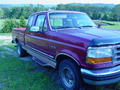
Picked up this 1988 E150, 302/AT (not sure which one) from a field across from my house. I have a Pickup/Bronco Haynes manual I've been using to look it over. The previous owner said he parked it when the heater core started to leak, about 4 years ago.
I've already done some research here in the archives, and I know my tanks (dual tank system) are probably both full of garbage, varnish, and rust. I have not removed the fuel filter(s) yet, and I have no interest in doing so until I hear the engine run.
Here is what I have done, and what I'd like some suggestions for:
Pulled the airbox, and intake tubing
New Battery
Pulled the distributor cap and sanded down the rotor a bit
Pulled the E-coil wire at the coil and turned the key, got a spark
Pulled a couple of plugs and left them hooked to the wire, put against the block, turned the key, got a spark
Shut the driver's door long enough to listen for the fuel pump(s) (I hate that buzzer)
No fuel pump noise, jumpered this to ground at the DLC connector
Sprayed some starting fluid in the intake, turned the key
Fuel pump is whirring, but I can hear what sound like air leaks/bubbles in the injector lines/rail
NO FUEL is leaking anywhere in the engine area, or under the van
Checked the fuel pressure regulator per the CoolMom post, no fuel coming out
Engine fires and will run briefly on starting fluid but is not getting fuel through/to the injectors
The 'check engine' light will come on with the key in the start position, and pulsate with the starter when trying to start. Haven't messed with codes yet either, as I ran the battery down...over zealous...it was soooo close to running....hahaha...
So, what I'd like to do is the old school, 'run it from a 5 gallon jug' test. Where and how can I insert a clean fuel source into this setup? It's highly likely that all of my injectors are just varnished up and garbage, do I have to pull them independantly to check for operation? Is there an easy way to 'crack' this fuel rail to bleed air? I'm all for quick and dirty at this point, I think I can pretty much jumper any condition the EEC needs. What I'd like to do is to just see if this engine actually runs before I go fixing anything serious.
Battery is on the charger tonight, and I'll mess with it some more tomorrow while the wife watches the superbowl...hahaha...
Thanks much!
Todd in OR
1988 Bivouac Conversion E150 (302/AOD?)
Picked up this 1988 E150, 302/AT (not sure which one) from a field across from my house. I have a Pickup/Bronco Haynes manual I've been using to look it over. The previous owner said he parked it when the heater core started to leak, about 4 years ago.
I've already done some research here in the archives, and I know my tanks (dual tank system) are probably both full of garbage, varnish, and rust. I have not removed the fuel filter(s) yet, and I have no interest in doing so until I hear the engine run.
Here is what I have done, and what I'd like some suggestions for:
Pulled the airbox, and intake tubing
New Battery
Pulled the distributor cap and sanded down the rotor a bit
Pulled the E-coil wire at the coil and turned the key, got a spark
Pulled a couple of plugs and left them hooked to the wire, put against the block, turned the key, got a spark
Shut the driver's door long enough to listen for the fuel pump(s) (I hate that buzzer)
No fuel pump noise, jumpered this to ground at the DLC connector
Sprayed some starting fluid in the intake, turned the key
Fuel pump is whirring, but I can hear what sound like air leaks/bubbles in the injector lines/rail
NO FUEL is leaking anywhere in the engine area, or under the van
Checked the fuel pressure regulator per the CoolMom post, no fuel coming out
Engine fires and will run briefly on starting fluid but is not getting fuel through/to the injectors
The 'check engine' light will come on with the key in the start position, and pulsate with the starter when trying to start. Haven't messed with codes yet either, as I ran the battery down...over zealous...it was soooo close to running....hahaha...
So, what I'd like to do is the old school, 'run it from a 5 gallon jug' test. Where and how can I insert a clean fuel source into this setup? It's highly likely that all of my injectors are just varnished up and garbage, do I have to pull them independantly to check for operation? Is there an easy way to 'crack' this fuel rail to bleed air? I'm all for quick and dirty at this point, I think I can pretty much jumper any condition the EEC needs. What I'd like to do is to just see if this engine actually runs before I go fixing anything serious.
Battery is on the charger tonight, and I'll mess with it some more tomorrow while the wife watches the superbowl...hahaha...
Thanks much!
Todd in OR
1988 Bivouac Conversion E150 (302/AOD?)
Fleet Owner


Joined: Aug 2005
Posts: 23,668
Likes: 301
From: Easton,Ks
First check the small ground wire coming off the NEG(-) Post of the battery. It has an inline fuse holder looking thing about 3 inches from the battery. It is a plug not a fuse holder but this Black wire with a green stripe is very important and the truck will not run with out it having a good ground connection to the battery. It goes to the EEC Computer and is the ground for pin #40 & 60.
You do not have to bleed the fuel manifold.
More than likely the small wire is most of the problem right now.
You do not have to bleed the fuel manifold.
More than likely the small wire is most of the problem right now.
Thread Starter
|
New User
Joined: May 2003
Posts: 14
Likes: 0
subford - Thanks!  That was the problem. Hooked that bad boy up, and the truck started on the first try.
White smoke out the tailpipe for the first 1/2 hour or so, and then it cleared up. I put a can of heet in each tank, and a can of fuel system cleaner in the front tank (which I'm running on), also put 5 gallons of fresh gas in last night.
It needs a tune up, badly, the plugs are all gapped at .050+ and the rotor and cap are really cruddy. But it runs....
Thanks again, it is now evident that the heater core is leaking....(just a little) and that will need changed. Also appears the pass exhaust manifold is cracked in two places.
What causes the ignition key to sort of stick in the run/start position? I have to manually return it to run once it fires...I have both an ignition cylinder and the actual ignition switch here as a pre-purchase to get this truck running. Is one of these the culprit?
Todd in OR
'88 Bivouac E-150 Conversion Van
That was the problem. Hooked that bad boy up, and the truck started on the first try.White smoke out the tailpipe for the first 1/2 hour or so, and then it cleared up. I put a can of heet in each tank, and a can of fuel system cleaner in the front tank (which I'm running on), also put 5 gallons of fresh gas in last night.
It needs a tune up, badly, the plugs are all gapped at .050+ and the rotor and cap are really cruddy. But it runs....
Thanks again, it is now evident that the heater core is leaking....(just a little) and that will need changed. Also appears the pass exhaust manifold is cracked in two places.
What causes the ignition key to sort of stick in the run/start position? I have to manually return it to run once it fires...I have both an ignition cylinder and the actual ignition switch here as a pre-purchase to get this truck running. Is one of these the culprit?
Todd in OR
'88 Bivouac E-150 Conversion Van
Fleet Owner
Joined: Aug 2005
Posts: 23,668
Likes: 301
From: Easton,Ks
Could be the key is cut a little off or a gummy ignition cylinder or bad rack and pinion. The ignition switch could also be gummy, hard to say you would just have to take it apart and look at them.

More Turbo
Joined: Jun 2004
Posts: 690
Likes: 0
From: Sweden
First understand the fuel system:
1. There's a low pressure delivery sump pump in each tank
2. The fuel goes through a tank switch valve
3. There's a high pressure fuel pump (>35 psi).
4. The fuel goes into one side of a U-shaped injector rail
5. The other side of the rail has a pressure regulator that simply bleeds off pressure by dumping fuel back through the select valve to the tank it came from.
Both the delivery and high pressure pumps run for a moment when you turn on the key, and then constantly while the engine is detected as running.
The point:
1. The fuel rail can't clog easily, nor will bad fuel get stuck in it if the engine won't run, since it gets flushed when you turn the key. There is a schrader valve on the fuel rail that can be used to (among other things) bleed off air but it's completely unnecessary since turning the key to run the pumps would flush out the air.
2. Sucking fuel out of a jerry can is a bit troublesome, since it will flush the fuel back to the selected tank unless you take the return line off and stick it in the jerry can.
3. The high pressure pump is actually pretty good at sucking fuel out of the tanks. In my experience, it isn't usually required to run the vehicle! Thus dipping the intake tube into a jerry can (preferrably raised up a bit) should be fine.
The intake manifold must be pulled to remove the injector rail. This is a fairly major operation and if you're going to do that there's some other things you need to work on at the same time.
I'm not sure of the prob you're describing with the ignition switch.
From what was described to me on a prob I have- I found I turned to START, let it fall back to RUN, but the high power accessories (blower motor) didn't come on until I bumped the key back a bit. I was told the ignition key switch doesn't have this contact in it. It's got a rod going down to the switch further in the column, and the problem was likely wear in the rubbing surface on the end of that connecting rod. I was also told this was not a very replaceable part so to just deal with it. I deal with it ok. Put some lubricant in the key switch itself and maybe that'll help.
1. There's a low pressure delivery sump pump in each tank
2. The fuel goes through a tank switch valve
3. There's a high pressure fuel pump (>35 psi).
4. The fuel goes into one side of a U-shaped injector rail
5. The other side of the rail has a pressure regulator that simply bleeds off pressure by dumping fuel back through the select valve to the tank it came from.
Both the delivery and high pressure pumps run for a moment when you turn on the key, and then constantly while the engine is detected as running.
The point:
1. The fuel rail can't clog easily, nor will bad fuel get stuck in it if the engine won't run, since it gets flushed when you turn the key. There is a schrader valve on the fuel rail that can be used to (among other things) bleed off air but it's completely unnecessary since turning the key to run the pumps would flush out the air.
2. Sucking fuel out of a jerry can is a bit troublesome, since it will flush the fuel back to the selected tank unless you take the return line off and stick it in the jerry can.
3. The high pressure pump is actually pretty good at sucking fuel out of the tanks. In my experience, it isn't usually required to run the vehicle! Thus dipping the intake tube into a jerry can (preferrably raised up a bit) should be fine.
The intake manifold must be pulled to remove the injector rail. This is a fairly major operation and if you're going to do that there's some other things you need to work on at the same time.
I'm not sure of the prob you're describing with the ignition switch.
From what was described to me on a prob I have- I found I turned to START, let it fall back to RUN, but the high power accessories (blower motor) didn't come on until I bumped the key back a bit. I was told the ignition key switch doesn't have this contact in it. It's got a rod going down to the switch further in the column, and the problem was likely wear in the rubbing surface on the end of that connecting rod. I was also told this was not a very replaceable part so to just deal with it. I deal with it ok. Put some lubricant in the key switch itself and maybe that'll help.
Last edited by Dannym; Feb 6, 2006 at 01:47 AM.
Thread Starter
|
New User
Joined: May 2003
Posts: 14
Likes: 0
https://www.ford-trucks.com/user_gal...&albumid=20462
Here is the link to the gallery, I'll try to get some interior photos up this week.
danny - thanks for the primer on the fuel system. I've always hated carbs, but my only experience with EFI was the old direct injection Saab 900 setup. This fuel rail thing is new to me. I think I'll pull the key cylinder and shove a little teflon/silicone lube in the shaft hole and see what happens.
After supplying the ground to the computer, the truck actually seems to run OK. I was able to get it to give me a 1-2 shift just driving it around the block. I think the previous owner made it sound a lot worse than it actually seems to be. Steering seems pretty tight, brakes work (sort of), all the lights, etc work. I'm running it with the air box off now, as I still have to change out the heater core, and tune it up, but it seems to have been worth the $400. The interior is a bit ratty, but it's pretty solid with no rust. More to come on this as I keep playing around.
Is the passenger side exhaust manifold a Van specific item?
Here is the link to the gallery, I'll try to get some interior photos up this week.
danny - thanks for the primer on the fuel system. I've always hated carbs, but my only experience with EFI was the old direct injection Saab 900 setup. This fuel rail thing is new to me. I think I'll pull the key cylinder and shove a little teflon/silicone lube in the shaft hole and see what happens.
After supplying the ground to the computer, the truck actually seems to run OK. I was able to get it to give me a 1-2 shift just driving it around the block. I think the previous owner made it sound a lot worse than it actually seems to be. Steering seems pretty tight, brakes work (sort of), all the lights, etc work. I'm running it with the air box off now, as I still have to change out the heater core, and tune it up, but it seems to have been worth the $400. The interior is a bit ratty, but it's pretty solid with no rust. More to come on this as I keep playing around.
Is the passenger side exhaust manifold a Van specific item?
Trending Topics
Fleet Owner
Joined: Aug 2005
Posts: 23,668
Likes: 301
From: Easton,Ks
"Is the passenger side exhaust manifold a Van specific item?"
No, I replaced my three piece 88 E150 manifold with one from a F150 302. It looks different but it bolted up OK. At least they said it was from a F150, it was sitting on the floor at the salvage yard when I got there and did not see them take it off.
No, I replaced my three piece 88 E150 manifold with one from a F150 302. It looks different but it bolted up OK. At least they said it was from a F150, it was sitting on the floor at the salvage yard when I got there and did not see them take it off.
FTE Stories
Ford Trucks for Ford Truck Enthusiasts

3 Best / Worst Features Of The 2025+ Ford Expedition
Brett Foote
10 Ways Ford is LOSING to the Competition
Joe Kucinski
Top 6 Best Deals Available on New Fords & Lincolns Right Now
Brett Foote
This Hennessey Takes the Expedition Tremor's Off-Roading Capability to the Next Level
Verdad Gallardo
Top 10 Fords at 2026 Carlisle Ford Nationals
Joe Kucinski
3 Best / 3 Worst Parts of Modern Ford Ownership
Brett Foote
10 Amazing Upgrades That Solve Common Ford Truck Owner Headaches
Pouria Savadkouei
Every 2026 Ford Engine Explained
Brett Foote
10 Ugly Ford Trucks That We Still Kinda Love
Joe Kucinski
More Turbo
Joined: Jun 2004
Posts: 690
Likes: 0
From: Sweden
Ebay guys carry those manifolds for like $20. If you ask me, I'd replace both.
Buy new exhaust manifold bolts from the parts store. Be prepared for the possibility that one may break off in the block.
As strange as it looks, the exhaust manifold does not use a gasket.
I can't think of any additional work I'd combine with the exhaust manifolds job (if you're removing the intake there's several things I'd combine).
Buy new exhaust manifold bolts from the parts store. Be prepared for the possibility that one may break off in the block.
As strange as it looks, the exhaust manifold does not use a gasket.
I can't think of any additional work I'd combine with the exhaust manifolds job (if you're removing the intake there's several things I'd combine).
Last edited by Dannym; Feb 6, 2006 at 02:07 PM.

Senior User
Joined: Nov 2004
Posts: 191
Likes: 0
got my 87 302 pass. mani from a company on ebay called 1aauto i think they're 1aatoumotive.com
under 50 dollars shipped. i'm happy with it. it was redesigned. the originals were faulty, thats why their are so many aftermarket versions.
u gotta soak the studs with lottas penetrating oil before attempting the job.
also get those pass. plugs at while your there. as u nknow the pass side is tight.
i picked up a electrical vacuum trouble shooting manual for my year on ebay(evtsm).
they are cheap and full of scheme.s' and hints.
good luck, thats a sharplooking van. clean in the rear too, so probably no leaks. lol
under 50 dollars shipped. i'm happy with it. it was redesigned. the originals were faulty, thats why their are so many aftermarket versions.
u gotta soak the studs with lottas penetrating oil before attempting the job.
also get those pass. plugs at while your there. as u nknow the pass side is tight.
i picked up a electrical vacuum trouble shooting manual for my year on ebay(evtsm).
they are cheap and full of scheme.s' and hints.
good luck, thats a sharplooking van. clean in the rear too, so probably no leaks. lol
Senior User
Joined: Nov 2004
Posts: 191
Likes: 0
o yeah. that white smoke is the engine running rich from the air leaking in just before the o2 sensor by the cracked pass mani.
i'm under the impression that the pass. side cracks due to the tightness of the side.
my drider side mani is good and most complaints i've found here are about the pass. side.
also, depending on emsissions in your area..... might think about dual exhaust or maybe even headers. might gain a alittle mpg.
my exhuast was shot and i replaced it with my manifold. i wish i put duals in but i was in the same boat as u..... a new van that had sat for awhile and figured id save the cash for future issues. i got it cheap so haven't put much money into it, thinking if it goes i'll pick up another and strip the goodies from mine.
anyway here is a list of what needed fixing soon after putting it on the road.
1. radiator. i'd check yours good. mine looked fine till i had to replace it. it crumbled taking it out.
2.egr valve. on ebay you can pick up a code reader cheap or go to fordfuelinjection.com it's all there under self test. has all code definitions too.
3. something called the a.i.r. tube(i think thats its name) its the tube that runs kinda like a saw horse across the back-top of the engine, it has a valve of some sort on top.
i'd check yours for holes near that valve conn.
4.tune up. boy it helped. USE ONLY MOTORCRAFT PARTS. plug and wires esp. napa in a pinch. these vans a prone to crossfire and melting wires. if the engine is misfiring at the moment that would be the culprit.
other than my exhaust an a new therm(it wasn't ness.) thats about it.
a word on the fuel selector valve for these years. it was a recall on some models.
it can get stuck in such a way that fuel returns the the wrong tank. after a while the tank can overfill an become pressurized casing fuel to spray from the closed filler cap.
mine has this issue. it only travels to the rear tank so i keep that one at a quarter tank. it actually kinda fun when switch to the back... since u know their is extra fuel there. its like a slot machine. lol. it's nice to see more fuel in the tank without stopping for sum. ........ but seriously this can be a fire issue for those not informed.
i'm under the impression that the pass. side cracks due to the tightness of the side.
my drider side mani is good and most complaints i've found here are about the pass. side.
also, depending on emsissions in your area..... might think about dual exhaust or maybe even headers. might gain a alittle mpg.
my exhuast was shot and i replaced it with my manifold. i wish i put duals in but i was in the same boat as u..... a new van that had sat for awhile and figured id save the cash for future issues. i got it cheap so haven't put much money into it, thinking if it goes i'll pick up another and strip the goodies from mine.
anyway here is a list of what needed fixing soon after putting it on the road.
1. radiator. i'd check yours good. mine looked fine till i had to replace it. it crumbled taking it out.
2.egr valve. on ebay you can pick up a code reader cheap or go to fordfuelinjection.com it's all there under self test. has all code definitions too.
3. something called the a.i.r. tube(i think thats its name) its the tube that runs kinda like a saw horse across the back-top of the engine, it has a valve of some sort on top.
i'd check yours for holes near that valve conn.
4.tune up. boy it helped. USE ONLY MOTORCRAFT PARTS. plug and wires esp. napa in a pinch. these vans a prone to crossfire and melting wires. if the engine is misfiring at the moment that would be the culprit.
other than my exhaust an a new therm(it wasn't ness.) thats about it.
a word on the fuel selector valve for these years. it was a recall on some models.
it can get stuck in such a way that fuel returns the the wrong tank. after a while the tank can overfill an become pressurized casing fuel to spray from the closed filler cap.
mine has this issue. it only travels to the rear tank so i keep that one at a quarter tank. it actually kinda fun when switch to the back... since u know their is extra fuel there. its like a slot machine. lol. it's nice to see more fuel in the tank without stopping for sum. ........ but seriously this can be a fire issue for those not informed.

Fleet Owner
Joined: Aug 2005
Posts: 23,668
Likes: 301
From: Easton,Ks
Originally Posted by eco
"USE ONLY MOTORCRAFT PARTS. plug and wires esp. napa in a pinch."
What do you mean and what exactly are you saying about NAPA?
I don't quite follow you.
What do you mean and what exactly are you saying about NAPA?
I don't quite follow you.
He says:
1. MOTORCRAFT PARTS
2. NAPA (their premium brand)
And then the parts from the other Auto Parts Stores may or may not work and this applies mostly to sensors.
Not necessarily my opinion.

Senior User
Joined: Jun 2004
Posts: 170
Likes: 0
From: The Netherlands, Europe
Originally Posted by subford
First check the small ground wire coming off the NEG(-) Post of the battery. It has an inline fuse holder looking thing about 3 inches from the battery. It is a plug not a fuse holder but this Black wire with a green stripe is very important and the truck will not run with out it having a good ground connection to the battery. It goes to the EEC Computer and is the ground for pin #40 & 60.
More than likely the small wire is most of the problem right now.
More than likely the small wire is most of the problem right now.
After I bought the beast, I have been through a lot of things, but to no avail; the relevant threads are here:
https://www.ford-trucks.com/forums/showthread.php?t=253355
https://www.ford-trucks.com/forums/showthread.php?t=256792
https://www.ford-trucks.com/forums/showthread.php?t=281254
Very briefly:
the folling has been checked out OK
timing, vacuum, spark, fuelpressure and fuelpump wiring which had been changed by the LPG conversion, It has been to a specialist Ford dealer who is responsible for USA products over here, and also after 3 calls to the Ford helpdesk in the US, they have been unable to find the problem.
When you crank the engine, it is willing to fire up, and runs for 1/2 a second and is then absolutely dead. stop, crank again, and again it seems to be willing to run.
Hence my delight with your tip, but it did not turn out to be the reason.Both the connection and the inside of the 'fuse-looking-thing are in exellent shape; I did not cut off the shrink wrap off the wires, but probed the wires and back to ground and resistance is zero!
Here is a pic of what I found
As you see, I do have a black/green wire, and the other one into the splice is just black.
Do you have some more secrets to share with me, as after 1 1/2 year I am getting very tired of it too.
Many thanks for your interest!
Cor
Fleet Owner
Joined: Aug 2005
Posts: 23,668
Likes: 301
From: Easton,Ks
What I said about the Black wire with a green stripe does not apply in your case. The wire that feeds pin 40 and 60 on a 92-93 5.0 is a Black with a white stripe. The black green striped wire that you show in your photo is a body ground. Ford does seem to change some wire colors from year to year. Also they use the same color wires in different places in the same year.