


300 6 stroker kit

Senior User
Joined: Nov 2003
Posts: 167
Likes: 0
From: vancouver bc
started with a fresh .030 bore, ported the head and did a 3 angle grind, comp cam (cant remember specs), offy 4bbl intake, holley 390, header. its a weird kick *** motor but the bang for buck factor is a lot better on a small block v8

Posting Guru
Joined: Mar 2005
Posts: 2,068
Likes: 0
From: western montana
(("The 300 is a nice engine, but just belongs in wood chippers and work trucks where high performance is not necessary. They're just made for low end torque and that's about it.))" 
I am also interested in the 300 (the one that used to be an Indy engine) The potential is huge and you would get tons of torque and good mileage as well I think. So I am searching the posts looking for info and I run upon this one that seems to have more to do with everything but the 300. That just isn't right man.
So who has built a hp 300 and how and what was the result??
thanks
I am also interested in the 300 (the one that used to be an Indy engine) The potential is huge and you would get tons of torque and good mileage as well I think. So I am searching the posts looking for info and I run upon this one that seems to have more to do with everything but the 300. That just isn't right man.
So who has built a hp 300 and how and what was the result??
thanks

Postmaster
Joined: May 2002
Posts: 3,241
Likes: 3
From: Broken Arrow, OK
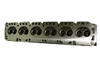
There are ways to build a stroker 300, but they aren't very cost effective. I am working on the logistics of a 351 striaght 6 right now. Actually, it's a 346, but 351 sounds better and helps the sleeper image when they see it's a 6. The good part is it looks like it can be done with mostly off the shelf parts. The biggest question mark right now is whether or not the stock block can be machined out to accept sleeves for a 400 sbc bored 0.060 over. If that is possible, we're in business. The next issue is getting a 4.2" stroke, which is probably possible by offset grinding the stock crank to use 1.9" rod bearings. I know that sounds feeble and weak, but the Chevy guys have been doing this on Winston Cup engines for years without trouble. Notice that leaves us with a common Chevy bore at the top, and a common Chevy crank pin at the bottom. We've got 10" of deckheight to work with. Off the shelf 400 SBC pistons have a 1.56" compression height and we've got a 4.2" stroke. 10-2.1-1.56=6.34. A 6.3" SBC rod is available off the shelf with 1.9" rod journals. You must have the crank ground with larger than normal fillet radii because of the narrow SBC rod. The SBC rod is only 0.940 wide vs. 0.990 for the 300. A BBC rod is 0.990 wide, but then you run into all kinds of issues with piston selection and rod bearing size. 4.2" stroke and 6.3" rod is a 1.5 rod ratio, which is low, but not as low as the 400 SBC in stock form. As far as cost, it's about $400 for the sleeve work, I'm guessing the crank grinding will be about $500, the pistons are $200 (set of 8, Eagle H beam ultralight rods are $500 (set of 8). If I'm not forgetting everything that adds up to around $1400 if you buy only 6 pistons and rods.
Now that we've got all this displacement, how are we going to feed it? The stock heads will be all done by 3400 rpm or so even with a good port job. Now we get into the conversion to V8 heads and really start spending money.
Now that we've got all this displacement, how are we going to feed it? The stock heads will be all done by 3400 rpm or so even with a good port job. Now we get into the conversion to V8 heads and really start spending money.
Last edited by Silver Streak; Apr 14, 2005 at 10:34 AM.
Senior User
Joined: Jan 2005
Posts: 229
Likes: 0
From: Wichita, KS
I don't want to sound bad (or wacky), but after reading a couple V8 head conversion thread (SS, I think you were in on one of them). I am wondering....Why not start with a hunk of billet, lay out what you want and have a cross flow head machined? Al machines easy enough. I was thinking that it may have to be done in two pieces. Combustion chambers and ports in the bottom, with the back sides of all needed areas hogged out for a water jacket. Then, put the rocker arms on the top part and bolt them together. The tough part would be to get a good seal where the valve guides would come up through the top half. Maybe put o-rings on the od of the valve guide, that will seat on the bottom side of the top half (similar to the function of an o-ring boss fitting).....
Again, just wondering.
Again, just wondering.
FTE Stories
Ford Trucks for Ford Truck Enthusiasts

Rezvani's Latest Post-Apocalytic Monster Is a Ford F-150 Raptor Underneath
Verdad Gallardo
Top 10 Most Expensive Ford Trucks Ever Sold on Bring a Trailer
Joe Kucinski
2027 Ford Super Duty Buyer's Guide (Every Model, Engine, & Package)
Brett Foote
Top 10 Ford Truck Tragedies
Joe Kucinski
AEV FXL Super Duty - the Super Duty Raptor Ford Doesn't Make
Brett Foote
Lobo Vs Lobo: Proof the F-150 Lobo Should Be Even Lower!
Michael S. Palmer
Ford's 2001 Explorer Sportsman Concept Looks For a New Home
Verdad Gallardo
10 Best Ford Truck Engines We Miss the Most!
Joe Kucinski
2026 Shelby F-150 Off-Road: Better Than a Raptor R?
Brett Foote
Postmaster
Joined: May 2002
Posts: 3,241
Likes: 3
From: Broken Arrow, OK
A billet head would probably cost about $8-10k. Just a chunk of aluminum that large would probably cost $2k. In order to get water jackets in it you would have to cast it. There is no realistic way to machine a water jacket in a head. If I ever find a set of SBF heads with an end cylinder screwed up I'm gonna pick 'em up. That is by far the easiest way to go.

1st Gear
Joined: Mar 2023
Posts: 1
Likes: 0
I remember somebody putting a crossflow head from Australia on their 300-6 but if I remember correctly it was some kind of experimental, very low production head and about as rare as hen's teeth.
I don't want to sound bad (or wacky), but after reading a couple V8 head conversion thread (SS, I think you were in on one of them). I am wondering....Why not start with a hunk of billet, lay out what you want and have a cross flow head machined? Al machines easy enough. I was thinking that it may have to be done in two pieces. Combustion chambers and ports in the bottom, with the back sides of all needed areas hogged out for a water jacket. Then, put the rocker arms on the top part and bolt them together. The tough part would be to get a good seal where the valve guides would come up through the top half. Maybe put o-rings on the od of the valve guide, that will seat on the bottom side of the top half (similar to the function of an o-ring boss fitting).....
Again, just wondering.
Again, just wondering.

1st Gear
Joined: Apr 2025
Posts: 1
Likes: 0
300 6
(("The 300 is a nice engine, but just belongs in wood chippers and work trucks where high performance is not necessary. They're just made for low end torque and that's about it.))"
I am also interested in the 300 (the one that used to be an Indy engine) The potential is huge and you would get tons of torque and good mileage as well I think. So I am searching the posts looking for info and I run upon this one that seems to have more to do with everything but the 300. That just isn't right man.
So who has built a hp 300 and how and what was the result??
thanks
I am also interested in the 300 (the one that used to be an Indy engine) The potential is huge and you would get tons of torque and good mileage as well I think. So I am searching the posts looking for info and I run upon this one that seems to have more to do with everything but the 300. That just isn't right man.
So who has built a hp 300 and how and what was the result??
thanks

Mountain Pass


Joined: Oct 2023
Posts: 163
Likes: 59
From: Kaslo, BC, Canada
why not consider a turbo charger??
If it were me I would be looking at building an engine specifically spec'd for a turbocharger. I turbo charger on a properly spec'd 300 build will pump out 500 HP and similar torque numbers. It also is a far less stressed unit as the high HP is only "on demand" rather than full time which means you will get better economy if you keep your foot out of it. I expect it would end up costing you thousands less to build as well.

Thread
Thread Starter
Forum
Replies
Last Post
