When you click on links to various merchants on this site and make a purchase, this can result in this site earning a commission. Affiliate programs and affiliations include, but are not limited to, the eBay Partner Network.
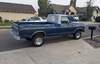
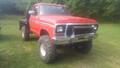
I recently purchased a 1976 F100 4x4 with a 4 speed manual transmission. The truck has 33" tires and the speedometer is way off. The speedometer shows 40mph when the actual speed is 60mph. The drive gear is a 6 tooth and the driven is a 19 tooth. The ID on the door shows a 3.5:1 rear end. I don't think raising the drive to 7 and lowering the driven to 16 will be enough to correct the error. Thoughts? Has anyone tried a mechanical adapter to speed up the speedometer? If so, how has it worked and what brand?
To get your mechanical speedo to read accurately with bigger tires, changing the driven and drive gears for the speedo cable will only get you so far. The drive gear on the speedo is easy to replace but there are not too many choices as you have found. Replacing the drive gear inside the tail-housing of the transfer case requires you to dig in a bit deeper. Often you will need to swap gears in the front and rear end to get the RPM back up to where it was with stock tires that are 28-29" tall. The other option is to convert to an electronic speedo with a vehicle speed sensor which can be customized to read correctly on the gauge.
According to an online gear swap calculator 33" tall tires put you at a 4.12:1 which isn't a gear ratio that is available. Instead you would use 4.10 or 4.11 gears, which for your D44 front will require a new carrier.
16-21 teeth, so yea not much of a range to work with.
To not have to mess with it at all, get a cheap used off FB MP or Craigslist Tom Tom, Navi, Garmin, Magellan Road Mate ect... and use that as your GPS / Speedo. Attach/secure (place it) to the center instrument speedo screen, pull up just the GPS speed option (it will be the complete screen) and keep on trucking.
I used a inline mechanical speedometer adapter. You have to figure out how many miles per hour you’re off by using a GPS on your phone and compare it to what your speedometer is reading and they will send you the correct adapter. Easy to install and now my speedometer is right on the money. It’s been so long. I don’t remember where I bought it or even what it’s called officially but it worked great.
eter
OK I found the website of the company I used it is “Speedometer cables USA”. And the part is called a speedometer gearing adapter. Call them on the phone and they will walk you through what information you need to get the correct one
I have to say, that’s a shocking difference in speedometer reading versus reality. I’ve never seen changing to 33 inch tires cause that big of a change in the speedometer.
A 20 mph variation is crazy. It’s like a 34% change. Whereas the change from approximately 28 inch tires to approximately 33 inch tires is roughly 16%. Which just happens to be the same percentage as changing from a 19 tooth to a 16 tooth driven gear.
Which would’ve been very convenient!
I wonder if the transmission, and or gear ratios were changed at the same time?
Have you physically verified the gear ratio in the differential?
I wonder too, could the speedometer also be failing/gummed up?
One way to check, would be to compare the odometer readings to actual miles traveled.
Drive a known distance (for example, 5 miles) and see if the odometer moved at a different rate than the needle is off.
Never used this method myself, but since the odometer is mechanically physically connected to the cable, and the needle is only driven by magnetic force on a pivot, there could be variations in an old gauge.
Just a thought anyway. While you’re mulling over your options.
Yes the ratio is big, but the speedo is smooth and it is the same percentage at all speeds. I got the rear differential ratio off the mfg tag on the door. I tried lifting the rear, marking the tire & drive shaft, but when spinning a tire the shaft did not spin. I tried again from the other tire and the same thing happened, no or very little movement of the drive shaft. Thoughts?
I will check the odometer soon. Got to finish replacing the power steering pump and gear box. It’s a work in progress. Thanks
Interesting. I know 2.75:1 gears were used in the 2wd trucks to keep RPM down on the highway. I'm curious if you get the same up front or if they only swapped gears in the rear end. At some point the entire rear end housing may have been swapped in from a 2wd or they could have swapped just the 3rd member.
If there is a big mismatch in gears between front and rear you can have issues in 4wd. Ideally front and rear gears match or are very close.
A note with two columns, speedo speed and real speed, taped to the dash, visor, etc ...... it can be done artfully. You don't need it at every speed, maybe just at town speed and normal 55 or 60.
If the truck is going 60 when the speedo says 40, set the speedo on 60 and you might keep up with some of that crazy traffic.
I prefer to use this speedo calculator since it has specific fields for drive and driven gears and can help with PSOM if working with a newer truck. Ford Speedometer Calculator
I used it to pick a 7 tooth x 16 tooth setup for my 33inch (more like 32inch actual) tires on my dent with the factory 3.50 rear end. My speedo is within 1mph of GPS. You should figure out exactly what gears are in your rig, because what you are experiencing doesn't match a 3.50 rear end. If you do have a 2.75 gear you probably need an adapter, but if you have 3.00 you could get by, by swapping to the harder to find 8 tooth drive gear and a 15 or 16 tooth driven gear depending on which direction you like your rounding error.
Rezvani's Latest Post-Apocalyptic Monster Is a Ford F-150 Raptor Underneath
Slideshow: Called the Fortress, the 850-horsepower pickup combines Raptor underpinnings with military-inspired features, survival equipment, and a starting price of $285,000.