When you click on links to various merchants on this site and make a purchase, this can result in this site earning a commission. Affiliate programs and affiliations include, but are not limited to, the eBay Partner Network.
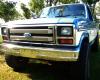
May be my first of many posts here. Just picked up a 93 F250 7.3 5 speed manual. It's in pretty good shape considering the age. This is my first diesel. Of the small list of things that need work the first I want to take care of is the clutch pedal. I have to put a lot of weight on the clutch pedal to get it to crank. I've done a lot of research and an considering the heim joint modification.
My questions are, should I look at anything else that might need fixing when I'm doing this modification? And is bypassing the neutral safety switch easy enough to do while I wait till I have the time to do the heim joint?
The Heim Joint mod is definitely the cure.
Be certain that you get full and proper travel so you're not wearing or damaging stuff like Synchros in the trans.
Probably best to replace both clutch cylinders as well. Last thing you want is one of those cylinders failing leaving you with no clutch in traffic or with a loaded trailer.
Several ways are suggested to bleed air from clutch system, but Luk says "pressure bleed" which is how I do it. I get a perfect pedal immediately. I made an adapter cap to fit the master cylinder so i can connect bleeder to it.
Easy to bypass the Clutch Switch.
It's a bad design anyway because it forces you to put pressure on the crankshaft thrust surface with no oil pressure. Never push the clutch in when starting, it causes extra wear on thrust surfaces over time. Just use a splice connector on the 2 wires going to the switch and remove the switch. Or you can put a secret switch under lower edge of dash so you can disable the vehicle when parking in theft-prone situations.
check the firewall in the area of the clutch master cylinder to see if the master cylinder moves when stepping on the clutch.
i know that was an issue with the 87 to 91 trucks, not sure if it was remedied by 93
As Tom said check the firewall and see how much movement you have. Also check under the dash for wear at the joints (heim joint mod will fix that) These issues will require larger than needed pedal travel to disengage the clutch, but are not necessarily related to the effort required to push the pedal.
Do you happen to know what flywheel and clutch are in the truck?
Both my '88 with the stock DMF (dual mass flywheel) and clutch, and my '93 with a Southbend single mass flywheel and clutch required "a lot of weight" to push the pedal at all. Stop and go driving was a nightmare, and anyone else that drove the truck had issues stalling it because the pedal effort made it extremely difficult to smoothly release the clutch. Both my trucks ended up with Luk single mass clutches and it was a night and day difference. Pedal effort feels like any normal car, and is smooth as butter. Best I can tell, Luk doesn't something different with their pressure plate that makes it much easier on the driver.
Easy to bypass the Clutch Switch.
It's a bad design anyway because it forces you to put pressure on the crankshaft thrust surface with no oil pressure. Never push the clutch in when starting, it causes extra wear on thrust surfaces over time. Just use a splice connector on the 2 wires going to the switch and remove the switch. Or you can put a secret switch under lower edge of dash so you can disable the vehicle when parking in theft-prone situations.
Funny, this is the first I've ever heard of this. I'm not saying you are wrong, but I doubt the extra wear is really a big deal or manufacturers would do design some different safety feature to allow starting the vehicle safely. I would highly recommend to NOT mess with the clutch switch. It is a very important safety measure that keeps people from starting the truck while it is in gear. This prevents you from running over your friends, family, the general public, and possibly yourself. It also prevents a ton of property damage. Automatic vehicles have a neutral safety switch for the same reason, transmission needs to be in park or neutral to start.
Please don't be an idiot and disconnect a safety feature that might very well save your life some day when you are tired and in a rush.
Go out to your 7,000lb IDI truck put the key in, try to start it in any gear.
Thrust wear from clutch engagement after thousands of starts is commonly known amongst us that have built a....few....engines.
Not sure if anyone is still following this but I decided to just deal with having to jam the clutch pedal through the floor till I can fix it properly. I have seen some videos of the clutch and brake pedal assembly getting worn out after the plastic bushings go out so I think I am just going to replace the whole assembly so I only have to pull it out once, because it looks like a pain to do. I also plan to do the Heim Joint Mod at that time.
The 2nd gear synchros are already bad and I read somewhere that this is most likely due to the clutch pedal being loose, which the previous owner decided to let it be instead of fix it.
It looks like as of earlier this morning, I am facing similar issues with my zf5 clutch pedal linkage. My original plastic pushrod apparently broke while I was backing into a parking space, and I think I may end up ordering the heim joint part like some people have been doing. The plastic white retainer on my safety switch doesn't appear to be in good condition either, one of the clips to release it broke
I most deffinetly - totally - disconnected the clutch depress start switch..
You would have to press the clutch all the way to the floor to get it to start..
Horrible for longevity on the clutch pressure pack, springs and sprags, applying full depth of engagement, you never fully depress them like that while driving.
When I bought my truck that clutch was blown, and I looked at the springs they were warped and uneven, first rebuild later snapped the plate sprag, it's the weakest point of the driveline.
I later deleted the clutch engagement start switch to reduce wear, I wouldn't pull a spring to maximum tension all so very often and expect it to keep shape and not develop fatigue cracks..
My clutch eats a pack every 3-4 years anyway, I deffinetly ain't gonna speed the wear down by bringing maximum travel to the throwout bearing, springs and sprags..
I have on rare occasion, cranked it while in gear, and it lunged, and then I stopped, popped it into neutral, and started again normally.
I haven't ever cranked it accedently long enough to fire off and begin driving on it's own..
It's up to you, do what you want, but it's a lot of bad tension an maximum travel for so remotely and unlikely a safety concern if your paying attention at all, as at least I am every time I put the key in the ignition and go to start.