


2000 7.3 shifting problems


Thread Starter
|
3rd Gear
Joined: Feb 2024
Posts: 3
Likes: 0
2000 7.3 shifting problems
2000 7.3 with around 160k, truck has banks trans command and smart lock trans brake, neither have given me an issue in the last 17 years ive owned the truck. OD light is blinking
Truck starts and drives fine in first, wont shift to second. if you rev out first gear fairly high and let off it shifts into third. I can manually shift between 1-2, but it wont shift to 2nd on its own. if i get it into third i can downshift to second, reverse is fine.
Code: P0743 - TCC circuit indicated the solenoid as ON (low voltage) when requested OFF (high voltage) - am i correct to assume this is code is because of the banks trans lock?
Code: P0782 - 2-3 Shift Error
Code: P0732 - Transmission Gear #2 incorrect ratio
What would be your first step to check? can you bench test the shift solenoid pack without dropping the pan or is that the best way?
I've also got a Code: P0470 - Exhaust Back Pressure sensor circuit malfunction, but i don't believe that is related to the issue, but that explains why my exhaust brake wouldn't turn off
Truck starts and drives fine in first, wont shift to second. if you rev out first gear fairly high and let off it shifts into third. I can manually shift between 1-2, but it wont shift to 2nd on its own. if i get it into third i can downshift to second, reverse is fine.
Code: P0743 - TCC circuit indicated the solenoid as ON (low voltage) when requested OFF (high voltage) - am i correct to assume this is code is because of the banks trans lock?
Code: P0782 - 2-3 Shift Error
Code: P0732 - Transmission Gear #2 incorrect ratio
What would be your first step to check? can you bench test the shift solenoid pack without dropping the pan or is that the best way?
I've also got a Code: P0470 - Exhaust Back Pressure sensor circuit malfunction, but i don't believe that is related to the issue, but that explains why my exhaust brake wouldn't turn off
Thread Starter
|
3rd Gear
Joined: Feb 2024
Posts: 3
Likes: 0
So tomorrow I'm going to drop the pan, pull the shift solenoid and test resistance, and will probably pull the valve body, disassemble and check that everything is moving smoothly. Unless someone thinks my problem lies elsewhere


Super Moderator


Joined: Dec 2011
Posts: 13,325
Likes: 6,098

First step that I would check is
1. What was the last / most recent service related item performed on the truck just prior to the current faults presenting?
No matter how remotely unrelated the most recent service just prior to the fault showing up may seem... whether it was changing the oil, changing the fuel filter, rotating the tires, replacing the alternator (in fact, especially the alternator)... the first step that I would check is what was last done to the truck.
You didn't ask for the second step, but I'm on a roll here, so why stop at one step.
2. The second step I would do is disconnect the Banks Transcommand, and install the jumper plug that Banks provided with the Transcommand, for purposes of bypassing the Transcommand for diagnosis.
3. The third step that I would consider is also disconnecting the Banks Smart Lock, the Banks Brake, and any Banks Ottomind, Automind, 6-Gun, PowerPDA, or other tuning device connected to the PCM or anywhere else on the truck's vehicle network.
Basically, I would want to restore an OEM baseline before dropping the pan, since the DTC's reported are all logic faults. As logic faults, I would want to first rule in or out any issues that could be electronic / communication related, rather than hard part failure.
I wouldn't want to drop the pan and start pulling valve bodies, if after restoring the truck to stock, the issues no longer appear again after a few drive cycles.
Sometimes, the descriptive language of any given Diagnostic Trouble Code (DTC) can inspire one to zero in on the part identified, and replace it. The literal interpretation of the language of the fault code has caused a lot of parts to be replaced unnecessarily.
Take for example, DTC 1670 is described as a communication error related to the IDM. People see the word "IDM", and immediately start shopping for a replacement IDM, totally skipping over the rest of the words in the DTC, which state "communication error." Just because the IDM is identified as a part, doesn't mean the IDM is faulty.
Transferring that metaphor to your situation, just because one of your DTC's states 2-3 shift error, may not necessarily mean that you need to pull the shift solenoid.
I once had a flashing overdrive light, so I pulled the transmission DTC, which was described as Turbine Speed Sensor (TSS) error. It would be very easy in my case to jump to the conclusion that getting a new TSS would fix the problem, and a new TSS isn't that expensive. But no matter how little it costs, it would still be excessively overpriced if it doesn't fix the problem, and I never needed it in the first place. So I never bought a new TSS, despite the DTC pointing to the TSS.
Keep in mind, the DTC didn't really say that the TSS was bad. Rather, it said that there was a fault with the information the PCM was programmed to expect from the TSS in the driving situation where the code was set. If I ignored all the rest of the language in the description, and just focused on the part mentioned in the description, I'd have bought a new part, needlessly.
What I did first instead is LIFO. (Last In, First Out).
The last thing I put IN the truck... just prior to my TSS fault code presenting... was a rebuilt alternator. So that was the first thing I checked OUT.
Come to find out, the rebuilt alternator had a bad diode, that was leaking stray AC, causing stray electro-magnetic interference (EMI). Since the TSS is a non contact Hall-Effect sensor, stray AC EMI can interfere with the integrity of the signal picked up by this sensor, and sent to the PCM. Bad data.
This is not unlike when we use the windshield wipers in the Intermittent setting. The way that the windshield wiper motor is electrically engaged on standby in the intermittent setting causes excess electrical noise that interferes with the camshaft position sensor (CPS, or also known as CMP), another Hall-Effect sensor. Those who pull a DTC that mentions the Camshaft Position Sensor may right away start shopping for a new CPS, because that is what the DTC said.
But in fact, the DTC likely didn't say that the CPS was bad. It probably said that the signal or communication or value received from the CMP sensor was bad. To fix the actual problem as to why the signal was bad, returning a value not expected... then one doesn't need a new CPS... if all it takes to prevent EMI signal interference from a windshield wiper motor that becomes electrically noisy in intermittent mode... is to isolate the ground away from the firewall where the PCM is grounded.
So, the first thing I would look at in your case, is the last thing that you did before your 17 year lucky streak ended.
1. What was the last / most recent service related item performed on the truck just prior to the current faults presenting?
No matter how remotely unrelated the most recent service just prior to the fault showing up may seem... whether it was changing the oil, changing the fuel filter, rotating the tires, replacing the alternator (in fact, especially the alternator)... the first step that I would check is what was last done to the truck.
You didn't ask for the second step, but I'm on a roll here, so why stop at one step.
2. The second step I would do is disconnect the Banks Transcommand, and install the jumper plug that Banks provided with the Transcommand, for purposes of bypassing the Transcommand for diagnosis.
3. The third step that I would consider is also disconnecting the Banks Smart Lock, the Banks Brake, and any Banks Ottomind, Automind, 6-Gun, PowerPDA, or other tuning device connected to the PCM or anywhere else on the truck's vehicle network.
Basically, I would want to restore an OEM baseline before dropping the pan, since the DTC's reported are all logic faults. As logic faults, I would want to first rule in or out any issues that could be electronic / communication related, rather than hard part failure.
I wouldn't want to drop the pan and start pulling valve bodies, if after restoring the truck to stock, the issues no longer appear again after a few drive cycles.
Sometimes, the descriptive language of any given Diagnostic Trouble Code (DTC) can inspire one to zero in on the part identified, and replace it. The literal interpretation of the language of the fault code has caused a lot of parts to be replaced unnecessarily.
Take for example, DTC 1670 is described as a communication error related to the IDM. People see the word "IDM", and immediately start shopping for a replacement IDM, totally skipping over the rest of the words in the DTC, which state "communication error." Just because the IDM is identified as a part, doesn't mean the IDM is faulty.
Transferring that metaphor to your situation, just because one of your DTC's states 2-3 shift error, may not necessarily mean that you need to pull the shift solenoid.
I once had a flashing overdrive light, so I pulled the transmission DTC, which was described as Turbine Speed Sensor (TSS) error. It would be very easy in my case to jump to the conclusion that getting a new TSS would fix the problem, and a new TSS isn't that expensive. But no matter how little it costs, it would still be excessively overpriced if it doesn't fix the problem, and I never needed it in the first place. So I never bought a new TSS, despite the DTC pointing to the TSS.
Keep in mind, the DTC didn't really say that the TSS was bad. Rather, it said that there was a fault with the information the PCM was programmed to expect from the TSS in the driving situation where the code was set. If I ignored all the rest of the language in the description, and just focused on the part mentioned in the description, I'd have bought a new part, needlessly.
What I did first instead is LIFO. (Last In, First Out).
The last thing I put IN the truck... just prior to my TSS fault code presenting... was a rebuilt alternator. So that was the first thing I checked OUT.
Come to find out, the rebuilt alternator had a bad diode, that was leaking stray AC, causing stray electro-magnetic interference (EMI). Since the TSS is a non contact Hall-Effect sensor, stray AC EMI can interfere with the integrity of the signal picked up by this sensor, and sent to the PCM. Bad data.
This is not unlike when we use the windshield wipers in the Intermittent setting. The way that the windshield wiper motor is electrically engaged on standby in the intermittent setting causes excess electrical noise that interferes with the camshaft position sensor (CPS, or also known as CMP), another Hall-Effect sensor. Those who pull a DTC that mentions the Camshaft Position Sensor may right away start shopping for a new CPS, because that is what the DTC said.
But in fact, the DTC likely didn't say that the CPS was bad. It probably said that the signal or communication or value received from the CMP sensor was bad. To fix the actual problem as to why the signal was bad, returning a value not expected... then one doesn't need a new CPS... if all it takes to prevent EMI signal interference from a windshield wiper motor that becomes electrically noisy in intermittent mode... is to isolate the ground away from the firewall where the PCM is grounded.
So, the first thing I would look at in your case, is the last thing that you did before your 17 year lucky streak ended.

Thread Starter
|
3rd Gear
Joined: Feb 2024
Posts: 3
Likes: 0
First step that I would check is
1. What was the last / most recent service related item performed on the truck just prior to the current faults presenting?
No matter how remotely unrelated the most recent service just prior to the fault showing up may seem... whether it was changing the oil, changing the fuel filter, rotating the tires, replacing the alternator (in fact, especially the alternator)... the first step that I would check is what was last done to the truck.
You didn't ask for the second step, but I'm on a roll here, so why stop at one step.
2. The second step I would do is disconnect the Banks Transcommand, and install the jumper plug that Banks provided with the Transcommand, for purposes of bypassing the Transcommand for diagnosis.
3. The third step that I would consider is also disconnecting the Banks Smart Lock, the Banks Brake, and any Banks Ottomind, Automind, 6-Gun, PowerPDA, or other tuning device connected to the PCM or anywhere else on the truck's vehicle network.
Basically, I would want to restore an OEM baseline before dropping the pan, since the DTC's reported are all logic faults. As logic faults, I would want to first rule in or out any issues that could be electronic / communication related, rather than hard part failure.
I wouldn't want to drop the pan and start pulling valve bodies, if after restoring the truck to stock, the issues no longer appear again after a few drive cycles.
Sometimes, the descriptive language of any given Diagnostic Trouble Code (DTC) can inspire one to zero in on the part identified, and replace it. The literal interpretation of the language of the fault code has caused a lot of parts to be replaced unnecessarily.
Take for example, DTC 1670 is described as a communication error related to the IDM. People see the word "IDM", and immediately start shopping for a replacement IDM, totally skipping over the rest of the words in the DTC, which state "communication error." Just because the IDM is identified as a part, doesn't mean the IDM is faulty.
Transferring that metaphor to your situation, just because one of your DTC's states 2-3 shift error, may not necessarily mean that you need to pull the shift solenoid.
I once had a flashing overdrive light, so I pulled the transmission DTC, which was described as Turbine Speed Sensor (TSS) error. It would be very easy in my case to jump to the conclusion that getting a new TSS would fix the problem, and a new TSS isn't that expensive. But no matter how little it costs, it would still be excessively overpriced if it doesn't fix the problem, and I never needed it in the first place. So I never bought a new TSS, despite the DTC pointing to the TSS.
Keep in mind, the DTC didn't really say that the TSS was bad. Rather, it said that there was a fault with the information the PCM was programmed to expect from the TSS in the driving situation where the code was set. If I ignored all the rest of the language in the description, and just focused on the part mentioned in the description, I'd have bought a new part, needlessly.
What I did first instead is LIFO. (Last In, First Out).
The last thing I put IN the truck... just prior to my TSS fault code presenting... was a rebuilt alternator. So that was the first thing I checked OUT.
Come to find out, the rebuilt alternator had a bad diode, that was leaking stray AC, causing stray electro-magnetic interference (EMI). Since the TSS is a non contact Hall-Effect sensor, stray AC EMI can interfere with the integrity of the signal picked up by this sensor, and sent to the PCM. Bad data.
This is not unlike when we use the windshield wipers in the Intermittent setting. The way that the windshield wiper motor is electrically engaged on standby in the intermittent setting causes excess electrical noise that interferes with the camshaft position sensor (CPS, or also known as CMP), another Hall-Effect sensor. Those who pull a DTC that mentions the Camshaft Position Sensor may right away start shopping for a new CPS, because that is what the DTC said.
But in fact, the DTC likely didn't say that the CPS was bad. It probably said that the signal or communication or value received from the CMP sensor was bad. To fix the actual problem as to why the signal was bad, returning a value not expected... then one doesn't need a new CPS... if all it takes to prevent EMI signal interference from a windshield wiper motor that becomes electrically noisy in intermittent mode... is to isolate the ground away from the firewall where the PCM is grounded.
So, the first thing I would look at in your case, is the last thing that you did before your 17 year lucky streak ended.
1. What was the last / most recent service related item performed on the truck just prior to the current faults presenting?
No matter how remotely unrelated the most recent service just prior to the fault showing up may seem... whether it was changing the oil, changing the fuel filter, rotating the tires, replacing the alternator (in fact, especially the alternator)... the first step that I would check is what was last done to the truck.
You didn't ask for the second step, but I'm on a roll here, so why stop at one step.
2. The second step I would do is disconnect the Banks Transcommand, and install the jumper plug that Banks provided with the Transcommand, for purposes of bypassing the Transcommand for diagnosis.
3. The third step that I would consider is also disconnecting the Banks Smart Lock, the Banks Brake, and any Banks Ottomind, Automind, 6-Gun, PowerPDA, or other tuning device connected to the PCM or anywhere else on the truck's vehicle network.
Basically, I would want to restore an OEM baseline before dropping the pan, since the DTC's reported are all logic faults. As logic faults, I would want to first rule in or out any issues that could be electronic / communication related, rather than hard part failure.
I wouldn't want to drop the pan and start pulling valve bodies, if after restoring the truck to stock, the issues no longer appear again after a few drive cycles.
Sometimes, the descriptive language of any given Diagnostic Trouble Code (DTC) can inspire one to zero in on the part identified, and replace it. The literal interpretation of the language of the fault code has caused a lot of parts to be replaced unnecessarily.
Take for example, DTC 1670 is described as a communication error related to the IDM. People see the word "IDM", and immediately start shopping for a replacement IDM, totally skipping over the rest of the words in the DTC, which state "communication error." Just because the IDM is identified as a part, doesn't mean the IDM is faulty.
Transferring that metaphor to your situation, just because one of your DTC's states 2-3 shift error, may not necessarily mean that you need to pull the shift solenoid.
I once had a flashing overdrive light, so I pulled the transmission DTC, which was described as Turbine Speed Sensor (TSS) error. It would be very easy in my case to jump to the conclusion that getting a new TSS would fix the problem, and a new TSS isn't that expensive. But no matter how little it costs, it would still be excessively overpriced if it doesn't fix the problem, and I never needed it in the first place. So I never bought a new TSS, despite the DTC pointing to the TSS.
Keep in mind, the DTC didn't really say that the TSS was bad. Rather, it said that there was a fault with the information the PCM was programmed to expect from the TSS in the driving situation where the code was set. If I ignored all the rest of the language in the description, and just focused on the part mentioned in the description, I'd have bought a new part, needlessly.
What I did first instead is LIFO. (Last In, First Out).
The last thing I put IN the truck... just prior to my TSS fault code presenting... was a rebuilt alternator. So that was the first thing I checked OUT.
Come to find out, the rebuilt alternator had a bad diode, that was leaking stray AC, causing stray electro-magnetic interference (EMI). Since the TSS is a non contact Hall-Effect sensor, stray AC EMI can interfere with the integrity of the signal picked up by this sensor, and sent to the PCM. Bad data.
This is not unlike when we use the windshield wipers in the Intermittent setting. The way that the windshield wiper motor is electrically engaged on standby in the intermittent setting causes excess electrical noise that interferes with the camshaft position sensor (CPS, or also known as CMP), another Hall-Effect sensor. Those who pull a DTC that mentions the Camshaft Position Sensor may right away start shopping for a new CPS, because that is what the DTC said.
But in fact, the DTC likely didn't say that the CPS was bad. It probably said that the signal or communication or value received from the CMP sensor was bad. To fix the actual problem as to why the signal was bad, returning a value not expected... then one doesn't need a new CPS... if all it takes to prevent EMI signal interference from a windshield wiper motor that becomes electrically noisy in intermittent mode... is to isolate the ground away from the firewall where the PCM is grounded.
So, the first thing I would look at in your case, is the last thing that you did before your 17 year lucky streak ended.
Truck is long overdue for a trans service so I think I'll go ahead and drop the pan, inspect valve body and check solenoid, replace filter and flush the trans fluid. I have an aftermarket pan with drain plug so it's nice and easy to drain. I'm not out anything other than a little extra time as I need to service it anyways.
If that doesn't work I'll get a hold of banks on what I need to bypass the 2 modules.

Lead Driver


Joined: Jul 2017
Posts: 6,861
Likes: 2,335
From: WV


Im wondering if there could be something wrong with the intermediate sprag. It’s used under normal operation but the Band jumps in to help when shifting manually.
@Mark Kovalsky is the expert and always gives top notch info.
Personally I would hold off on touching the trans until at least checking the newish alternator. The more you disturb in the process could compound issues and confuse things. Can I suggest just removing the wires from the alternator for a test drive? Tape them up to prevent and position to prevent any type of short. That would be a strong short.
Super Moderator
Joined: Dec 2011
Posts: 13,325
Likes: 6,098
Truck is long overdue for a trans service so I think I'll go ahead and drop the pan, inspect valve body and check solenoid, replace filter and flush the trans fluid. I have an aftermarket pan with drain plug so it's nice and easy to drain. I'm not out anything other than a little extra time as I need to service it anyways.

As far as your aftermarket transmission pan, that is something to be very careful about when refilling.
Aftermarket pans gain their additional fluid volume, while at the same time trying not to encroach too much into the breakover angle that would reduced ground clearance over high centering, by making the entire bottom of the pan flat.
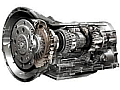
Notice that the stock steel pan isn't flat. The stock pan has a funky shape, with a thimble like deep well in only one small spot, as opposed to having the same deep depth throughout the entire bottom of the pan.
While it seems logical at first glance that there would be no ground clearance lost, and only more fluid volume gained, by making the entire pan as deep as the thimble well that concentrates the low point into one small spot, some "deeper" thought into why Ford designed the stock pan the way they did might cause one to upshift the first glance logic, into higher thinking. Like hills. Steep hills. Or better yet, even steeper driveways, where the percentage grade isn't ameliorated by fuel tax dollars carving down the earth.
As fluid always seeks it's own level, the fluid in a deep and wide pan can pool in the corner of the pan opposing the pickup snorkel of the internal pan screen/filter. Ford designs the pans specifically for the filter snorkel position. Later transmissions, such as the 5R110W, that have the same pan gasket interface and profile as the 4R100, have a different internal filter, and thus have a different pan bottom contour, to concentrate fluid around the filter snorkel at any operational angle, compound or otherwise.
Something to think about.
I have a stock pan with a drain plug. I've measured the transmission cooling return circuit flow to be 1 gallon per minute.
If I had a big aftermarket aluminum transmission pan that held 4 more quarts of fluid, then any benefit from the additional fluid might buy me 1 more minute of time. That is not an impressive benefit.
Aluminum is a great thermal conductor. We see aluminum used as heat sinks just about everywhere in electronics. Aluminum is used in aftermarket transmission pans under the theory that the aluminum will absorb some of the heat from the transmission fluid. The directionality of thermal conduction is toward the state of equilibrium in temperature.
However, this great aluminum conductor (aftermarket transmission pan) is immediately adjacent to the Diesel Oxidation Catalyst (if equipped), or the turbo down pipe. "Hot" Transmission fluid is somewhere between 220°F to 240°F. Hot exhaust fighting through a DOC or flowing through a downpipe is 600°F to 1,200°F, which is a lot hotter than 200°F. If heat is being conducted by the aluminum heat sink to a state of thermal equilibrium, is that pan conducting the 6X higher temperature exhaust heat radiating in close proximity to the pan, into the 6X cooler temperature transmission fluid?
I don't know the answer to that question, but I have observed that even where OEMs design cast aluminum oil pans for their engines, the same OEMs have not specified cast aluminum oil pans for transmissions in body on frame rear wheel drive vehicles.
Yet these same OEMs have upgraded transmission cooling solutions... first by adding back oil to water transmission coolers when they were temporarily thrifted out, then by increasing the size of oil to air transmission coolers, then by increasing the effectiveness in the design of the oil to air transmission coolers, then by taking advantage of water being a more efficient cooling medium than air, and switching to independent oil to water transmission coolers on vehicles with two independent cooling circuit systems. So it isn't like the OEMs are holding back in devoting engineering and manufacturing costs to produce improvements in transmission cooling. Yet the OEMs are not installing larger aluminum transmission pans.
Something else to think about.

Thread
Thread Starter
Forum
Replies
Last Post
justcruzin125
1987 - 1996 F150 & Larger F-Series Trucks
18
Feb 8, 2016 05:38 PM
JustinAK5
1999 - 2016 Super Duty
7
Mar 26, 2015 06:55 PM


