


Windshield Icing on the Inside ???

Thread Starter
|
More Turbo


Joined: Jan 2007
Posts: 622
Likes: 55
Okay, after my initial flushing of the heater-core, it stopped flowing again.
With some cold weather predicted in the near future, I decided I had better address the situation.
I intended to purchase two bottles of Blue Devil Radiator Flush; but, the local store only had a single bottle; so, I got that single bottle and a quart bottle of Prestone Total Cooling System Cleaner - also the only one they had.
I first used the Prestone and followed it up with the Blue Devil; I was afraid to put both bottles in my 7-gallon system at the same time as I was afraid of creating something bad if the two were incompatible.
In plain bold English, the Prestone says "Sodium Citrate"; I figure that is the active ingredient.
I have carefully read every word printed on the Blue Devil and nowhere does it say anything, not even a hint, as to what it consists of..
I opened the radiator drain and disconnected both heater-hoses.
I flushed the heater-core back-and-forth countless times.
I flushed through the engine side of the heater-hoses, switching from one to the other, over and over again.
I closed everything, filled with plain water, and let the engine run an hour or so; for the first half hour, the metal valve in the outlet heater-hose was hot as a branding-iron; and then, the core plugged again and the hoses became cold.
Drained everything and more flushing and back-flushing, many times over.
NOW, I closed everything and added the 32-ounce bottle of Prestone Total Cooling System Cleaner and filled with water; I ran the engine at a semi-fast idle for some four hours.
Twice during this episode, the heater-core plugged and stopped circulating; each time, it was a simple matter to close the valves, unscrew the hose-ends, and flush out the core; button everything back up, fire up the engine, and continue the Prestone cycle.
After four hours running, I let things sit all night with the Prestone still in the system.
The next morning, I drained out the Prestone mix.
I was rather disappointed in what drained out; the water was a bit dingy and that was all.
Now, I started my water-hose flushing again, giving everything another back-and-forth and back-and-forth thorough flushing.
I closed up everything and added the quart of Blue Devil Radiator Flush and filled with water.
I ran the engine for two hours, checking the heater-hoses every fifteen minutes; the metal valve in the outlet line remained branding-iron hot the entire time.
Instructions on both brands say for a quick flush to run the engine ten minutes = HOGWASH --- in 68° outside temperature, it takes a measured thirty minutes before the thermostat opens the first time; that held true each time I ran the cold engine.
NOW, we have a different story = I opened the drain and it looked like strong Maxwell House Coffee pouring out.
I back-flushed the heater-core and the stuff that came out of there was scary looking --- and this after numerous plain water flushings and a round of Prestone Cleaner.
Forcing high-pressure hose water through the engine side heater-hose ports, switching from one to the other and back-and-forth, and allowing it to puke out the radiator neck, it took forever before the water finally cleared up; but, I didn't stop there, not by a long shot; I wanted things flushed and all problems gone.
Guess which radiator flush I will be recommending from now on...
All in all, I would be safe in saying that I put a minimum of 300-gallons of water through everything and probably closer to five- or six-hundred gallons.
I did my best to evacuate all traces of well-water, sucking with the shop-vac and blowing with compressed air, until everything was as dry as I could get it.
I mixed the new Peak 10-year concentrate 50/50 with Clover-Valley distilled water and filled her to the top of the neck.
By then it was dark as Miller's Cave and by the time I got all the various tools packed in it started a monsoon, thundering ferociously, lightning continuously, wind blowing hard, and the rain driving down.
I did not have opportunity to run the engine with the new coolant.
With some cold weather predicted in the near future, I decided I had better address the situation.
I intended to purchase two bottles of Blue Devil Radiator Flush; but, the local store only had a single bottle; so, I got that single bottle and a quart bottle of Prestone Total Cooling System Cleaner - also the only one they had.
I first used the Prestone and followed it up with the Blue Devil; I was afraid to put both bottles in my 7-gallon system at the same time as I was afraid of creating something bad if the two were incompatible.
In plain bold English, the Prestone says "Sodium Citrate"; I figure that is the active ingredient.
I have carefully read every word printed on the Blue Devil and nowhere does it say anything, not even a hint, as to what it consists of..
I opened the radiator drain and disconnected both heater-hoses.
I flushed the heater-core back-and-forth countless times.
I flushed through the engine side of the heater-hoses, switching from one to the other, over and over again.
I closed everything, filled with plain water, and let the engine run an hour or so; for the first half hour, the metal valve in the outlet heater-hose was hot as a branding-iron; and then, the core plugged again and the hoses became cold.
Drained everything and more flushing and back-flushing, many times over.
NOW, I closed everything and added the 32-ounce bottle of Prestone Total Cooling System Cleaner and filled with water; I ran the engine at a semi-fast idle for some four hours.
Twice during this episode, the heater-core plugged and stopped circulating; each time, it was a simple matter to close the valves, unscrew the hose-ends, and flush out the core; button everything back up, fire up the engine, and continue the Prestone cycle.
After four hours running, I let things sit all night with the Prestone still in the system.
The next morning, I drained out the Prestone mix.
I was rather disappointed in what drained out; the water was a bit dingy and that was all.
Now, I started my water-hose flushing again, giving everything another back-and-forth and back-and-forth thorough flushing.
I closed up everything and added the quart of Blue Devil Radiator Flush and filled with water.
I ran the engine for two hours, checking the heater-hoses every fifteen minutes; the metal valve in the outlet line remained branding-iron hot the entire time.
Instructions on both brands say for a quick flush to run the engine ten minutes = HOGWASH --- in 68° outside temperature, it takes a measured thirty minutes before the thermostat opens the first time; that held true each time I ran the cold engine.
NOW, we have a different story = I opened the drain and it looked like strong Maxwell House Coffee pouring out.
I back-flushed the heater-core and the stuff that came out of there was scary looking --- and this after numerous plain water flushings and a round of Prestone Cleaner.
Forcing high-pressure hose water through the engine side heater-hose ports, switching from one to the other and back-and-forth, and allowing it to puke out the radiator neck, it took forever before the water finally cleared up; but, I didn't stop there, not by a long shot; I wanted things flushed and all problems gone.
Guess which radiator flush I will be recommending from now on...
All in all, I would be safe in saying that I put a minimum of 300-gallons of water through everything and probably closer to five- or six-hundred gallons.
I did my best to evacuate all traces of well-water, sucking with the shop-vac and blowing with compressed air, until everything was as dry as I could get it.
I mixed the new Peak 10-year concentrate 50/50 with Clover-Valley distilled water and filled her to the top of the neck.
By then it was dark as Miller's Cave and by the time I got all the various tools packed in it started a monsoon, thundering ferociously, lightning continuously, wind blowing hard, and the rain driving down.
I did not have opportunity to run the engine with the new coolant.

Lead Driver

Joined: Nov 2013
Posts: 7,173
Likes: 1,173
But hoo boy, I've got to wonder what's in your well water. Does the plumbing glow in the dark? Do you experience joint pain or a burning sensation after taking a shower? Has your tap water ever caught fire?
Thread Starter
|
More Turbo
Joined: Jan 2007
Posts: 622
Likes: 55
Dang! Is your house built on top of an old toxic waste dump? I've always just run half Prestone concentrate and half tap (municipal) water. Never had a problem in years.
But hoo boy, I've got to wonder what's in your well water. Does the plumbing glow in the dark? Do you experience joint pain or a burning sensation after taking a shower? Has your tap water ever caught fire?
But hoo boy, I've got to wonder what's in your well water. Does the plumbing glow in the dark? Do you experience joint pain or a burning sensation after taking a shower? Has your tap water ever caught fire?
I have been adamant about only ever using distilled water in it and that seems to have been a useless endeavor according to the crap that came out of the system.
The well-water that I used for flushing was the first well-water ever introduced into the system.
The crap that came out for certain didn't come from the well.
Lead Driver
Joined: Nov 2013
Posts: 7,173
Likes: 1,173
Ah, I was less correct than usual. I thought you had been running a mix of well water and antifreeze concentrate.
In that case, what do you think is the source of the crud?
In that case, what do you think is the source of the crud?

Moderator


Joined: Jan 2001
Posts: 56,980
Likes: 2,735
From: Virginia

Okay, after my initial flushing of the heater-core, it stopped flowing again.
With some cold weather predicted in the near future, I decided I had better address the situation.
I intended to purchase two bottles of Blue Devil Radiator Flush; but, the local store only had a single bottle; so, I got that single bottle and a quart bottle of Prestone Total Cooling System Cleaner - also the only one they had.
I first used the Prestone and followed it up with the Blue Devil; I was afraid to put both bottles in my 7-gallon system at the same time as I was afraid of creating something bad if the two were incompatible.
In plain bold English, the Prestone says "Sodium Citrate"; I figure that is the active ingredient.
I have carefully read every word printed on the Blue Devil and nowhere does it say anything, not even a hint, as to what it consists of..
I opened the radiator drain and disconnected both heater-hoses.
I flushed the heater-core back-and-forth countless times.
I flushed through the engine side of the heater-hoses, switching from one to the other, over and over again.
I closed everything, filled with plain water, and let the engine run an hour or so; for the first half hour, the metal valve in the outlet heater-hose was hot as a branding-iron; and then, the core plugged again and the hoses became cold.
Drained everything and more flushing and back-flushing, many times over.
NOW, I closed everything and added the 32-ounce bottle of Prestone Total Cooling System Cleaner and filled with water; I ran the engine at a semi-fast idle for some four hours.
Twice during this episode, the heater-core plugged and stopped circulating; each time, it was a simple matter to close the valves, unscrew the hose-ends, and flush out the core; button everything back up, fire up the engine, and continue the Prestone cycle.
After four hours running, I let things sit all night with the Prestone still in the system.
The next morning, I drained out the Prestone mix.
I was rather disappointed in what drained out; the water was a bit dingy and that was all.
Now, I started my water-hose flushing again, giving everything another back-and-forth and back-and-forth thorough flushing.
I closed up everything and added the quart of Blue Devil Radiator Flush and filled with water.
I ran the engine for two hours, checking the heater-hoses every fifteen minutes; the metal valve in the outlet line remained branding-iron hot the entire time.
Instructions on both brands say for a quick flush to run the engine ten minutes = HOGWASH --- in 68° outside temperature, it takes a measured thirty minutes before the thermostat opens the first time; that held true each time I ran the cold engine.
NOW, we have a different story = I opened the drain and it looked like strong Maxwell House Coffee pouring out.
I back-flushed the heater-core and the stuff that came out of there was scary looking --- and this after numerous plain water flushings and a round of Prestone Cleaner.
Forcing high-pressure hose water through the engine side heater-hose ports, switching from one to the other and back-and-forth, and allowing it to puke out the radiator neck, it took forever before the water finally cleared up; but, I didn't stop there, not by a long shot; I wanted things flushed and all problems gone.
Guess which radiator flush I will be recommending from now on...
All in all, I would be safe in saying that I put a minimum of 300-gallons of water through everything and probably closer to five- or six-hundred gallons.
I did my best to evacuate all traces of well-water, sucking with the shop-vac and blowing with compressed air, until everything was as dry as I could get it.
I mixed the new Peak 10-year concentrate 50/50 with Clover-Valley distilled water and filled her to the top of the neck.
By then it was dark as Miller's Cave and by the time I got all the various tools packed in it started a monsoon, thundering ferociously, lightning continuously, wind blowing hard, and the rain driving down.
I did not have opportunity to run the engine with the new coolant.
With some cold weather predicted in the near future, I decided I had better address the situation.
I intended to purchase two bottles of Blue Devil Radiator Flush; but, the local store only had a single bottle; so, I got that single bottle and a quart bottle of Prestone Total Cooling System Cleaner - also the only one they had.
I first used the Prestone and followed it up with the Blue Devil; I was afraid to put both bottles in my 7-gallon system at the same time as I was afraid of creating something bad if the two were incompatible.
In plain bold English, the Prestone says "Sodium Citrate"; I figure that is the active ingredient.
I have carefully read every word printed on the Blue Devil and nowhere does it say anything, not even a hint, as to what it consists of..
I opened the radiator drain and disconnected both heater-hoses.
I flushed the heater-core back-and-forth countless times.
I flushed through the engine side of the heater-hoses, switching from one to the other, over and over again.
I closed everything, filled with plain water, and let the engine run an hour or so; for the first half hour, the metal valve in the outlet heater-hose was hot as a branding-iron; and then, the core plugged again and the hoses became cold.
Drained everything and more flushing and back-flushing, many times over.
NOW, I closed everything and added the 32-ounce bottle of Prestone Total Cooling System Cleaner and filled with water; I ran the engine at a semi-fast idle for some four hours.
Twice during this episode, the heater-core plugged and stopped circulating; each time, it was a simple matter to close the valves, unscrew the hose-ends, and flush out the core; button everything back up, fire up the engine, and continue the Prestone cycle.
After four hours running, I let things sit all night with the Prestone still in the system.
The next morning, I drained out the Prestone mix.
I was rather disappointed in what drained out; the water was a bit dingy and that was all.
Now, I started my water-hose flushing again, giving everything another back-and-forth and back-and-forth thorough flushing.
I closed up everything and added the quart of Blue Devil Radiator Flush and filled with water.
I ran the engine for two hours, checking the heater-hoses every fifteen minutes; the metal valve in the outlet line remained branding-iron hot the entire time.
Instructions on both brands say for a quick flush to run the engine ten minutes = HOGWASH --- in 68° outside temperature, it takes a measured thirty minutes before the thermostat opens the first time; that held true each time I ran the cold engine.
NOW, we have a different story = I opened the drain and it looked like strong Maxwell House Coffee pouring out.
I back-flushed the heater-core and the stuff that came out of there was scary looking --- and this after numerous plain water flushings and a round of Prestone Cleaner.
Forcing high-pressure hose water through the engine side heater-hose ports, switching from one to the other and back-and-forth, and allowing it to puke out the radiator neck, it took forever before the water finally cleared up; but, I didn't stop there, not by a long shot; I wanted things flushed and all problems gone.
Guess which radiator flush I will be recommending from now on...
All in all, I would be safe in saying that I put a minimum of 300-gallons of water through everything and probably closer to five- or six-hundred gallons.
I did my best to evacuate all traces of well-water, sucking with the shop-vac and blowing with compressed air, until everything was as dry as I could get it.
I mixed the new Peak 10-year concentrate 50/50 with Clover-Valley distilled water and filled her to the top of the neck.
By then it was dark as Miller's Cave and by the time I got all the various tools packed in it started a monsoon, thundering ferociously, lightning continuously, wind blowing hard, and the rain driving down.
I did not have opportunity to run the engine with the new coolant.
Thread Starter
|
More Turbo
Joined: Jan 2007
Posts: 622
Likes: 55
I haven't the foggiest idea.
I haven't documented the brand/type of every bit of antifreeze that has been added over the years; but, about anything full-strength one can find around here says compatible with all vehicles and mixes with all coolants; it is a far-fetched speculation that maybe some incompatibility of the antifreeze or just the nature of the antifreeze to clabber up after a while is all I can figure.
I let it run this evening for about an hour to check for leaks, 38° outside; the thermostat finally did open after almost an hour.
Almost as soon as the engine started, I could feel the heater-hoses getting warm and the metal valves in them were hot as blazes pretty soon after starting and remained so until I shut it off.
I didn't see any leaks anywhere; for now, I am going to call it Mission Accomplished.
I haven't documented the brand/type of every bit of antifreeze that has been added over the years; but, about anything full-strength one can find around here says compatible with all vehicles and mixes with all coolants; it is a far-fetched speculation that maybe some incompatibility of the antifreeze or just the nature of the antifreeze to clabber up after a while is all I can figure.
I let it run this evening for about an hour to check for leaks, 38° outside; the thermostat finally did open after almost an hour.
Almost as soon as the engine started, I could feel the heater-hoses getting warm and the metal valves in them were hot as blazes pretty soon after starting and remained so until I shut it off.
I didn't see any leaks anywhere; for now, I am going to call it Mission Accomplished.
Thread Starter
|
More Turbo
Joined: Jan 2007
Posts: 622
Likes: 55
I went through this same thing with a little ranger pickup with a v6. When I finally got it cleaned out, everything was ok for a couple of weeks, then I noticed a coolant leak. It was one of the freeze plugs in the engine. Put a rubber one in, and that stopped for a couple of weeks and then another one started seeping. Put a rubber one in it. Couple of months later, one of the rubber ones popped out on me. Got it back in but didn't want to stay. So I finally pulled the engine and replaced all the freeze plugs. They were very rusty. Glad I pulled the engine, this particular engine has a freeze plug behind the bellhousing, and you could tell it was starting to seep also.
Lead Driver
Joined: Nov 2013
Posts: 7,173
Likes: 1,173

FTE Stories
Ford Trucks for Ford Truck Enthusiasts

2027 Ford Super Duty Buyer's Guide (Every Model, Engine, & Package)
Brett Foote
Top 10 Ford Truck Tragedies
Joe Kucinski
AEV FXL Super Duty - the Super Duty Raptor Ford Doesn't Make
Brett Foote
Lobo Vs Lobo: Proof the F-150 Lobo Should Be Even Lower!
Michael S. Palmer
Ford's 2001 Explorer Sportsman Concept Looks For a New Home
Verdad Gallardo
10 Best Ford Truck Engines We Miss the Most!
Joe Kucinski
2026 Shelby F-150 Off-Road: Better Than a Raptor R?
Brett Foote
2027 Super Duty Carhartt Package First Look: 12 Things You NEED to Know!
Michael S. Palmer
10 Most Surprising 2026 Ford Truck Features!
Joe Kucinski
Lead Driver
Joined: Nov 2013
Posts: 7,173
Likes: 1,173
Glad to hear you've solved the heat side of the equation.
Don't forget the airflow problem, with the evaporator icing over. The most likely culprit there is low refrigerant or a pressure switch in need of a slight adjustment.
Don't forget the airflow problem, with the evaporator icing over. The most likely culprit there is low refrigerant or a pressure switch in need of a slight adjustment.
Thread Starter
|
More Turbo
Joined: Jan 2007
Posts: 622
Likes: 55
For now, I am most happy with the A/C clutch unplugged.
I do understand the theory; but, I believe it is hogwash to have the A/C running when one wants hot defrost; all of my non-A/C trucks have always had better defrost than any of my A/C trucks so I am not seeing the advantage.
I will probably put a kill-switch on the A/C clutch wiring so I can kill the feature from the driver seat.
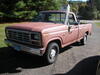
I think something can be learned from the fact that the older the truck the better the heater; my 1978 Chevrolet is better heat than this 1985 Ford; the 1972 Ford is better than the Chevy; and, the 1964 GMC outperforms them all in the heat category.
Lead Driver
Joined: Jun 2013
Posts: 5,662
Likes: 1,159
From: Tolland, CT
R134a...Is that what you changed your AC system over too ?
It's been a while, but didn't the R134a come about in the 90's ? I seem to recall you had to make some changes to use it in older vehicles... ?
The idea for AC when in defrost is to remove moisture from the air, every newer car for many years do that. Here in New England where during winter you get in the car with snow on your feet. As that snow melts, it leaves moisture in the car, which can cause the moisture to freeze on the inside. After skiing, on the short drive back to the house, the snow melts off them and sit's on the rubber mat in the back of my Outback. It will freeze overnight, then melt during the next day in the snow. I keep a towel back there to soak it up.
Even with the AC running it will blow hot air depending on where the temp selector is set to.
It's been a while, but didn't the R134a come about in the 90's ? I seem to recall you had to make some changes to use it in older vehicles... ?
The idea for AC when in defrost is to remove moisture from the air, every newer car for many years do that. Here in New England where during winter you get in the car with snow on your feet. As that snow melts, it leaves moisture in the car, which can cause the moisture to freeze on the inside. After skiing, on the short drive back to the house, the snow melts off them and sit's on the rubber mat in the back of my Outback. It will freeze overnight, then melt during the next day in the snow. I keep a towel back there to soak it up.
Even with the AC running it will blow hot air depending on where the temp selector is set to.
Thread Starter
|
More Turbo
Joined: Jan 2007
Posts: 622
Likes: 55
I can sort of remember when it had real genuine R12 and would freeze the kneecaps off a brass monkey; it has been R134a for many years.
Just curious, what else could it have been ?
Just curious, what else could it have been ?
Thread Starter
|
More Turbo
Joined: Jan 2007
Posts: 622
Likes: 55
Well....., I have run against a HUGE SNAG
It is just a miracle that I tested my new coolant mix; that fancy high-dollar PEAK is weak as water.
I don't know even if they mistakenly put pre-mix in the full-strength jugs and then I split it again 50/50 with distilled water whether it could test so low.
It is just a miracle that I tested my new coolant mix; that fancy high-dollar PEAK is weak as water.
I don't know even if they mistakenly put pre-mix in the full-strength jugs and then I split it again 50/50 with distilled water whether it could test so low.

Thread
Thread Starter
Forum
Replies
Last Post
SC'79
1973 - 1979 F-100 & Larger F-Series Trucks
2
Jan 14, 2013 11:12 PM
Dofunny
1980 - 1986 Bullnose F100, F150 & Larger F-Series Trucks
3
Oct 7, 2004 12:19 AM