When you click on links to various merchants on this site and make a purchase, this can result in this site earning a commission. Affiliate programs and affiliations include, but are not limited to, the eBay Partner Network.
Hi there Folks,
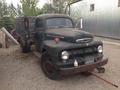
I have also posted this over at Ford Barn as well for advice: Need some advice on what procedure and how & what products I need to prep my M47 Pickup chassis before applying an etch primer?
I don't have access to any sand blasting equipment so just keen to know the best alternative to remove surface oxidation, dirt & grime and what detergent to use prior to etch priming etc?
Thanks
The answer to your question may be a bit more involved than you might think. Etch primer may or may not be the best product for your needs, either. Please elaborate on what your project is, where you are on the job, and what your intended goals are? Is your frame already stripped down to bare rails? Typically an etch primer is used as an in between product to something else, either a high build primer (which typically isn't necessary or desired to use on a frame) or sealer and paint. It's commonly used what's known as wet-on-wet, so once applied, after the recommended flash time you apply something else over it right away. If you're not prepared to go the next steps and see the project through to finish when applying your etch prime, ie; other primer or finish paint, it may not be the best product for your needs. It's also designed to go over clean and properly prepared bare metal, not rust, other paint, primers or coatings, new or old. The product information sheet for the material you plan to use is going to be the best source of information to tell you exactly what that means.
Sandblasting and cleaning is a good preparation. You may not have personal access to the equipment, but there's probably more than one place near you that does sandblasting, and it probably wouldn't cost a lot. It's difficult and extremely time consuming to clean and prep all the nooks and crannies in a frame with all the hidden areas between the crossmembers and rails, and sandblasting can get in there a lot better than your fingers and a piece of sandpaper. If you insist on doing it yourself, you could spend a couple days scraping and cleaning the dirt and grease, scrubbing with solvent, followed by a grinder and a few hundred dollars worth of Rolox discs. Once you're prepped and ready for paint, a good direct to metal epoxy sealer followed by paint will be sufficient and eliminate the need and expense for an etch prime.
So while this may be more info than you bargained for, I hope it gives you something to consider, and was helpful.
Excellent reply 52Merc . The one thing I might add that there are numerous self etching primers - sealers which of course you need to read the info sheet .
Great reply 52Merc, thanks.
I haven't yet made a start on cleaning the bare chassis but was looking for mechanical ways to smarten up the steel before priming without sandblasting. Also is there a method of cleaning bare metal before priming. I always thought that an etch primer would attach to bare steel due to a mild chemical reaction? I don't mind some manual labour to bring the chassis back to clean metal before priming but the thing is what is the best method?
Sure, like I mentioned, you can start by steam cleaning or pressure washing the bare chassis, after you remove the drivetrain, springs and axles, and any other ancillary parts. Then you're looking at hand scraping the entire everything to remove any other left over dirt and grease, which there will be. Then you can pressure wash it all again to clean it. This is all a good idea to do before sandblasting, as well. It will make the sandblasting go easier, faster, which means cheaper, and leave you with a better product. After that, your better choices for mechanical stripping is wire brushes/wheels, roloc discs on a small had grinder, any type of small power tool that will get the job done. (I don't recommend wire wheels because those little wire barbs will fly off and take out your eyes. They have a nasty habit of finding the space between your face and safety glasses and get you hard.) I think you can get the idea. There's no miracle tool that does this.
Yes, etch primer bonds chemically with acid to bare steel, but only bare, clean steel. There's no short cut and expecting success there. Its purpose is to help other primer stick to metal better. It was created as a replacement to washing parts with acid etch metal prep liquids and the messy clean up necessary, and the flash rust that comes with it. Some of your fill primers stick good to filler, but have a tougher time sticking to bare metal. For car bodies after doing all your filler work, a quick shot of etch primer before fill primer is a good thing. It's not so necessary on a frame as there's better plans of attack to make paint stick, as mentioned above.
If you have access to a pressure washer then you have access to a sand blaster. I have an attachment sand blasting wand for my pressure washer. They are inexpensive and do a great job. I did my frame, cab, fenders and bed with it. With the water you don't have to worry about heat warping the sheet metal. I would look into one if you have a pressure washer. I did nothing special to the metal after blasting and it has been at least 7 years and the bare metal has not even flash rusted, just kept it covered through the winters here (tons of snow and some rain.)
Sure, like I mentioned, you can start by steam cleaning or pressure washing the bare chassis, after you remove the drivetrain, springs and axles, and any other ancillary parts. Then you're looking at hand scraping the entire everything to remove any other left over dirt and grease, which there will be. Then you can pressure wash it all again to clean it. This is all a good idea to do before sandblasting, as well. It will make the sandblasting go easier, faster, which means cheaper, and leave you with a better product. After that, your better choices for mechanical stripping is wire brushes/wheels, roloc discs on a small had grinder, any type of small power tool that will get the job done. (I don't recommend wire wheels because those little wire barbs will fly off and take out your eyes. They have a nasty habit of finding the space between your face and safety glasses and get you hard.) I think you can get the idea. There's no miracle tool that does this.
Yes, etch primer bonds chemically with acid to bare steel, but only bare, clean steel. There's no short cut and expecting success there. Its purpose is to help other primer stick to metal better. It was created as a replacement to washing parts with acid etch metal prep liquids and the messy clean up necessary, and the flash rust that comes with it. Some of your fill primers stick good to filler, but have a tougher time sticking to bare metal. For car bodies after doing all your filler work, a quick shot of etch primer before fill primer is a good thing. It's not so necessary on a frame as there's better plans of attack to make paint stick, as mentioned above.
If you have access to a pressure washer then you have access to a sand blaster. I have an attachment sand blasting wand for my pressure washer. They are inexpensive and do a great job. I did my frame, cab, fenders and bed with it. With the water you don't have to worry about heat warping the sheet metal. I would look into one if you have a pressure washer. I did nothing special to the metal after blasting and it has been at least 7 years and the bare metal has not even flash rusted, just kept it covered through the winters here (tons of snow and some rain.)
I like your idea of a pressure washer with a sand blaster. Do you have link that describes what the sandblasting attachment looks like? Thanks again.
The attachment I bought came from Northern Tool about 25 years ago but they still sell them.. The link is the same one I have but at half the price of what Northern Tool sells them for. Do a search for pressure washer sandblasting attachment and several will pop up. You might need a different one depending on the fittings on your pressure washer. I use kiln dried #30 sand and it gives a great metal finish. If you look in my albums there are several photos of my blasted frame.
Hey @48m47. Just food for thought.
Yes, you want to clean and paint the frame, if for no other reason, then it is so much nicer to work on.
The other reasons are rather dubious and mostly aesthetic, it looks good but that's about all.
My first project back when dirt was invented I acid etched the frame, mostly because I owned an auto parts store.
Each next project got less and less love until my last one that got slopped on tremclad. The same net result.
As you get older and the time left becomes a issue wasting it on a frame that no one is going to see becomes a problem.
The truth of the matter is that the first time you drive on a gravel road in a rain storm your frame is covered in mud.
This Hennessey Takes the Expedition Tremor's Off-Roading Capability to the Next Level
Slideshow: The VelociRaptor Expedition gains a lift, upgraded suspension, Brembo brakes, and trail-ready equipment while retaining the stock 440-horsepower EcoBoost V6.
Rezvani's Latest Post-Apocalyptic Monster Is a Ford F-150 Raptor Underneath
Slideshow: Called the Fortress, the 850-horsepower pickup combines Raptor underpinnings with military-inspired features, survival equipment, and a starting price of $285,000.