When you click on links to various merchants on this site and make a purchase, this can result in this site earning a commission. Affiliate programs and affiliations include, but are not limited to, the eBay Partner Network.
Yesterday my new starter went in successfully. Today I started the truck once now it won’t turn on. The starter makes a loud noise but dosent fire the bendix to engage the flywheel. It has 12.8 to the starter. Just tried to start it by placing the solenoid wire to the battery terminal as I be done in the past with the same result.
thanks for the help
Is the ring gear all chewed up? I've seen that on cars that had a bad starter and multiple attempts at starting the engine resulted in a few inches of ring gear teeth were missing. Only cure after that is remove transmission and replace ring gear.
Other than that, carry a breaker bar to turn the engine over a few degrees to get the bad part of the ring gear away from the starter bendix and then the starter will engage with the good teeth.
You probably need to check the trigger wire for voltage while the ignition is engaged. You my not be getting full voltage to activate the solenoid . That or the battery cables are full of corrosion and not allowing enough current through to do the work. Have you tried jumping the truck? I had a Chevy once upon a time that the cables corroded all the way through and would start cold but not hot. Hook up jumper cables and it would start hot.
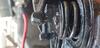
Edit: Mystery solved while I hunt and pecked it appears. Good call Kwik.
Is the ring gear all chewed up? I've seen that on cars that had a bad starter and multiple attempts at starting the engine resulted in a few inches of ring gear teeth were missing. Only cure after that is remove transmission and replace ring gear.
Yep. A v-8 will chew off teeth every 90 degrees for two reasons: 1. They're where the engine stops rotating after shut-off due to compression strokes, and 2. They're where most of the strain is while cranking due to compression.
Yep. A v-8 will chew off teeth every 90 degrees for two reasons: 1. They're where the engine stops rotating after shut-off due to compression strokes, and 2. They're where most of the strain is while cranking due to compression.
Might be a dumb question, but do inline-6 motors have this issue as well, or not so much?
























 https://youtu.be/fWFfFYZGW_4