When you click on links to various merchants on this site and make a purchase, this can result in this site earning a commission. Affiliate programs and affiliations include, but are not limited to, the eBay Partner Network.
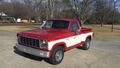
Ok so I have a 1995 4.9 with e40d and 4x4. I think I’m going to buy 19lb injectors and a micro squirt ecu. Does anyone have an idea of what I might feel in increase of performance and does anyone see any obviously adverse effects??
What are the stock size injectors?
Why do you feel the need to go larger are you running a larger cam headers and 3" exh pipes?
If so then maybe I can see going larger and because the factory ECU can not be "chipped" is why the Micro Squirt ECU?
If everything is factory stock then to only thing I know for sure will happen is you will have less money in your pocket and maybe less MPG.
What do others have to say?
Dave ----
What are the stock size injectors?
Why do you feel the need to go larger are you running a larger cam headers and 3" exh pipes?
If so then maybe I can see going larger and because the factory ECU can not be "chipped" is why the Micro Squirt ECU?
If everything is factory stock then to only thing I know for sure will happen is you will have less money in your pocket and maybe less MPG.
What do others have to say?
Dave ----
thank you and I was doing it cause I plan to build a 4.9 in the future and was just wanting to play around with the micro squirt and I’ve heard the 4.9 already run a tad lean. The stock injectors are 14 but the 4.9 have a high fuel pressure so the run like 19. I have the stock efi split manifold running to the first car then from that back it’s 4” exhaust I just had laying around I threw on for fun. I was hoping to see if I could squeeze a little more hp out of it. Do you think it might be worth my time to get a “cheap” cam such as a compliment cam?
I would say unless you are using a AFR gauge and know if you are running lean or rich it is just a crap shoot on the tune and what tweaks can be made.
The other think you need is a base line what the motor / truck can do before any work is done.
With out this black & white base line you will never know if the last thing you did helped (more power) or hurt (less power).
Say you change timing how will you know if it did any good or not?
Dyno runs would be the best but can run $$$$$
Drag strip runs is another way but the tracks can be far away (mine were 2+ hr one way).
Last would be 0 to 60 MPH times and MPG for a few tanks after a change.
Good luck
Dave ----
Do you think it might be worth my time to get a “cheap” cam such as a compliment cam?
The stock cam has a 268 degree .006" duration and is set with the intake lobe center at 114 degrees which is 4 degrees retarded. The intake valve closes 68 degrees ABDC.
Most moderate performance aftermarket cams have less .006" duration and are installed 4 degrees advanced which closes the intake valve sooner than 68 degrees ABDC.
The result is a higher Dynamic Compression Ratio and you will have problems with detonation.
It would still be a good idea to get the micro squirt ecu up and running now for your future engine build where you can match the engines compression ratio to the cam you want to use.
there is a local university that ill be going to next year that i think has a dyno. i might see of a friend or i can bring my truck and get some dyno runs
so there isnt really cam that is moderate enough to not cause problems or big enough to boost performance?
or did i misinterperute what you said.
I will be more specific which should help.
From all the Ford 300/4.9 engine builds that have been done on the Fordsix.com forum we know the following.
The max Dynamic Compression Ratio for the 300 six is 7.0 to 7.5 for 87 to 91 octane pump gas respectively to prevent detonation.
The DCR is calculated using the .006" cam lobe closing point for the intake valve.
The stock cam closes the intake valve at 68 degrees ABDC.
The Ford 4.9 EFI engine from 1987 to 1996 has an 8.8 Static compression ratio which results in a 6.9 DCR with the stock cam so it can run on low octane pump gas.
Most moderate duration aftermarket cams close the intake valve before 68 degrees ABDC so they would require a lower static compression ratio to run on 87 octane pump gas.
The other option is to use a higher octane pump gas depending on the cam profile.
As the cam profiles increase in duration there will be a point where the 8.8 stock EFI engine compression ratio is OK with 87 octane pump gas.
For example: Most of the aftermarket cams that have a 220 degree .050" duration fit that category.
Those cams produce power from 1000 to 5000 rpm with a ported head.
What this means is that you decide what type of power band you want, then you select the cam that fits that need and then you calculate what the compression ratio needs to be to run on the pump gas octane you wish to use.
I hope this helps
oks so the problem is having detonation. Is that a problem with just the stocke ecu or would i probably have it with the microsquirt as well? Also with the cam it sounded like you said the avoid detonation i could run 87 or 93 fuel? If you were in my situation and doing exactly what im doing (miscorsquirt,19lb injectors,and cam) what cam would u instal in if any? IS using the Melling MTF-6 RV/TORQUE cam an option or the custom ground cam you had made?
?
The Microsquirt would allow you to adjust the ignition timing curve to help if detonation occurs.
It will also allow you to use a wide band O2 sensor for closed loop control over the entire power band for better fuel control.
Along with the 19 lb injectors the engine will have a higher power limit than with the stock 14 lb injectors.
The Melling MTF-6 RV/TORQUE cam has a very long 281 degree advertised intake duration and will work if it is installed 2 degrees advanced at the most.
The main objective for the cam I customized was to work with the stock ECU. The compression was lowered a little by increasing the combustion chamber volume in the head just to be sure it would run on 87 octane pump gas.
Do you care which octane pump gas you use?
What type of power would you eventually like to have?
Will you be doing a complete rebuild later on?
The Microsquirt would allow you to adjust the ignition timing curve to help if detonation occurs.
It will also allow you to use a wide band O2 sensor for closed loop control over the entire power band for better fuel control.
Along with the 19 lb injectors the engine will have a higher power limit than with the stock 14 lb injectors.
The Melling MTF-6 RV/TORQUE cam has a very long 281 degree advertised intake duration and will work if it is installed 2 degrees advanced at the most.
The main objective for the cam I customized was to work with the stock ECU. The compression was lowered a little by increasing the combustion chamber volume in the head just to be sure it would run on 87 octane pump gas.
Do you care which octane pump gas you use?
What type of power would you eventually like to have?
Will you be doing a complete rebuild later on?
I have definatly been doing some looking into alot about this. And no if i have to pump 93 so be it ill be fine if it alows the cam to work. Eventully with a full build im hoping 400+ (i hope that isnt wishfull thinking) and yes im going to college next year so it might be during or after that it actually gets built but thats the hp im hoping with the engine. (from what ive seen it should hopefullly be possible esspecially with boost, which i will be doing.)
Also i was looking at some crower cams, do you think either of these are a viable option and which one you think woud work best with the stock block
The stock cam has a 192/192 .050" duration and .397" valve lift.
The Crower 248HDP (19210) .405”/.411” 184/192 248/254 112deg is for stump pulling power and will not make power above 3000 rpm. It has less .050" intake duration than the stock cam
The Crower 252HDP (19211) .426”/.440” 192/196 252/258 112deg is a notch above the stock cam because it has more valve lift.
I was under the impression that you wanted a significant gain in power over the stock cam?
As far as future plans, the 300 six can be made to pruduce up to 325 hp naturally aspirated and still be very street worthy.
If you are turbocharging, 400 hp is way too easy and almost a waste of time unless you are building a low rpm torque monster to haul heavy loads.
Otherwise 500+ hp is a better goal.
The stock cam has a 192/192 .050" duration and .397" valve lift.
The Crower 248HDP (19210) .405”/.411” 184/192 248/254 112deg is for stump pulling power and will not make power above 3000 rpm. It has less .050" intake duration than the stock cam
The Crower 252HDP (19211) .426”/.440” 192/196 252/258 112deg is a notch above the stock cam because it has more valve lift.
I was under the impression that you wanted a significant gain in power over the stock cam?
As far as future plans, the 300 six can be made to pruduce up to 325 hp naturally aspirated and still be very street worthy.
If you are turbocharging, 400 hp is way too easy and almost a waste of time unless you are building a low rpm torque monster to haul heavy loads.
Otherwise 500+ hp is a better goal.
Well im glad to hear that 500+ is more achievable then i thought.
And yes i was hoping for as significant of a gain i can without severely threatening things such as my transmission or my rear end.
i was looking do you think either of these would be a better option since they have more lift.
Also, would you suggest looking for a kit to go with the crower cam or hand pick things such as springs, lifters
Alos sorry if i seems like im asking the same question twice or like im not understanding, im a senior in high school and everything i know is self taught or learned online. So im learning as i go and from people such as you or youtube
You are not going to threaten the trucks drivetrain with just a cam upgrade.
Here is a video of the truck that had my custom ground cam in it. It's not a big deal. Video - Google Photos
Between the two Crower cams you posted I would recommend the 266HDP (19213) .456”/.461” 210/213 266/274 112deg.
If you get the kit that comes with springs, retainers and lifters, it has double valve springs and the head will need to be removed and machined for double valve springs.
Aside from the cam installation, the fiber timing gear set needs to be replaced with a metal gear set.
Last I knew crower was out of cam cores but you can call and see if that is still the case.
I believe Erson cams is one of the few that still has cam cores for the Ford 300 six.
Ersons E270101 (RV10H) .448"/.448" 208/208 280/280 110deg (Actual .006" duration is 270) would be a very good choice.
You are not going to threaten the trucks drivetrain with just a cam upgrade.
Here is a video of the truck that had my custom ground cam in it. It's not a big deal. Video - Google Photos
Between the two Crower cams you posted I would recommend the 266HDP (19213) .456”/.461” 210/213 266/274 112deg.
If you get the kit that comes with springs, retainers and lifters, it has double valve springs and the head will need to be removed and machined for double valve springs.
Aside from the cam installation, the fiber timing gear set needs to be replaced with a metal gear set.
Last I knew crower was out of cam cores but you can call and see if that is still the case.
I believe Erson cams is one of the few that still has cam cores for the Ford 300 six.
Ersons E270101 (RV10H) .448"/.448" 208/208 280/280 110deg (Actual .006" duration is 270) would be a very good choice.
do I have to buy the kit with two springs or can I use a single sping?
also would a steel or aluminum timing gear be better there is a 5$ difference
Rezvani's Latest Post-Apocalyptic Monster Is a Ford F-150 Raptor Underneath
Slideshow: Called the Fortress, the 850-horsepower pickup combines Raptor underpinnings with military-inspired features, survival equipment, and a starting price of $285,000.