When you click on links to various merchants on this site and make a purchase, this can result in this site earning a commission. Affiliate programs and affiliations include, but are not limited to, the eBay Partner Network.
Sorry to do this to you all. I have a project 2002 7.3 4x4 lariat 7.3 6sp crew cab. Bought it not running. Fixed the pickup in the tank, changed the icp, and fuel pump and she now runs good. Also fixed about a million other things, it's a project. Latest on the list was an oil leak in the valley. Pedestal leak and HPOP leak. Rebuilt the turbo, new orings, new pedestal, egbv deleted. So far so good. Next is HPOP. do the reseal. Still leaks. try again, with thread sealer and new "non serviceable plug". This time noticed the threads are toast, but no 3/8x24 helicoil locally, so put it together and try my luck. Quick test drive and plug shoots out never to be found again. Order a Terminator T500 pump and some new lines. Install and test. Truck runs amazing. Better than it ever has. Idles smooth, good power and finally a 7.3 that doesn't have the auto chasis lubing feature....so i thought. After my test drive I notice my truck is leaking worse than it ever has. about 3 drips a second coming off the outside of the transmission. Checked all my hoses and fittings. Action cam in the valley , which is still dry. Nothing. Rear oil rail plugs look good, but the drivers head is soaked below that. I have tried looking all around with an action cam on a selfie stick but cannot locate a leak. Pedestal looks good, HPOP not leaking, valley dry, oil rail plugs dry. Is there anything else on the back of the engine that could leak? Could it be possible that a higher flowing pump could cause another failure, or can I assume it's self inflicted? My next plan of action is to remove the turbo so i can get a better look. Any other suggestions would be greatly appreciated
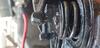
Hi again. I answered my own question. While checking the hose fittings again, I noticed the JIC fitting, in the head, for the crossover hose was loose. I tried to tighten it and it got worse. Found out I over tightened it and broke the o-ring when i installed it. Funny thing is I expected oil to flow into the valley. Instead it shot up on the oil galley casting, then ran down a little channel between the casting and the valve cover. so it missed the oil galley plug, but flowed down the transmission and onto the ground. Hopefully now I have one of the 3 or 4 7.3's in existance that doesn't leak oil
Hi again. I answered my own question. While checking the hose fittings again, I noticed the JIC fitting, in the head, for the crossover hose was loose. I tried to tighten it and it got worse. Found out I over tightened it and broke the o-ring when i installed it. Funny thing is I expected oil to flow into the valley. Instead it shot up on the oil galley casting, then ran down a little channel between the casting and the valve cover. so it missed the oil galley plug, but flowed down the transmission and onto the ground. Hopefully now I have one of the 3 or 4 7.3's in existance that doesn't leak oil
What I learned with those HPOP fitting o-rings is you cannot just install them straight on in or they will tear as you experienced. What I found works for me is to, of course, lubricate all surfaces with engine oil so it's not dry. Then with the new o-ring installed on the fitting begin installing the fitting into the cylinder head. When the o-ring begins to make contact with the shoulder of the cylinder head, begin to start "walking" it down instead of just straight screwing it in. 1/4 turn in, 1/8 turn back out. Another 1/4 turn in, another 1/8 turn back out. And it's not an arbitrary 1/4 turn. It must be done by tactile feedback as you are running the new fitting into the cylinder head. You'll feel the o-ring start to compress under the torque. GO NO FURTHER without pausing and working it back and forth until you feel the pressure relax a little, then go in some more. If you just force it in, guaranteed you will tear that o-ring. Give it time to adjust to it's new place in the shoulder, then run it down some more. Eventually you will hit bottom and then you can torque the fitting to spec.
Remember it's not the tightness of the fitting that does the sealing, it's the o-ring sitting in the groove that is the sealing agent.
These things are well worth the money, not only for leaks but dropped bolts/ fittings. Was installing new riffraff braided fuel lines over the weekend and dropped the fuel fitting that goes in the back of the passenger head, of course it ended up in Narnia somewhere back up underneath the passenger head. Using the magnetic attachment on this borescope is the only way I was able to find and retrieve the fitting. Considering the down time I would have had on my work truck waiting for another fitting from riffraff, the borescope has paid for itself 10 fold. It's also helped me find several leaks as well, great investment for sure
I would like to second what RacinJasonWV said as well as piggyback on what jstihl said.
A while back I had an oil leak in the rear of the valley, or so I thought. Based on the advice from RacinJasonWV and a couple other FTE'rs I purchased that same scope and got to looking.
I was confident my leak was between the turbo and pedestal or pedestal and block, but the scope proved me wrong. I saved a lot of time and effort using the scope for a few minutes and then refocusing my attention to the true leak point.