When you click on links to various merchants on this site and make a purchase, this can result in this site earning a commission. Affiliate programs and affiliations include, but are not limited to, the eBay Partner Network.
Hoping I could get some input to get this figured out.
I drove from San Jose, CA to Bend, OR on Tuesday to pick up a 25ft enclosed trailer from a family member, then towed it back to CA on Wednesday. I figured it would be a good time to give my mileage a check since I have done some upgrades since the last time i checked on a longer trip.
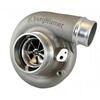
For context, I’m running single shot 160/100s, T500 HPOP, Borg Warner 369SXE, Regulated Fuel Return, Stock Trans with John Woods Valve Body & Billet Torque Converter, 6637 Intake, 4” Turbo Back Exhaust, and Tunes from a friend. Using cetane boost fuel additive.
On the way to Oregon, it was fairly hot, I’d say 80-90 degrees for some parts of the trip. I ran an Eco Tune the whole way, drove about 65-75 MPH, and would sometimes kick OD off to keep my EGTs under 1200 while climbing. Was running anywhere from 3psi to 10psi boost, occasionally 15psi. I calced the mileage when I topped back off and ONLY GOT 12 MPG.
On the way back to CA, now towing the 25ft enclosed trailer. Probably 2500 - 3000 lbs (empty)… I first tried out the modified stock tune as well as a 40Tow tune. Ran that for a short while and topped off. Had to turn off OD to keep EGTs below 1200 a decent amount. This limited speed a bit to 55-65MPH when OD was off. When I topped off, Mileage came in around 11MPG. Up to 15psi boost when climbing with OD off.
Switched to an 80Tow tune & ran that from Weed, CA all the way to San Jose (320 miles). Same situation with the boost & OD off while climbing. Particularly hot outside from 90-100 degrees. Same situation with boost pressures. Eventually as it got later in the day, the outside temp dropped down to 80-85 and I was able to keep it in OD at 70mph without hitting 1200 degree EGTs, but it was pretty consistently 950-1150. Topped off when I got home and I ONLY GOT 10 MPG.
Not too happy with the results here as you could imagine while paying $6.40 - $7.20 per gallon.
I checked all of my boots visually for leaks etc and couldn’t see anything glaring.
It sure seems like there is something wrong. With a turbo this big on Stage 2 160/100s, I would think that regardless of the high outside temperatures, hills, and some wind, I would have a lot lower EGTs & better mileage.
I plan to tow this trailer loaded to Montana in early August. Want to make sure I get this handled before that happens.
My first thought would be to actually test with an air compressor for boost leaks. New to towing with this turbo so I’m wasn’t sure what to expect with boost pressures since it’s moving a lot of air volume too.
My thought..
You are running an apple to banana to pear, to grape comparison.
In other words you keep changing the tunes to find answers while running uneven terrain while empty and then loaded.
Going north I am guessing you went up grapevine pass which is long and ever changing hills and terrain. Not the best way to get an estimate on milage to gallon of diesel in a truck.
Then you come back pulling a sail and keep changing tunes on the up and down hills again so not the best again to check an estimate on milage to gallon of diesel in a truck.
Weight of the trailer does matter, however... Frontal area is as important when towing, speed makes a huge difference as well. The method of the skinny pedal application, method of coasting to stops and approach to other traffic matters as well. Every time you slow then spool up the turbo for speed or passing or slowing affects the milage.
If you want better MPG you need to slow down, anticipate traffic, anticipate lights, anticipate hills, coast when you can, brake when you must.
That said... You drive a truck and those numbers are not bad or even horrible. A few weeks ago I drug a horse condo goose neck through the middle of the U.S. in rolling terrain on I40 and got anywhere from 9 mpg to as much as 14 mpg (EDIT.... FAST FINGERS 9 TO 12 MPG) on fill-ups on a stock truck while scaling over 21000 before I put dad, dog, and their stuff. Also speed was 60-65 mph, sometimes a bit slower in climbing the bigger rolling hills with the cruise on almost the entire way.
Jimmy, agreed it’s a data set with a lot of variables. I did that on purpose to see how the different tunes performed, even given the differing conditions. But it is good to know that I’m not far off from average with these trucks & my circumstances for this trip.
Y2K, appreciate it. I don’t feel too bad now.
That 70mph in OD was probably only for about half of the 320 mile trip for that particular test. So if 10 mpg is good even with the other half of the trip mixed in where there was hotter outside temps, less overdrive usage, and steeper grades, I’m happier.
What are these sensor adjustments you speak of? Interested.
I was thinking speedo calibration would be good to do since I’m running 35s. Wondering if that would help. And FYI, I do know what my Speedo needs to read currently to actually be going 60,65,70 mph. So my initial speeds reporting are pretty accurate. Perhaps that could help with shift points?
Like Broke said. Big turbo isnt helping a thing, also having ability of injecting more fuel isnt gonna help mpg if you use that ability.
MPG isnt far off for towing with a 7.3. I rarely see more then 12 empty and usually 8-10 towing
What are these sensor adjustments you speak of? Interested.
I was thinking speedo calibration would be good to do since I’m running 35s. Wondering if that would help.
The first sensor to recalibrate is your sense of expectations. The earlier responses in this thread may have already helped you with that recalibration.
Under the circumstances you described, your fuel economy was well within range of what could be expected.
The second sensor to recalibrate relates to the APS, sometimes called the APPS (Accelerator Pedal Position Sensor)
For best overall fuel economy, recalibration should occur every time you drive, but it is easiest to appreciate the benefits of APPS recalibration on a longer trip, such as the trip you recently completed.
The most common way to recalibrate the APPS is by reducing the arc travel, or extension, of the plantar flexion.
Here's why.
The trucking industry (pulling a 25 ft trailer is qualification enough) has identified 3 physical characteristics on a truck and trailer combo that significantly contribute to the war between fuel consumption versus fuel efficiency.
These 3 physical characteristics don't care about the engine, and actually, don't care about the fuel either. Could be diesel, gas, battery power, hydrogen bomb, or pixie dust. Some type of source of energy is consumed to haul a load from point A to point B.
Regardless of what the source of energy is, and regardless of what type of engine is consuming the energy, there still remains three physical characteristics on the truck itself that are known to have a significant influence over whether the truck uses more of, or less of, that energy to do the assignment.
Here are the 3 physical characteristics, not listed in order of contribution to fuel economy, but simply listed in the order I wanted to eliminate them from the list.
1. Weight
2. Rolling Resistance
3. Aerodynamic Drag
Back to
1. Weight. Nothing we can do about weight. We gotta haul what we gotta haul. 'Nuff said. Next...
2. Rolling Resistance. Nu Uh. Not gonna touch the '35's with the off road tread, even though Rolling Resistance has been shown to be a near neck and neck tie with the most significant physical factor contributing to fuel economy, which is
3. Aerodynamic Drag. But here's another no go in reducing drag. You have to pull the trailer, with all of it's frontal area acting as a parasail down Hwy 5. That was the entire point of making the trip.
Fortunately, we can dissect Aerodynamic Drag into a small group of different factors, which when multiplied together, equals the force opposing the motion of the truck and trailer caused by the resistance of ambient air...which is the very definition of Aerodynamic Drag.
So what are these factors?
- Cd is the coefficient of aerodynamic drag... Not gonna redesign the truck or mount a $1K NoseCone on the trailer, so nothing we can do about Cd.
- ρ is air density... Not gonna control the weather, or change the time of day we drive. Besides, any decrease in air density could reduce engine power!
- A is frontal area... Not gonna change, as previously discussed.
- V is vehicle speed... Now this could actually be changed.
And how are these four factors multiplied together into a proportional product of drag Force?
Without knowing, changing, or giving a fig about what any of the factors in the equation above are, what stands out is the square symbol 2, right above the factor V.
This means that whatever V may be, its value literally has exponential power and influence over the outcome of the equation. It isn't just V. It's V squared.
Since V is velocity, it is clear that a change in velocity will exert an exponential difference in the product described as "aerodynamic drag force", which is one of the big 3 physical characteristics that influences fuel economy in a truck, irrespective of engine.
If V = 55 mph, which is the maximum speed limit in California when pulling a trailer, even on the 75 mph portions of Hwy 5, then 55 squared is 3,025.
If V = 70 mph, which is the speed your reported pulling a trailer through California, then 70 squared is 4,900,
No matter what the other factors are in the equation to quantify drag force, the one factor that is easiest to control, V, happens to also be the one factor that exerts the greatest influence.
Anything multiplied by 4,900 is going to be a lot more than the same thing multiplied by 3,025.
Hence, recalibrating (or reducing) foot pressure on the APPS appears to have the highest probability of increasing fuel economy for the lowest cost.
The first sensor to recalibrate is your sense of expectations. The earlier responses in this thread may have already helped you with that recalibration.
Under the circumstances you described, your fuel economy was well within range of what could be expected.
The second sensor to recalibrate relates to the APS, sometimes called the APPS (Accelerator Pedal Position Sensor)
For best overall fuel economy, recalibration should occur every time you drive, but it is easiest to appreciate the benefits of APPS recalibration on a longer trip, such as the trip you recently completed.
The most common way to recalibrate the APPS is by reducing the arc travel, or extension, of the plantar flexion.
Here's why.
The trucking industry (pulling a 25 ft trailer is qualification enough) has identified 3 physical characteristics on a truck and trailer combo that significantly contribute to the war between fuel consumption versus fuel efficiency.
These 3 physical characteristics don't care about the engine, and actually, don't care about the fuel either. Could be diesel, gas, battery power, hydrogen bomb, or pixie dust. Some type of source of energy is consumed to haul a load from point A to point B.
Regardless of what the source of energy is, and regardless of what type of engine is consuming the energy, there still remains three physical characteristics on the truck itself that are known to have a significant influence over whether the truck uses more of, or less of, that energy to do the assignment.
Here are the 3 physical characteristics, not listed in order of contribution to fuel economy, but simply listed in the order I wanted to eliminate them from the list.
1. Weight
2. Rolling Resistance
3. Aerodynamic Drag
Back to
1. Weight. Nothing we can do about weight. We gotta haul what we gotta haul. 'Nuff said. Next...
2. Rolling Resistance. Nu Uh. Not gonna touch the '35's with the off road tread, even though Rolling Resistance has been shown to be a near neck and neck tie with the most significant physical factor contributing to fuel economy, which is
3. Aerodynamic Drag. But here's another no go in reducing drag. You have to pull the trailer, with all of it's frontal area acting as a parasail down Hwy 5. That was the entire point of making the trip.
Fortunately, we can dissect Aerodynamic Drag into a small group of different factors, which when multiplied together, equals the force opposing the motion of the truck and trailer caused by the resistance of ambient air...which is the very definition of Aerodynamic Drag.
So what are these factors?
- Cd is the coefficient of aerodynamic drag... Not gonna redesign the truck or mount a $1K NoseCone on the trailer, so nothing we can do about Cd.
- ρ is air density... Not gonna control the weather, or change the time of day we drive. Besides, any decrease in air density could reduce engine power!
- A is frontal area... Not gonna change, as previously discussed.
- V is vehicle speed... Now this could actually be changed.
And how are these four factors multiplied together into a proportional product of drag Force?
Without knowing, changing, or giving a fig about what any of the factors in the equation above are, what stands out is the square symbol 2, right above the factor V.
This means that whatever V may be, its value literally has exponential power and influence over the outcome of the equation. It isn't just V. It's V squared.
Since V is velocity, it is clear that a change in velocity will exert an exponential difference in the product described as "aerodynamic drag force", which is one of the big 3 physical characteristics that influences fuel economy in a truck, irrespective of engine.
If V = 55 mph, which is the maximum speed limit in California when pulling a trailer, even on the 75 mph portions of Hwy 5, then 55 squared is 3,025.
If V = 70 mph, which is the speed your reported pulling a trailer through California, then 70 squared is 4,900,
No matter what the other factors are in the equation to quantify drag force, the one factor that is easiest to control, V, happens to also be the one factor that exerts the greatest influence.
Anything multiplied by 4,900 is going to be a lot more than the same thing multiplied by 3,025.
Hence, recalibrating (or reducing) foot pressure on the APPS appears to have the highest probability of increasing fuel economy for the lowest cost.
Or, said a different way,
you could set the cruise control to 55
And keep it on as much as possible,
Only taking it off when climbing hills or when the engine is struggling to maintain speed.
I can almost guarantee that will be the best mileage you will get out of your specific truck the way you have it set up.
The most important factor on the highway is speed and how you drive the truck.
I can travel for hours on end on cruise control and only steer the wheel past obstacles and anticipate the road ahead of me to maintain the need to even have to touch the brake pedal ( or the tps pedal ).
The computer does the rest and I'm along for the ride.
I only wish I could get that good of a mileage with my setup. Everything about the engine is stock. 4.88 rear axle, 10,000lb truck, pulling 14k trailer, CC set to 68-70 mph on any terrain outside of town. 7.5MPG, give or take a tenth of point here and there. Empty, pushing 15 mpg. I'm thinking it's mostly the 4.88 axle.
Let’s address for a minute the 35” tires. With the factor of rolling resistance and assuming stock 3.73 gears, would returning to stock size tires help in the pursuit of better overall fuel mileage? If not stock size what is the “sweat” spot tire size?
When hand calculating the fuel mileage you would need to multiply the trip mileage by the percent increase in tires size to get true miles traveled. In my case I am running larger tires that are 9% larger than stock. So it if travel 100 mile with what the trip says I actually traveled 109 miles. (100 trip miles * 1.09 = 109 total miles driven)
Something to think about while we are all reaping the energy policy consequences of the current administration.
I agree with the fellas above that this is normal if not above average. I am fortunate to garner 18.5 MPG unloaded and 12 MPG (hand calculated over thousands of miles) loaded with a 5th wheel at 18,000 - 20,000 lbs GCVW.
Although, I drive like I have nowhere to be and very rarely over 65 MPH. I coast to stop lights instead of using the brakes most times, I shift through the gears (ZF6) smoothly and attempting to maintain momentum as much as possible. I run OEM size 265/75R16 tires and have 3.73 gears in the rear end.
Some people struggle to get 12 MPG unloaded and I am grateful I am not one of those people as we travel long distance with our truck and 5th wheel.
I agree with the fellas above that this is normal if not above average. I am fortunate to garner 18.5 MPG unloaded and 12 MPG (hand calculated over thousands of miles) loaded with a 5th wheel at 18,000 - 20,000 lbs GCVW.
Although, I drive like I have nowhere to be and very rarely over 65 MPH. I coast to stop lights instead of using the brakes most times, I shift through the gears (ZF6) smoothly and attempting to maintain momentum as much as possible. I run OEM size 265/75R16 tires and have 3.73 gears in the rear end.
Some people struggle to get 12 MPG unloaded and I am grateful I am not one of those people as we travel long distance with our truck and 5th wheel.
Be safe and enjoy the journey!
Do you find running the stock tire size to be the best size for 3.73 gears for maximum fuel-efficiency?
Rezvani's Latest Post-Apocalyptic Monster Is a Ford F-150 Raptor Underneath
Slideshow: Called the Fortress, the 850-horsepower pickup combines Raptor underpinnings with military-inspired features, survival equipment, and a starting price of $285,000.