When you click on links to various merchants on this site and make a purchase, this can result in this site earning a commission. Affiliate programs and affiliations include, but are not limited to, the eBay Partner Network.
Throttle position sensor problems. P0122 and P0222
Hi all
New member here looking for some advice. I have an RV on a 2016 E450 with a 6.8L V10 gasoline engine. All was good a month ago when I drove it for an hour or so to a storage location. Now it starts but the accelerator does nothing.
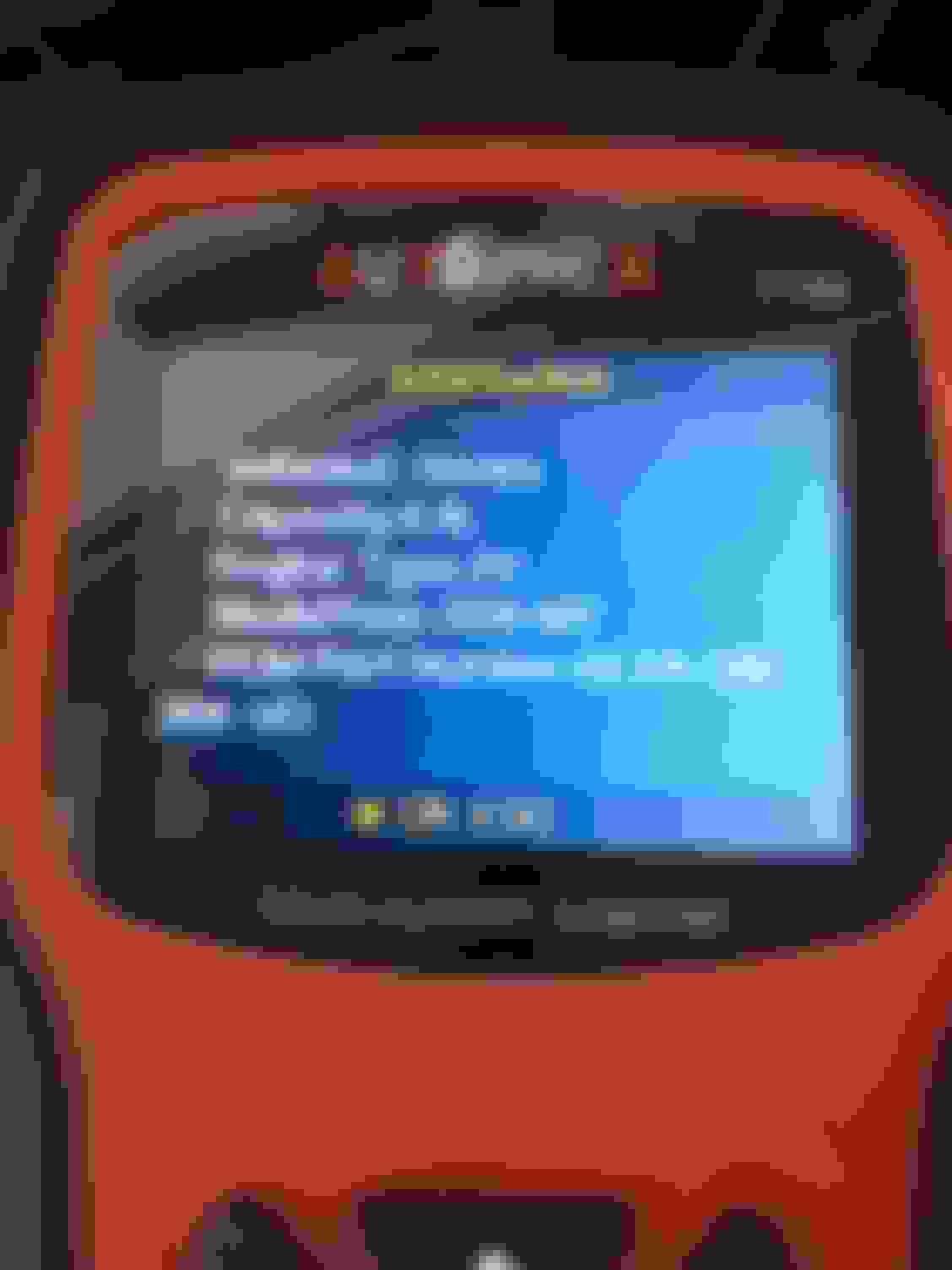
I have a scanner and it reports codes P0122 and P0222. See images. I've read a lot online and understand that this is related to the throttle position sensor so I'm not sure if I'm going to gain any new insights here but I thought it might be useful to describe the exact symptoms.
It starts easily.
It revs at about 2000 rpm for a few seconds and then goes down to a little below 1000 rpm. I think that's normal.
It is idling a little rough at that normal rpm.
Both the powertrain wrench light and the engine (service required?) light are on.
I'm absolutely no mechanic but I'm reasonably mechanically and technically capable. I would like to exhaust all possibilities of fixing this myself before I call in a professional. Unfortunately it's parked in a somewhat remote place where local services are limited. I have spoken to a local car repair guy, a one person business. He's willing to look at it but he's pretty much leaping to "replace the throttle body" and "replace the pedal" so I'm not sure if that's a good initial plan.
I was there a week ago and didn't see any obvious wiring damage but I'm still finding my way around. I now understand the system a little better. I haven't checked any voltages yet. Based on a YouTube video I watched, I think the throttle position sensor has three wires. 5 volts power, ground and signal. I will check the 5 volts. The guy on this video shorted the signal line to the 5v and observed the throttle position "changed" on the scanner. Does that seem like a good and safe thing to do? I mean while disconnected from the sensor of course. It seems like if that works then it's definitely the sensor.
Some scanner images are attached. This scanner has the usual OBD-2 menu. That's where I get to the P0122 and P0222 screens. It also has a special Ford menu. The datastream image is from that Ford specific menu. At least one of those percentages changes when I press the pedal. That suggests to me that the pedal itself is okay but it also says "Yes fault" and "No pedal" which is a little confusing.
Anyway ... thanks for reading this far. I'm happy for any advice, suggestions etc.
I would first check the connection to the gas pedal. Its not unheard of for this to not been plugged in correctly and is coming loose. Once down there reseat connection a few times to clean up pins.
I don't see any evidence of wiring damage by rodent etc. The pedal looks good. I pulled the connector out of the pedal. It looks clean and tidy.
I disconnected the cable from the throttle position sensor. It has four pins. One of them, presumably the power / reference source has 5 volts to ground. Voltage is going in, the fault code says low voltage coming out of the TPS. It's looking to me like the TPS is faulty. I'm happy to be convinced otherwise but it seems like a good place to start.
The TPS is one of these https://parts.ford.com/shop/en/us/el...ttle-7876387-1 which I can get easy enough. It looks like an easy thing to replace until I start reading about the loctite on the screws and the need for heat. I've found multiple posts online warning that without heat there's a good chance of breaking the head off the screws. One video showed heating the screws with a blowtorch. That was with the throttle body out of the vehicle. I assume that would be very foolish idea in the vehicle anywhere near gasoline so I won't do that. Some suggest using a soldering iron. Some report trying that and failing but I think they're trying with a small iron designed for small electronics. I have a soldering gun which I suspect has enough thermal power to heat up the screws. Any other suggestions for heating or generally removing the screws? It's the blue loctite which is apparently nowhere near as "permanent" as the red. I want to avoid removing the throttle body if possible but I'll be in a real pickle if I break a screw. The deeper I get into pulling things apart the further I get from my comfit level and a feeling of "I really shouldn't be doing this".
If anyone can recommend anyone in East Texas I'd be happy to hear from them. It's near Corrigan which is between Livingston and Lufkin, a bit over an hour from the north side of Houston. I've made contact with a local car repair guy. He seems a nice enough guy and is wiling to take a look but he doesn't seem to be interested in any sort of diagnostic troubleshooting. He wants to leap straight to replacing the accelerator pedal and throttle body and no talk of doing some simple voltage measurements like I have now done myself.
Both fault codes are related to the TPS, not the APP sensor. They indicate that TP1 & TP2 are both less than .25 volts with the ignition ON and the engine either running or not.
Use your scan tool to pull up the TP1 & TP2 PIDS. The two sensors are run in parallel with TP1 tracking from 5 to 0 volts and TP2 reversed as the throttle plate rotates from closed to fully open.
Ignition ON, engine off:
With the throttle closed, TP1 should read 3.7-4.7 volts and TP2 should read .3 to 1.9 volts. With the throttle plate fully open (press pedal to floor), TP1 should read .7 to 2.9 volts and TP2 should read 4.1 to 4.9 volts.
If either or both signals are zero and you have your 5 volt reference signal at the sensor, don't forget to check the two signal lines for a short to ground before condemning the TPS.
Both fault codes are related to the TPS, not the APP sensor. They indicate that TP1 & TP2 are both less than .25 volts with the ignition ON and the engine either running or not.
Yes, I think my scan tool mentioning "pedal" in the description of P0122 an P0222 is wrong or a translation issue. Maybe I should get a bluetooth adaptor so I can use Forscan that many people seem to recommend.
Originally Posted by projectSHO89
Use your scan tool to pull up the TP1 & TP2 PIDS. The two sensors are run in parallel with TP1 tracking from 5 to 0 volts and TP2 reversed as the throttle plate rotates from closed to fully open..
I'm still finding my way around so I'm not quite sure what PIDS means but I'll do some research.
Originally Posted by projectSHO89
Ignition ON, engine off:
With the throttle closed, TP1 should read 3.7-4.7 volts and TP2 should read .3 to 1.9 volts. With the throttle plate fully open (press pedal to floor), TP1 should read .7 to 2.9 volts and TP2 should read 4.1 to 4.9 volts.
I'm a little confused by that. I understand the concept of the two voltages which work in opposite directions but I don't think the throttle is opening and closing when I move the pedal. Wouldn't the engine rev up if the throttle is open? Sorry if that's a silly question.
How do you measure the voltage when the TPS is connected? Do you pull the connector out just far enough to expose the pins but hopefully still connecting?
Originally Posted by projectSHO89
If either or both signals are zero and you have your 5 volt reference signal at the sensor, don't forget to check the two signal lines for a short to ground before condemning the TPS.
Yes I should have checked that. I wasn't sure which pin was which. I'll have to find a diagram. I know which (on one end) is the reference. I suspect the other end is ground and the middle two are signal.
"Live data", that is, specific data parameters. Who knows what your scan tool's software writes may have called them... Using Forscan or Torque Pro will get you into the same arena for terminology that Ford uses and may simplify things.
I'm a little confused by that. I understand the concept of the two voltages which work in opposite directions but I don't think the throttle is opening and closing when I move the pedal. Wouldn't the engine rev up if the throttle is open? Sorry if that's a silly question.
Not if the engine is OFF as stipulated for the test...
I can provide the diagram for the 2014 version which hopefully (fingers crossed) didn't change for the 2016 MY (probably not). I've also attached the diagnostic procedures from the PCED.
I should have newer volumes on hand later this week, I'll cross check for validity once I get those in and get them running.
What about how to read the voltages when the connector is plugged into the TPS? Is that how you do it? Just pull it out enough to get some probes in or is there some other trick?
I just noticed those pin numbers on the TPS in that diagram. If the physical pins are in order 1-2-3-4 then the one on the end that I measured about 4.8 volts on was not the reference. It was one of the signal lines. That suggests there is no reference voltage. The other three pins were pretty much zero. I guess wire colors are a clue. I realize that diagram is an earlier year so just could be different.
I was measuring from ground where I probably should have been measuring from ETC RTN which may not be close to ground.
It occurs to me that I should be able to measure the resistance of the TPS too. I'm thinking, if I disconnect it, turn key on but don't start the engine, I should be able to measure changing resistance between pins on the TPS as I press the pedal, assuming the throttle is opening and closing.
Unfortunately the vehicle is about an hour and half drive from me so I can't run out on a whim and do some more tests.
TPS connector pinout is in the Pinpoint DV introduction previously provided.
I checked the 2016 diagrams against what I posted earlier. Except for a renaming of the connector on the new diagram for the PCM connector, they're the same electrical circuit.
ETCRET *should* be at ground potential, should be connected inside the PCM to chassis ground if prior conventions were maintained. You can make a quick resistance check (with power off) to verify before using it for future measurements.
Thanks @projectSHO89 and sorry, I didn't open those PDFs before. I was just looking at the diagram. That's all very helpful and has given me the next steps. I'm into electronics so I'm comfortable debugging this with the right info. It's the mechanical stuff and finding where things are that I find challenging. I'll hopefully get back to it in a few days but, now that I know the pinout, it's looking like I don't have a reference voltage. That would seem to point to a cable or connector problem or, something I really don't want to think about, the PCM unit.
I was there yesterday. I didn't have as much time as I would have liked so I haven't really made much progress.
I know this sounds kind of lame but:
I didn't do DV5. i.e., check for obstruction of the throttle body because of lack if time to disassemble a few things to get to it to remove the inlet tube.
I didn't do DV6. I got some pins for backprobing but there doesn't seem to be any gaps at the back of the connector to push pins into so they'd be piecing the plastic which I got nervous about.
Maybe I'm making foolish assumptions but those two tests seem irrelevant because DV7 fails. That's effectively what I'd already done last visit.
Assuming I'm looking at the correct pin 2 on on the TPS connector, there is no voltage on ETCREF. I checked resistance and it's not shorted to ground. That document says to go to Pinpoint Test C but I don't know where or what that is. Online searches have found similar documents but never a link or anything to Test C.
I assume Pinpoint Test C is something to do with checking the voltage closer to the PCM but my attempts at following the wires fails miserably. The small four wire cable from the TPS merges into a big thick wiring harness and who knows where after that. This might be a silly question but the attached photo is the PCM right? I wasn't planning on doing anything with it except perhaps pull the connectors out and plug them back in but I can't even move them. Maybe I'm pushing the wrong tabs or something.
Anyway ... I'm actively looking for some professional help but that's easier said than done where it is. I notice the Ford dealer about 25 miles away does mention "mobile service" on their web site so I might see if they're interested in helping.
Good testing but just to make sure you are testing the correct pins, they are pins 2 (reference) and 3 for the throttle position sensor plug or the two middle pins.
Good testing but just to make sure you are testing the correct pins, they are pins 2 (reference) and 3 for the throttle position sensor plug or the two middle pins.
Yes that fooled me before I knew the pins. One of the end pins, pin 1 I think, has about 4.8v while disconnected. I assumed that was the reference but now I know it's not. I don't know how much sense it makes for one of the signal pins to have voltage. Maybe that's correct and the TPS pulls it down.