When you click on links to various merchants on this site and make a purchase, this can result in this site earning a commission. Affiliate programs and affiliations include, but are not limited to, the eBay Partner Network.
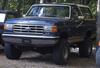
So, the short is, I scored an amazing little regular cab short bed 91 f150. The motor is supposed to be a 94 stang motor. Looking at the injectors they are the orange/yellow not white; meaning 19lbs per hour not 15lbs per hour. The motor has truck intake, computer, harness, distributor, throttle body. I know the 91 5.0 motor has a different firing order, but with this configuration will the motor run? I'm concerned with batch firing of 5.0 vs sequence firing of the stang 5.0. Yes, they 22's, it level but in the picture the tires are flat. Only rust is really the bed. I just replaced, wires, plugs, cap, button, thermostat, waterpump, front tank, fuel pump, sending unit, and fuel filter. Truck doesn't start. I left her in the shop, battery died, I made a minor mistake by running the firing order clockwise instead of counter clockwise (I work on a lot of chevys), fixed the mistake and flooded motor and dead battery. Called it a night. Tomorrow when I resume the resurrection (sitting a few years) do I have an injection firing issue from using 91 5.0 dis. On 94 stang 5.0? Also, I paid 900 for the truck and am only 500ish in parts. The girl needs new shoes and to shred them. Thanks for the advise.
So, the short is, I scored an amazing little regular cab short bed 91 f150. The motor is supposed to be a 94 stang motor. Looking at the injectors they are the orange/yellow not white; meaning 19lbs per hour not 15lbs per hour. The motor has truck intake, computer, harness, distributor, throttle body. I know the 91 5.0 motor has a different firing order, but with this configuration will the motor run? I'm concerned with batch firing of 5.0 vs sequence firing of the stang 5.0. Yes, they 22's, it level but in the picture the tires are flat. Only rust is really the bed. I just replaced, wires, plugs, cap, button, thermostat, waterpump, front tank, fuel pump, sending unit, and fuel filter. Truck doesn't start. I left her in the shop, battery died, I made a minor mistake by running the firing order clockwise instead of counter clockwise (I work on a lot of chevys), fixed the mistake and flooded motor and dead battery. Called it a night. Tomorrow when I resume the resurrection (sitting a few years) do I have an injection firing issue from using 91 5.0 dis. On 94 stang 5.0?
You got bad information somewhere. The truck would have had 19# injectors. Not 15#. The computer has no way of knowing how you routed the spark plug wires. Use the the 5.0 HO / 351W firing order. The fact that is still bank fired and not sequential injected is a non issue. Since you “work on a lot of Chevys” I’ll ask…. Are you aware that from front to back the passenger side cylinders are numbered 1-4 and the driver’s side is 5-8? It isn’t even numbers on one side and odd on the other.
“Yes, they 22’s”. I’m going to assume you are referring to the wHeels? They would be the first thing I’d take to the swap meet or yard sale.
Yeah.. no 5.0 EFI truck motor ever used anything but orange/yellow top 19lb/hr injectors.
If this swap was done correctly and none of the Mustang engine bay wiring was used the motor should run well, and you will know it's actually a 5.0HO and not a truck motor if it makes good power up to 5000rpm. The firing order and plug routing should be as below...
Yes I'm aware the plug numbers, I have it set to the ho/351w. Is there way to know which motor I actually have without to much disassembly? Definitely taking the 22" rims off. Yes I admit I'm an old school mechanic, and chevys are my normal project vehicles and I haven't done much with ford engine swaps. Other than putting together 351 Cleveland in my bronco trail rig, and making mustangs go fast. The projects I've done are building old body style chevys. I wanted to do a obs ford street truck and the price is right and good bones on this truck. I'm tired of s10s and dropped obs chevys, I want to build a unique ford f150. I'm just stuck in not knowing what motor is actually in the truck or if it's a cluster of ho and non-ho. So, with that said I appreciate the help. If it doesn't fire on the 351w today, I'm going to try the non ho firing order. I just want to avoid ditching efi and going carb to avoid headaches. I love a challenge. The goal is get it running, put a flareside bed, drop it correctly and put appropriate muscle rims on it and kick my chevy out of the garage and put the f150 in there. I will say don't hate on me for being a chevy guy, I've owned many of the big three and ford and chevy are great, not a dodge or ram fan. Street truck ford is my goal and typing on the phone isn't going to get it done. Lol. Thanks again for the help!
The Mustang and truck distributors are the same for the early EFI years so no electrical issue there, but a '91 truck motor would have used a cast iron gear while the HO used a steel gear because that motor has a steel roller cam. The cast iron gear will be fine to get the motor running but once you know what version of the motor you have you may need to change that gear. A '91 truck motor had a tiny little flat tappet cam, so if you can determine that this is a roller motor that suggests it has been changed at least, but the trucks also got roller cams starting in '92 so you will need some more data to know exactly what you have. The best way to figure this out is to simply drive it, as mentioned if the motor pulls well to 5k or more it's definitely a HO, a '91 truck motor will run like the exhaust is plugged and just won't want to rev up.
There aren't a lot of differences between a truck and Stang longblock... the HO got forged pistons and a bigger cam everything else is exactly the same, The 5.0 truck intake flows quite a bit better than the car intake so that is a plus here. A stang motor will run fine on the truck efi system with just the spark plugs re routed, but it won't make quite as much power as it should because the cars used more agressive timing maps. Since you are starting from scratch with a complete unknown setup, make sure that the disdributor is actually installed correctly first, bring #1 piston to tdc on compression and check that the pointer in the dizzy is pointing at the #1 post on the cap, if the PO just randomly stabbed the thing it won't work correctly obviously. Once you know the dizzy is in correctly and have the motor running you can advance the base timing to get maximim power out of the motor, stock is 10deg btdc with the spout plug removed to disable computer advance, many engines will tolerate 12-14deg initial advance before pinging becomes audible but that is something you can play with.
Update, the distributor was installed wrong at a local speed shop. After installing the distributor correctly, and changing the fuel soaked plugs she fired up. Changed the oil after about 1 -3 minutes of running. The oil was mostly fuel. Anyway, moving right along, the correct firing order was the ho/351w. Turns out when I cleaned the harmonic balancer to find TDC and 10⁰ btdc there is an engine code and the letters HO.
Now that mystery is solved she idles great! Until you put her in gear. R or D = stall or popping and backfire then no more running. Starts back up fine. Cold or at running temp same issue. Found two disconnected/broken vacuum lines. Tomorrow's project is pull egr, throttle body, iac and related attached sensors, and clean/replace as necessary. Also clean and ensure attachment of all the vacuum lines. Doubts are high that a diagram exists on the truck.
Questions: 1. Can I delete smog pump and related coffee/soup can vacuum canisters? 🤔 2. Diagram for vacuum lines with HO block, truck intake and throttle, which diagram should I use? Truck is 91 and engine is 94. 3. Is there a TSB or anything on why the truck would rough idle/stall when put in gear?
I'm really thinking air/fuel mixture or the distributor isn't advancing properly when under load. Advice is again, greatly appreciated!
Check fuel pressure, there should be 32-35psi at the test port with the engine idling and 39-45psi when vacuum is removed from the FPR. The motor will start and idle with 20psi but won't take any load. That coffee can vacuum resovoir is known to rust out on the bottom as well and if it doesn't hold vacuum it can cause a throttle tip in stumble/stall condition, replace it with a plastic resovoir from a later ford truck or car, should be lots of them laying around scrap yards.
All the smog stuff can be deleted but the coffee can isn't part of that. But right next to the coffee can is the intake filter for the air pump, both of those and all the associated plumbing can be deleted but the two solenoids next to the ignition coil must remain and be electrically connected. You can cap or remove all the vacuum lines in this system too. There is a tube connecting ports on the back of the heads that is also part of this system, if you remove that plug the holes with 5/8 x 1" coarse thread bolts with copper washers to seal. There cannot be any fresh air getting into the exhaust upstream of the O2 sensor or it will mess with A/F mixtures once the motor goes into closed loop, and it may be hard to seal the crossover tube at the back of the motor if it isn't removed, so doing it this way generally works better.
The EGR is a separate system that cannot be eliminated without setting codes and a check engine light, but it can be disabled to keep the intake cleaner. To do this remove the tube and plug the fitting on the lower intake where the tube connects, and sandwich a piece of sheet metal with a couple gaskets between the EGR valve and upper intake, then connect vacuum and electrical and let it go through the motions.
Update #2 truck is now running and it does drive now but with a few problems. The throttle body was packed with gunk, the iac/air bypass valve was clogged. Iac and TPS were replaced and throttle body cleaned. Distributor was reset to 12⁰ BTDC you know to the right of 0 instead of the left, darn chevy mechanic! Anyway, at normal temp with spout out and like magic she is happy at idle, set her at 700 rpms in N. With the timing mistakes I replacing the plugs again to make sure she is happy there and going to run seafood thru the fuel this time and see if that will help the injectors. When the old fuel filter was removed the fuel way dark with bits of rust and dirts, the lines were flushed and tank, pump, sending unit and filter replaced. However I think injectors may need replacing or rebuilt. So, your advice is helping and I appreciate it!
On the 1991 throttlebody there is an idle set screw. Adjusting that changes your idle, must must do it at normal running temp and ensure everything else is good. HO 5.0l 650-675 idle, non HO is 575-850 idle speed
That is not an idle set screw. It's sole purpose in life is setting it to prevent the the throttle blades from closing too far then sticking in the bore. There are some folks that use it for setting the idle but that is not what it was designed to do.
Turns out the motor was very neglected, filled with gunk and carbon, two stuck valves. Blown head gaskets and intake gaskets. Motor got tanked, cleaned, reassembled, painted, and carb swapped since air density is not preferable for performance. Thoughts?
It's your call to go back to a carb. If the truck has an AOD transmission or a manual the swap is easier. If it has an E4OD then you need to pony up more dollars for a controller.
Rezvani's Latest Post-Apocalyptic Monster Is a Ford F-150 Raptor Underneath
Slideshow: Called the Fortress, the 850-horsepower pickup combines Raptor underpinnings with military-inspired features, survival equipment, and a starting price of $285,000.