When you click on links to various merchants on this site and make a purchase, this can result in this site earning a commission. Affiliate programs and affiliations include, but are not limited to, the eBay Partner Network.
As weighed on a Cat scale at a truck stop, here are my axle weights and allowable payload, along with axle weight ratings and GVWR. As others has stated, if you go per the sticker, you can weigh up to your GVWR, but not exceed one of the axle weight ratings. Philip.
I honestly think you should buy a F250, only if you need the 250. For me my homeowner association, hammer lanes on the JFK in Maryland, parkways in DC, MD and NY, streets near my WV home, on street parking in some eastern towns. In my case below about 12,000 pounds, the commercial "B" plates in WV are cheaper, than the passenger plates.
My 5er is light, only 1600# on the pin, so I was under 10k with a 2012 F250 diesel, when loaded for a long trip. You need to buy the tool for the job, but consider all of the jobs you have.
As weighed on a Cat scale at a truck stop, here are my axle weights and allowable payload, along with axle weight ratings and GVWR. As others has stated, if you go per the sticker, you can weigh up to your GVWR, but not exceed one of the axle weight ratings. Philip.
That half tank of fuel is why you show more available payload. You need to scale with a full tank to get true payload.
Originally Posted by arniet
I honestly think you should buy a F250, only if you need the 250. For me my homeowner association, hammer lanes on the JFK in Maryland, parkways in DC, MD and NY, streets near my WV home, on street parking in some eastern towns. In my case below about 12,000 pounds, the commercial "B" plates in WV are cheaper, than the passenger plates.
My 5er is light, only 1600# on the pin, so I was under 10k with a 2012 F250 diesel, when loaded for a long trip. You need to buy the tool for the job, but consider all of the jobs you have.
You are lucky to have B plates under 12K. B in IL are only good up to 8K, then C, which are hard to get, are good to 10K, then D up to 12K, and now that the F350 Duallys have a 14K GVWR they get dumped into E plates which are $100 more a year. I would have to order it with the derated GVWR in order to reuse the plates on my current F350.
The reason there are still 3/4 ton( really? don't know why they still use that term) are for registration and insurance purposes. Once a truck exceeds 10,000 GVWR they fall under Commercial class in some states. FDOT also rates anything over 10,000 as CDL territory, which means if you drive over 10K for hire you fall under Federal DOT regulations. This is why you can order an F250 with a 9900 GVWR, so it stays under that 10K limit. Doesn't mean the truck is limited to actually 9900 pounds, but in the eyes of the legal beagles, anything over 9900 pounds, or 10K, is considered overweight/over registration weight.
Once you drop a diesel into a pickup, you lose 800 pounds of payload. The higher the trim level, the lower that payload gets, so if you are looking for a tow vehicle and want a diesel, forget about getting a 250/2500 because they won't have the legal payload required, even though they are quite capable of handling it. A lightly optioned F150 can indeed have more payload than a Diesel F250. I saw it myself in 2017 when I went to replace my smashed truck. Tested an F250, then looked at an F150 Sport Lariat 501a, the F150 had 2100 pounds payload while the F250 had a little over 2K. Now that's not right, is what I said. I would have bought the F250 as it would have suited my needs, but it was used and looked like it had a visitor of the four legged hairless tail variety under the drivers seat.
If your state registration is the same for the F250 as the F350, and requires state inspections for either one, get the F350 and be done with it, same truck but rated for more weight (same except for spring and rear axle).
I don't know all the history, but from what I have gathered, starting for the 2020MY the HCTT package (which can only be added to an F250 with the Diesel engine selected) upgraded the rear axle and added a leaf spring to the rear leaf spring pack, which bumped the listed GVWR from 10000 to 10800. This makes the F250 quite similar to a 350, however, the 250 is still missing the rear helper spring, but this can be added with the camper package, which means the rear leaf spring pack now has 5 leaves, which is now the same as a standard 350. Of course the listed GVWR is still less than a 350, even though all the parts are the same, but it wouldn't make any sense to give a 250 a listed rating that is the same as a 350...
Saying all of that, I disagree with the statement in bold above... at least to a point... It all comes down to what you want to tow, really. But, my 6.7L F250 XLT 4X4 CCSB has a printed payload of 3016 lbs, which is plenty to tow many things... I have scaled my truck with a full tank of fuel, both me and my wife, and all of the add ons I have put on my truck (tonneau, Bakbox, toolbox, tools, air compressor and tank, BedRug, etc...) and I still have 2640 lbs of payload left according to actual weight measurements. And to add to this, I know that my truck is physically no different from a 350, so based on the 11500 GVWR of the exact same 350, I know that I actually have at least another 700 lbs that the truck can safely handle if I needed it too... But, I bought what I needed, and the 250 was plenty for that. I'll never exceed the rating that the 250 has, so it's not an issue for me. So, now (since 2020 anyway) you absolutely can get a F250 with the Diesel engine and still have plenty of payload left over, as long as you add the HCTT package (and the camper package for good measure).
That half tank of fuel is why you show more available payload. You need to scale with a full tank to get true payload.
My choice, I have 6 scale tickets with different payloads and trailers, they are all weighed at 1/2 tank. My tank is never full, nor is my tank ever empty, thus, I always weigh at 1/2 tank. And if you think 17 gallons of fuel is going to make a difference in the big picture, you are pretty simple minded. Philip.
My choice, I have 6 scale tickets with different payloads and trailers, they are all weighed at 1/2 tank. My tank is never full, nor is my tank ever empty, thus, I always weigh at 1/2 tank. And if you think 17 gallons of fuel is going to make a difference in the big picture, you are pretty simple minded. Philip.
I'm just pointing out, Curb weight is based on the as built truck with a full tank of fuel, GVWR minus Curb weight is where payload comes from. Thats why your truck shows more payload than the sticker. For anyone who is looking to find their true payload, thats what they need to do to find it. Fill the tank and weigh it, subtract your weight and you get the trucks true payload. My truck has a 50 gallon tank. A half tank is a LOT of weight.
I'm just pointing out, Curb weight is based on the as built truck with a full tank of fuel, GVWR minus Curb weight is where payload comes from. Thats why your truck shows more payload than the sticker. For anyone who is looking to find their true payload, thats what they need to do to find it. Fill the tank and weigh it, subtract your weight and you get the trucks true payload. My truck has a 50 gallon tank. A half tank is a LOT of weight.
Your F150 has a 50 gallon fuel tank, interesting You point out the simple. I weigh my truck and trailer to get a baseline, see where I am at, not trying to max out this or that. Maybe one day I add an extra passenger or two, maybe one day I have a ballast box on the tractor instead of a bush hog, maybe one day I throw a generator in the bed when we take the camper, at least I have weigh tickets to see where I am at, and if I have to make load changes, I know about where I will be on the axles. By the way, will you share a copy of your weight ticket? Philip.
Thanks for all of the thorough info. Now you've given me a new number to look for. The tires are rated up to 3,750 at 80 psi, but I only run them at 60 front 65 rear per the manual.
On the F250 or the F150???
The rear number looks way low, think my F250 calls for 75 rear.
I don't know all the history, but from what I have gathered, starting for the 2020MY the HCTT package (which can only be added to an F250 with the Diesel engine selected) upgraded the rear axle and added a leaf spring to the rear leaf spring pack, which bumped the listed GVWR from 10000 to 10800. This makes the F250 quite similar to a 350, however, the 250 is still missing the rear helper spring, but this can be added with the camper package, which means the rear leaf spring pack now has 5 leaves, which is now the same as a standard 350. Of course the listed GVWR is still less than a 350, even though all the parts are the same, but it wouldn't make any sense to give a 250 a listed rating that is the same as a 350...
Saying all of that, I disagree with the statement in bold above... at least to a point... It all comes down to what you want to tow, really. But, my 6.7L F250 XLT 4X4 CCSB has a printed payload of 3016 lbs, which is plenty to tow many things... I have scaled my truck with a full tank of fuel, both me and my wife, and all of the add ons I have put on my truck (tonneau, Bakbox, toolbox, tools, air compressor and tank, BedRug, etc...) and I still have 2640 lbs of payload left according to actual weight measurements. And to add to this, I know that my truck is physically no different from a 350, so based on the 11500 GVWR of the exact same 350, I know that I actually have at least another 700 lbs that the truck can safely handle if I needed it too... But, I bought what I needed, and the 250 was plenty for that. I'll never exceed the rating that the 250 has, so it's not an issue for me. So, now (since 2020 anyway) you absolutely can get a F250 with the Diesel engine and still have plenty of payload left over, as long as you add the HCTT package (and the camper package for good measure).
Finding one a dealer ordered (though today that doesn't happen) with HCTT would be next to impossible, dealers usually have morons ordering trucks who have no clue what their real purpose is, so based on that, majority of F250's would be too light on payload with a diesel. Yours would still not have enough to tow my 3660Suite, which is GVWR of 13,500, scaled at 12,640 with 2500 on the pin, and with my family we are 100 over the GVWR of the truck. It is also 43' long. A lot does depend on the individual requirements. While that one works for you, it would not work for me, even though it has a higher GCWR and trailer rating. I also added a 50 gallon tank to replace the 28 gallon one it came with (28 gallons on a superduty?) so now I am really well over the GVWR. I just don't travel with water in the FWT anymore.
On a side note, I looked up the towing guides for 2020, and Ford made some big changes in their calculations over previous years. Before for GCWR it was max trailer weight plus curb weight, but looking at the latest guides, it is now under GCWR with the max trailer weight and GVWR of the truck. For my 2012, GCWR is 23,500, trailer tow 15,700, leaving only 7800 for the truck. Glad to see they changed that, because it really limits the actual trailer load down 3000 pounds. Now that is for F250, F350 and F450, so your real limit becomes payload pre-2020. For the 2020+, F250 is 19,000# 5th wheel, depending on rear gear and package, GCWR is 30,000. You will never see this though. A 19K trailer with 20% pin weight would put 3800 pounds in the bed. With a 150 pound driver and nothing else in the truck, 3K payload, the most 5th wheel capacity is really 14,250 pounds. The tow guide is based on minimum pin weights of 15%, which equates to exactly 2850 pounds for a 19K trailer. A 150 pound driver and 2850 pound pin weight is 3K payload. That might work for some trailers, but not for an RV.
It really comes down to, what are you going to tow and how many passengers there will be. Some can get away with a properly equipped F250, most wont though.
Your F150 has a 50 gallon fuel tank, interesting You point out the simple. I weigh my truck and trailer to get a baseline, see where I am at, not trying to max out this or that. Maybe one day I add an extra passenger or two, maybe one day I have a ballast box on the tractor instead of a bush hog, maybe one day I throw a generator in the bed when we take the camper, at least I have weigh tickets to see where I am at, and if I have to make load changes, I know about where I will be on the axles. By the way, will you share a copy of your weight ticket? Philip.
The F150 has a 36 gallon tank, the F350 has a 50 gallon Titan I installed last year. Expensive to fill when it gets below 3/4 tank, two card swipes at the pump unless I go to a TS and use the TSD card. All depends on difference in CPG.
The scale weight to find out true payload is what I used when buying a 5th wheel RV so I would know what GVWR to shop for. Looking at the tow guides is helpful, but not real world in that they base those at 15% pin weight, and 10% for conventional. You can get into a lot of trouble if you go by those percentages when towing an RV, and most RV's are 12-13% TW and 20% pin weight. Knowing how much real payload you have goes a long way in deciding what trailer to get. Had I gone with the tow guide and bought a 15K GVWR trailer, the truck would have been grossly over Gross. I did the same thing when I had a 2014 F150, I knew how much payload I had available and shopped for trailers that fell into the 13% tongue weight of my payload, which happened to be 7600#. That was well under what the tow guides said my truck could tow, even for 2018. I also ignore all dry weight ratings because those only happen when the trailer leaves the factory and only the delivery drivers use that, so I always go by GVWR since if you have enough to cover the trailer at GVW, then you will have plenty of payload when at loaded traveling weight.
That HCTP axle is heavy. I had a loaded to the gills 19 platinum 6.7 f250 plat and it was like 2075 payload. I certainly hope you have 5th wheel prep and panoroof.
You unfortunately have a truck that is capped at 10,000 gvwr. They make the same gvwr for a Gas motor 2wd with hand crank windows.
Does that explain the legal payload sticker?
Just because your chrome tailgate is heavier than others doesnt mean you get a tax break.
And I always thought 3/4 of a ton was 1,500lbs. What wrong? 😆
And I always thought 3/4 of a ton was 1,500lbs. What wrong? 😆
No kidding. That nomenclature is so out of date considering most "1/2 ton" pickups have more than 3/4 tons of payload.
In reality, they should go by their classifications. However, not all states follow the classes, IL is 500 pounds lower than the Class 2a rating
Anything under 6,000 is considered a Class 1, such as Ranger, Colorado, etc. half tons are really Class 2a trucks 6001-8500, F250/2500 that have a GVWR of 10,000 or less are Class 2b 8501-10,000, both fall under Light Duty, hence why some states scrutinize the loads on them. F250/2500 that have GVWR over 10,001 and F350 are Class 3, medium duty 10,001-14,000. The F450 is a Class 4 Medium Duty 14,001-16,000.
States like Illinois register trucks based on this Class rating. Up to 8,000 is class B plates, 8,001-10,000 is Class C plates, They are called Second Division Vehicles, and Class C plates do not require annual inspections, however you can only get them IF the trucks registration is 10,000 or less, so if you have an F250 that has the 10,800 or whatever HCTT gives, you cannot register it with class C plates and must get Class D plates AND require an annual inspection. 10,001-12,000 are Class D plates, The Class C plates are $218 a year, Class D are $238 plus annual inspection, which the fees have doubled to $40 this past year. An F350 Dually over 12,001 GVWR and F450 would be considered Class F registration, 12,001-16,000 and those fees are $342 a year plus Bi-annual inspections, so another $80 on top.
Not all states use this type of registration, so up to F350 with a GVWR of 11,500 would be one plate, same as a half ton. Used to get away with B plates on F350, but not anymore. Now if you were to have an F250 with Class C plates, and it's titled GVWR is 10,800, and you are towing to the max and over 10K GVWR, and get pulled over, the fine would be, catch this, the difference between Class C and Class D plates, but where they nail your *** is the State Inspection since Class C doesn't require one, but Class D does, aka anything over 10,001, then they hit you with that ticket and could set you back several hundred bucks.
Bottom line, IF you are considering an F250 over an F350 and get one with HCTT, make sure it is properly registered for your state to avoid any hassles over registrations. You are ultimately responsible to properly register your truck, not the dealer. Do your due diligence by looking at the GVWR on the truck, check your states registration schedule and make sure the dealer does the correct registration on your truck.
Finding one a dealer ordered (though today that doesn't happen) with HCTT would be next to impossible, dealers usually have morons ordering trucks who have no clue what their real purpose is, so based on that, majority of F250's would be too light on payload with a diesel. Yours would still not have enough to tow my 3660Suite, which is GVWR of 13,500, scaled at 12,640 with 2500 on the pin, and with my family we are 100 over the GVWR of the truck. It is also 43' long. A lot does depend on the individual requirements. While that one works for you, it would not work for me, even though it has a higher GCWR and trailer rating. I also added a 50 gallon tank to replace the 28 gallon one it came with (28 gallons on a superduty?) so now I am really well over the GVWR. I just don't travel with water in the FWT anymore.
On a side note, I looked up the towing guides for 2020, and Ford made some big changes in their calculations over previous years. Before for GCWR it was max trailer weight plus curb weight, but looking at the latest guides, it is now under GCWR with the max trailer weight and GVWR of the truck. For my 2012, GCWR is 23,500, trailer tow 15,700, leaving only 7800 for the truck. Glad to see they changed that, because it really limits the actual trailer load down 3000 pounds. Now that is for F250, F350 and F450, so your real limit becomes payload pre-2020. For the 2020+, F250 is 19,000# 5th wheel, depending on rear gear and package, GCWR is 30,000. You will never see this though. A 19K trailer with 20% pin weight would put 3800 pounds in the bed. With a 150 pound driver and nothing else in the truck, 3K payload, the most 5th wheel capacity is really 14,250 pounds. The tow guide is based on minimum pin weights of 15%, which equates to exactly 2850 pounds for a 19K trailer. A 150 pound driver and 2850 pound pin weight is 3K payload. That might work for some trailers, but not for an RV.
It really comes down to, what are you going to tow and how many passengers there will be. Some can get away with a properly equipped F250, most wont though.
I agree, finding what you actually want on a lot is tough to basically impossible, and it's why I ordered mine. I have a feeling though that most vehicles purchased in the last few months or more have been ordered rather than bought off a lot... so getting what you actually want is more of a thing now. Still though, when reading through these (and other) forums, the F250 even with the HCTT package seems to be a hard pill for many to swallow... they all just say to get the F350. In my case though, I ended up with a 350 in reality, but it's badged 250 and costs me about $700 less than a 350.
Anyway, you say that the pin weight on your 5th is 2500 lbs, so I would actually have enough payload for it, plus about another 140 lbs for anything else I would want to carry based on my actual, measured weights. As I mentioned above, my truck has a 10800 lb GVWR and after I added all my stuff (tonneau, Bakbox, toolbox, tools, air compressor and tank, BedRug, etc...) to my truck, along with me and my wife, we weighed in at 8160 lbs total. Subtract this from my 10800 lb GVWR and this gives me an additional 2640 lbs to add anything else, so your 2500 lb pin weight would still be within my trucks limits based on the listed GVWR on my truck. Besides this though, being that my truck is the same as the 350 with an 11500 lb GVWR, my truck will still easily handle quite a bit more than it's listed for, because it is simply derated. So the payload would work, and of course the tow rating (20k) and GCW (30k) would still be easily under what it's rated for.
Saying all of this though, I personally wouldn't want to pull a 5th wheel that big and heavy with anything less than a long wheel base 350, or better yet, just go with a DRW, but that's my own personal preference. I know plenty of folks pull even heavier with SRW 250's & 350's, but it does come down to what we are each comfortable with. I would rather be well under weight ratings, and for what I pull, my truck is way more than I need. I just wanted to point out that I think that some packages just aren't all that understood, one being the HCTT package, specifically on 2020+ SD's (and the other the FX4 package, but that's a whole other thread!) Your original comment I replied to: "so if you are looking for a tow vehicle and want a diesel, forget about getting a 250/2500 because they won't have the legal payload required" is an example of this because as I have pointed out, my 250 with a 6.7 would still tow even your camper and remain in the legal payload required. I will also point out that mine is a lowly XLT (although, it's pretty well optioned out) so not having all the stuff like on the higher trims also helps with having extra payload.
Also keep in mind they use to tag 250s at 8800gvwr. I have had 2 last gen 6.2 that way.
If I end up with a new one I am pretty sure I will get a 250 base and gear it with trutracs myself. Save $1500 at purchase and do it the way I want. Never had issues sagging my f250 platinum as I never find a reason to trailer over 15k gooseneck and it handled that fine.
This Hennessey Takes the Expedition Tremor's Off-Roading Capability to the Next Level
Slideshow: The VelociRaptor Expedition gains a lift, upgraded suspension, Brembo brakes, and trail-ready equipment while retaining the stock 440-horsepower EcoBoost V6.
Rezvani's Latest Post-Apocalyptic Monster Is a Ford F-150 Raptor Underneath
Slideshow: Called the Fortress, the 850-horsepower pickup combines Raptor underpinnings with military-inspired features, survival equipment, and a starting price of $285,000.




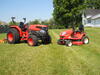








 You point out the simple. I weigh my truck and trailer to get a baseline, see where I am at, not trying to max out this or that. Maybe one day I add an extra passenger or two, maybe one day I have a ballast box on the tractor instead of a bush hog, maybe one day I throw a generator in the bed when we take the camper, at least I have weigh tickets to see where I am at, and if I have to make load changes, I know about where I will be on the axles. By the way, will you share a copy of your weight ticket? Philip.