When you click on links to various merchants on this site and make a purchase, this can result in this site earning a commission. Affiliate programs and affiliations include, but are not limited to, the eBay Partner Network.
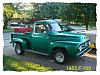
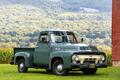
The hickory I originally used wasn't kiln dried. My dad had it milled and It just sat in a an old shed for several years till i took some of it for my bed. It didn't hold up very well and started cracking and was looking bad. I bought some good kiln dried hickory from a local lumber mill and replaced my bed wood, I also replaced the plain steel strips with polished stainless and added the side strips. I modified the 4 bolts that usually came thru the wood so they don't show. Gives it a cleaner look.
In Missouri insects and rot would be your concern, similar to mine in NC. I used a wood called padauk that has similar qualities of teak at a fraction of the cost. It is reddish at first then dark brown after a few weeks outside.
Wow ,That really looks great where did you get this fantastic looking wood if you don't mind me asking.
I used Hickory in my bed. Luckily it didn't cost me anything for the wood since it was from a tree my dad cut down and had milled. But it did cost me a lot to buy a good planer to get the boards to correct thickness.
how is your bed wood mounted without using the 4 large bolts and washers? That is how I want to install mine.
I've studied the picture and for the life of me I can't figure out what it's supposed to illustrate or how it's supposed to work. I'm about ready to begin working on the bed of my 1952 f1. As I understand it, the crossmembers usually bolt to the sides and the big carriage bolts go through a big counter-sunk washer, the wood, the crossmembers and the frame. There are a few things I'm not clear on.
1. Does the wood sit on the lower angle or ledge of the bed sides? My edges are in really bad shape and have been reinforced by a previous "restorer" by welding in heavy pieces of angle iron. I plan to have the wood sit on top of the ledges. I hope to get a tight fit between the outside boards and the sides.
2. I notice that some rout a rabbet or groove on the edge of the boards so that the tops of the strips are level with the tops of the boards. Others just set the strips on top of the boards. What is the best way? It seems to me that the original purpose of the strips is to allows stuff you're loading to slide on the floor with less friction.
3. I plan to use white oak because it should stand up to the weather better.
Not sure if they are Mar-k. I am not that far away from Mid Fifty's so that's where I have done all my business. It's a couple of hours away so it's convenient. Diane and Jesse have treated me so good. Plus, I have been back in the warehouses and my jaw dropped.
I used white oak on my 54 with a couple of coats of Cuprinol, in 1971. Vehicle always sat outside. Boards started rotting around 1995.
I think originally Henry used yellow pine (or whatever was available) , painted to match the truck.
On my 56 F100 I went for broke and used white oak. It was cut and milled to the correct size and stained all the way around with an exterior marine spar varnish. It held up good for 5yrs but it has lost the topside protection and has turned gray. I can save it, but I dread the thought of resanding the tops of the boards. There are a bunch of stainless steel bolts and bed strips to fuss with. On my 64 F350 I went with locust boards. They are dry and stacked waiting to be milled for the bed. Locust gets harder as it ages and is rot restraint They still have to be planed to the proper thickness then coated with a stain. Locust when stained is multicolored. I also have to order bed strips, not sure if I want stainless or plain steel as it will be a work and play toy. It's going to haul the other toys hope fully in an enclosed trailer.
Last edited by GJCAT; Nov 26, 2022 at 10:03 AM.
Reason: revising description