When you click on links to various merchants on this site and make a purchase, this can result in this site earning a commission. Affiliate programs and affiliations include, but are not limited to, the eBay Partner Network.
I am starting to work on getting my ‘55 F250 back on the ground after having removed the suspension. I need to buy tires. I am going to stick with Bias Ply tires since they it sounds like they are easier on manual steering trucks and they are better made than they used to be.
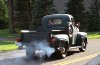
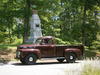
When I got the truck The rear tires were 7.50-16 tires with an aggressive tread similar to the picture below.
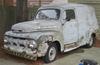
the Fronts were 7.00-16 with a standard tread and pie crust sides.
A few questions…
-Did they come staggered from
the factory or is this an owner change?
-Is there any downside to the different tread patterns front to rear or should all four tires be the same?
-Should all four tires be the same size and if so 7.00 or 7.5 or another size?
- I like the idea of a slightly more aggressive tire on the back as I do expect to occasionally use it in my field to pull a brush hog. I also like the way they look but maybe not appropriate for modern roads? But whatever the best configuration is I will probably go with.
That said it will be used mostly on 35-50mph roads in the area.
Thanks for the advice and feedback I am sure it will be very helpful in getting me to a final decision.
I have found when it comes to tires, there are lots of opinions--which is good. You'll get lots of advice. My opinion, for what it's worth, is that all four tires should match. I have bias tires, and they do ride rough for the first mile or two after the truck has been parked for a few days--flat spots from sitting is the presumed cause. I've been told that bias tires don't do that anymore, but mine do. I can live with it, so it's not really a problem. For some, it will be annoying.
On the rare occasions when my wife agrees for a ride in the old truck, she is sure it is going to shake to pieces before we reach the main road. I'd put her in the annoyed group. The shaking and rattling is what she remembers and associates with the truck, and as a result, is always amazed when I make it back from long extended trips.
Bottom line--maybe ride quality is an important consideration in your tire choice--depending of course, on the disposition of your wife. LOL.
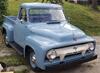
I've had the same issue that Jim has with the tires I put on the truck. For the first few miles they seem to have a flat spot. I've assumed it's because I purchased the least expensive I could find - STA Transport 650-16 from JEGS. They look like the the ones you've pictured with normal tread and pie crust edges. By the way, if you're looking for new tires, be prepared to wait. I ordered B.F Goodrich tires from Coker for my Model A in May and they're still backordered even though they're made in USA.
I didn’t even think of availability. I was going to have the old ones removed so I could paint the rims. The trick would have been stuck up on jackstands for the winter……I think I will wait to paint the wheels and leave the ancient tires on so I can at least move it around. Thanks for the tips!
For what it's worth, I've been running Firestone bias ply tubed tires on an F-1 for about 10 years. These don't have any flat spot issues and seem just fine for puttering about. The more aggressive rear tread types would be better for any field work. The skinnier the tire the more prone it is to follow any ruts in the road surface. I'm using 650x16s on the F-1 and have only a few roads where the truck wants to steer itself. The other old Ford in the garage has 600x16 tires and it is like a puppy on a leash lunging after every crack, ripple and groove in the roadway. For this reason, I would suggest that you stay as wide in the front as the rear.
My last comment is about mounting. There is a fine little local shop that does mostly brake and tire work. He struggled with mounting the tires without damaging the tubes. After a couple pinched tube attempts, I do the mounting and Sparky balances. Everybody wins. You may have a similar experience.
My F-3 came with 7:00 17's front and 7:50x17 rear originally and that is what I have stayed with, when new tire time comes I will put the same size on all 4. In the event of a flat steering becomes awkward
I've been running General Jet Air Bias ply tires on my truck and don't have any issues with flat spots unless it sits for a very long time...like over the winter. But it smooths out quickly. Here is the link but it appears that they don't have the blackwall tire only whitewall at this time. They have many different tires and sizes.
I'll second FortyNiner's comment about the importance of having the right person mounting your tires when tubes are involved. On the often mentioned, and fondly remembered, white knuckle road trip to Kentucky, I had two flat tires. The tires were brand new, and problems with them were not something I was expecting. Within the first year, there were issues with the other two tires as well. The guy mounting them must not have been familiar with tubed tires. The tubes were bidding in such a way that holes developed.
I used to be a big proponent of radial tires on old Fords since they drive very nicely. Previously I have installed 215-85 R16 tires an F-1 and had a set on an F-2. Both trucks drove nicer than any bias ply equipped truck I have driven. However, the issue I have found is the radial tires get old quickly (seems to be happening faster as I age). Unlike bias ply tires that go for decades, the radial tires will eventually come apart. I recently installed the third set of radials on my off topic 53 sedan since the last set aged out (again). I run radials on that car since almost every time I drive it I go highway speeds and am not willing to put up with bias ply tires at 75 mph. If you drive a lot and plan to replace your tires every seven to ten years, you may want radials.
Both radials and bias ply can be hard on your steering box. Don't turn the steering wheel without the vehicle in motion. If you grab the steering wheel and muscle a turn while sitting still you will wear out your steering box. Most people seem to have forgotten that since all modern cars come with power steering.
This Hennessey Takes the Expedition Tremor's Off-Roading Capability to the Next Level
Slideshow: The VelociRaptor Expedition gains a lift, upgraded suspension, Brembo brakes, and trail-ready equipment while retaining the stock 440-horsepower EcoBoost V6.
Rezvani's Latest Post-Apocalyptic Monster Is a Ford F-150 Raptor Underneath
Slideshow: Called the Fortress, the 850-horsepower pickup combines Raptor underpinnings with military-inspired features, survival equipment, and a starting price of $285,000.