When you click on links to various merchants on this site and make a purchase, this can result in this site earning a commission. Affiliate programs and affiliations include, but are not limited to, the eBay Partner Network.
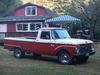
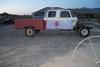
Taking a deep dive into the 1966 F-100 I acquired last year. I knew the floor pans needed to be replaced, but now that the front clip is off there is more. Lower front corners of the cab are rotted. How big is this job to fix. Or, as someone with no experience cutting/welding, how expensive is a job like if I had a shop do it?
I have been trying to get folks to clean out the A-pillar. That's where the rust you have starts. The floor boards and roof rust is a product of condensation in the cab. These trucks aren't worth as much as these newer ones we drive daily, but they require more protection from the elements. If I were you it would be time to learn how to fabricate metal and weld it in. The cost to have it done would buy a rust free truck. IMO.
You say the floor pans need work and your A pillars. I would bet your rear cab corners are bad also. You would have to pay a shop a bunch of money to fix your problem. If you did it yourself you would spend money on a welder, trying to learn how to weld and believe me that is a boat load of work and time. plus the price of floor pans, rear cab corners and other patch pieces. I always tell people buying another rust free cab would put you miles ahead of the game. You could have a cab shipped to you. Or just like Christmas said buy a complete truck have extra parts and sell the other extras to off set your investment. Just my 2 cents
You're lucky in one respect, you are in a part of the world where reasonably rust free cabs actually exist. The rust you have is an easy fix if you have the skill and the tools. You just need to decide if you are up to doing it. There are a lot of parts coming on the market to deal with the rusty places in these trucks. Like those lower cowl parts. Just type lower cowl in the search box. Carolina Classics F100 (carolina-classics.com) None of that was available 5 years ago. But it is dirty time consuming, "think months or years" work. And the cost will be right up there with buying another cab. But if you repair it you will have the satisfaction of knowing you saved one more from the crusher.
You could be faced with this. My wife traded her old Scion for a 1938 DeSoto. I drug it home yesterday with the statement from her you need something to do and I need a Rat Rod. Naturally it will have Ford power. If I live long enough.
If it were me I'd repair it but where I live that cab is considered to be in rather pristine condition, and WTH ya might as well learn how to weld on em (old trucks/cars are kind of an all in or all out thing).
Nice Desoto Cropduster.
Unless Harley happens to be from eastern Washington, I’d never offer up Washington as a place where rust-free bodies abound. No offense to you, Harley, and that cab looks far better than what many start out with. Good luck.
Thanks to all of you for the responses. I’m going to be all-in with this truck. I have very little money invested in it now because it was given to me. And, as I’m closing in on 70 years on this earth, this is a challenge I want to say I tackled and it’s a relatively inexpensive learning experience.
There won’t be any exterior body/paint expense because I’m going for a sleeper look. Clean/paint the frame, engine bay and interior and leave the 55 years of “experience” untouched on the outside. The body is surprisingly straight and rust free considering the truck has been parked many years.
Thanks to all of you for the responses. I’m going to be all-in with this truck. I have very little money invested in it now because it was given to me. And, as I’m closing in on 70 years on this earth, this is a challenge I want to say I tackled and it’s a relatively inexpensive learning experience.
There won’t be any exterior body/paint expense because I’m going for a sleeper look. Clean/paint the frame, engine bay and interior and leave the 55 years of “experience” untouched on the outside. The body is surprisingly straight and rust free considering the truck has been parked many years.
Nice patina I like trucks that are left with as much original as reasonable possible but that's just me.
Not sure how much bodywork you've done but as far as putting new metal in once you get used to it on the easier stuff like floor pans etc the pillars won't seem so hard. BTW personal preference but I avoid lap welds and try to butt weld when I can (avoids re-rusting at the seam).
Good luck.
Nice patina I like trucks that are left with as much original as reasonable possible but that's just me.
Not sure how much bodywork you've done but as far as putting new metal in once you get used to it on the easier stuff like floor pans etc the pillars won't seem so hard. BTW personal preference but I avoid lap welds and try to butt weld when I can (avoids re-rusting at the seam).
Good luck.
No body work background at all. Never welded. Willing to learn but a little hesitant because last thing I want is to burn the place (or myself) down!
Learning to use a MIG is pretty easy. And with body work you are only doing little dots until they are all connected. Or you are doing spot welds, even easier. I would suggest if you plan on giving it a try to buy a small MIG of good quality ie. Miller or Lincoln that uses shielding gas, ( C-25 ) and not one of the flux-core machines. The flux core wire will leave a lot of slag and cause you nothing but aggravation. Then get yourself an old door panel or hood and practice connecting the dots.
Learning to use a MIG is pretty easy. And with body work you are only doing little dots until they are all connected. Or you are doing spot welds, even easier. I would suggest if you plan on giving it a try to buy a small MIG of good quality ie. Miller or Lincoln that uses shielding gas, ( C-25 ) and not one of the flux-core machines. The flux core wire will leave a lot of slag and cause you nothing but aggravation. Then get yourself an old door panel or hood and practice connecting the dots.
And don't cut everything out all at once (as in floor pans, pillars etc) or take the cab off the frame I've seen people with minimal experience do that then the cab springs or warps or whatever & things don't line up correctly. Mine was far worse rustwize than yours to the point it had sunk down onto the frame, the doors wouldn't close etc. & I had to ask here for original dimensions so I could pull the cab back together. I left it on the frame & did it one piece at a time & it turned out good. Having said that I'm a novice of sorts an experienced body person might do it differently.
This spring I spent two months doing exactly what you are starting to do. I'd never done much welding either, nor any significant body repairs, but since I got a decent small MIG (Hobart Handler 140) it really wasn't that hard.
As is so often the case, the prep and setup of each piece was considerably more time consuming than the actual welding. Carolina Classics had just about every panel I needed. Think I spent something like $700 on sheet metal and a significant amount on paint, primer and seam sealer. But very few body shops would take on a job like this (too busy doing collision repair) and it would run into the several thousands if not more. You can do it.
Edited to add: Thread with pics https://www.ford-trucks.com/forums/1...body-work.html
Exactly the issues my truck had.
One little piece at a time and you got it done. Be aware that if your outer cowls are bad, so are your inner kick panels if you can't already see it.
Rezvani's Latest Post-Apocalyptic Monster Is a Ford F-150 Raptor Underneath
Slideshow: Called the Fortress, the 850-horsepower pickup combines Raptor underpinnings with military-inspired features, survival equipment, and a starting price of $285,000.

















 https://www.ford-trucks.com/forums/1...body-work.html