When you click on links to various merchants on this site and make a purchase, this can result in this site earning a commission. Affiliate programs and affiliations include, but are not limited to, the eBay Partner Network.
Check out B&W hitches. Have several really nice adjustable hitches in different heights and when you are done the fold underneath the rear bumper to eliminate the sore shins.
Are you going to be towing any consistent loads? Or just want a ball mount for general use when it's needed?
The old "formula" we used when setting up a customer's truck, if they did not know what they might be towing, was to measure it out at 17" from the top of the ball to the ground. Assuming a not-too-heavy tongue load this put most utility and light weekend trailers at a nice level stance.
No idea if there is an industry standard for trailer frame heights, or if we just got lucky going generic like that.
But the end result you're looking for is normally to have the trailer sit level when attached to the truck, and not have too much drop on the truck suspension that the front sits high and light. So it really does depend on the load of the trailer and truck bed, and the rating of the suspension. If that's a light-duty F150 and you try to tow a big trailer or a fully loaded car hauler your suspension might drop a HUGE amount, making your initial choice of ball mounts too low.
Hence my wishy-washy answer...
From your initial description I would say a 4" mount would get you in the ballpark, but you really need to check it against your expected loads right there at the truck.
Good luck! Hopefully others have more direct answers for you with direct experiences with F150's set up like yours.
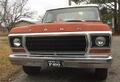
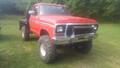
Beautiful truck by the way! Is it stock height? What's it's GVWR?
Usually around 17" is right as mentioned above. There isn't a standard the trailer manufacturers are required to follow or anything though, so if you don't have a specific trailer to match up, go with 17" or 18" to match your other rig.
1. I would load the truck as it will be normally loaded when towing the trailer. Full tank of fuel, what ever you are carrying in the back of the truck.
2. Trailer loaded normally as when towed. Put in on a temp installed bumper ball and see how much the ol 1/2 ton squats.
3. Measure how far the bottom of the receiver hitch is off the ground.
4. Look at the trailer angle (nose high or low).
5. Do the gee wiz math to see how much of a drop hitch you need. Not really gee wiz, you just need to see how much your truck is going to settle with the normal load. If you just back the truck up to the trailer and get what measures out. Then it can wind up being to long/much of a drop when the load is on the truck.
Or skip all that and just get the B&W adjustable hitch to be able to make adjustments as the trailer loads differ (if you haul a lot of different loads) and the truck squat changes.
Rezvani's Latest Post-Apocalyptic Monster Is a Ford F-150 Raptor Underneath
Slideshow: Called the Fortress, the 850-horsepower pickup combines Raptor underpinnings with military-inspired features, survival equipment, and a starting price of $285,000.