When you click on links to various merchants on this site and make a purchase, this can result in this site earning a commission. Affiliate programs and affiliations include, but are not limited to, the eBay Partner Network.
I've gotten a lot of answers solved using this forum here before, so I figured I'd try to get some answered that already weren't.
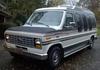
SO, basically I have a 1990 E350 that had a brief surface engine fire due to a gas leak. The only parts that were visually damaged were the fuel injector wires which have been spliced accordingly, and also a couple small vacuum lines which have also been replaced. The current state of my bus (it's an E350 cutaway with a 460 EFI) is in a bizarre situation. It has fuel, spark, and compression. It takes a multitude of timed intervals of cranking the engine for it to actually start, each time getting closer and closer to idling until it actually does, and will STAY idling for as long as I open the throttle to let in air. It's only when I take my foot off the gas pedal and let it idle is when it stalls. Usually it takes me 5-8 five minute intervals until it turns over, resulting in the following situation:
(the camera friezes briefly during recording for some reason, so just ignore that.)
My question for you today is this: Why does it take some many attempts to start, and when it does, why does it stall almost immediately?
I will list here the fixes/adjustments I have made thus far, as well as known issues/fixed issues.
GOODS:
-engine coolant sensor has been replaced
-battery terminals and battery have been replaced
-fuel injectors are functioning and to my belief have power, as when it idles and I accelerate there is no misfiring or delay
-spark plug wires, spark plugs, distributor cap, and ignition coil have all been replaced
-both fuel pumps (in-line and tank) have been replaced
-there are no vacuum leaks, as I do not hear any nor are there any symptoms to there being one. The engine runs very rich when it idles briefly
-oil, transmission fluid and coolant are, while in need of replacement, present and aren't in poor condition
BADS:
-I honestly could not tell you if the MAP sensor is working or not. I have tried three different ones all with the new intake vacuum line, and I seemingly noticed no difference
-when idling and cranking, the alternator gauge is going absolutely out of control. It fluctuates constantly
-while very minuscule in number, there are just maybe one or two small vacuum lines that are melted and in need of replacement still
-the breather valve on the fuel tank is broken, not done by me, but I am aware it is broken and not sealed with the tank
-brakes don't work at all, even with fluid
-I have yet to perform an alternator test
This bus is an old church bus that sat for quite some time and just needs a whole lotta love, which I am fully prepared to give. I know I typed a lot, but I really want to give as much information as possible.
Please don't be afraid to ask for images or ask questions regarding anything whatsoever about this E350, as I will gladly respond and send ASAP.
Sounds like the fuel pressure may be too high.
Check the vacuum line to the Fuel Pressure Regulator (FPR) and check the fuel pressure with a gauge.
You can rent a fuel pressurea gauge at an auto parts store.
Just make sure it has the Ford adapter with it when you rent it.
I actually have replaced the vacuum line to the regulator already, however, not with the OEM design. Does the size/length of the hose matter, or as long as it fits over each end tightly and causes no leaks?
I actually have replaced the vacuum line to the regulator already, however, not with the OEM design. Does the size/length of the hose matter, or as long as it fits over each end tightly and causes no leaks?
Checking for a vacuum signal at the regulator is just one part of testing the device. If you have vacuum at the connection into the FRP then its on to checking if it is working properly---no signal is a problem, failed device quite another.
Either way checking the actual fuel pressure will be important diagnosing this problem.
Checking for a vacuum signal at the regulator is just one part of testing the device. If you have vacuum at the connection into the FRP then its on to checking if it is working properly---no signal is a problem, failed device quite another.
Either way checking the actual fuel pressure will be important diagnosing this problem.
Alright, I'll try to get to checking the fuel pressure tomorrow.
HOWEVER, I have fixed the rough start problem and immediate stalling. In my case, I just simply had old gas in the tank and refilling it with new gas has it starting immediately. It now idles reasonably fine, still running very rich, and then once it reaches normal operating temperature stalls after idling for maybe 10-15 seconds. As long as I open the throttle, the engine runs and has no misfiring/hesitation.
Check your fuel pressure, report it here and answers or suggestions might be forthcoming.
Here are the results of the fuel pressure test;
Turning the key to the ON position and letting the pump run without cranking the engine, the PSI slowly climbs to 28 PSI and stops (takes maybe 20 seconds to do so)
With the engine idling, it took almost a minute to reach barely 28 PSI
Your fuel pressure should be between 32 to 35 psi at idle with the vacuum line connected to the FPS and 39 to 45 PSI with the vacuum line disconnected from the FPS.
The fact that it is low indicates a possible clogged fuel filter, bad in tank pump, bad high pressure pump, bad fuel pressure regulator, or a problem with your fuel injectors sticking open.
You said : "This bus is an old church bus that sat for quite some time". How long did it sit and was it sitting because of the fire? How long have you owned it and what are your plans for it?
You said : "This bus is an old church bus that sat for quite some time". How long did it sit and was it sitting because of the fire? How long have you owned it and what are your plans for it?
I don't exactly know how long, but if I were to guess 3-8 years.
Also the fuel pumps as I mentioned, both in-tank and in-line, were replaced as well as the fuel filter. Just got done replacing the fuel pressure regulator and it's still struggling to start.
The fire happened on my part a few months ago because the shrader valve in the fuel line was broken and was spraying gas, so when the engine initially backfired it caused a brief surface fire. All visual issues have been fixed.
The MAP sensor definitely isn't functioning at all and hasn't been. After a few cranking attempts, as per usual it began to idle roughly, running very rich as it normally does. I decided to check the MAP sensor just to see if it would make a difference because I had no way of proving that it was ever working. Unplugging the vacuum line to the sensor - nothing. Unplugging the MAP sensor connector itself - also nothing. Putting my finger over the vacuum line - you guessed it, nothing. No change in idle RPM or performance whatsoever, as if nothing happened.
So clearly a massive issue here is the MAP sensor. Why would it not be working? I've swapped it out with three others and there was no difference. The wires to the connector seem fine.
The MAP sensor definitely isn't functioning at all and hasn't been. After a few cranking attempts, as per usual it began to idle roughly, running very rich as it normally does. I decided to check the MAP sensor just to see if it would make a difference because I had no way of proving that it was ever working. Unplugging the vacuum line to the sensor - nothing. Unplugging the MAP sensor connector itself - also nothing. Putting my finger over the vacuum line - you guessed it, nothing. No change in idle RPM or performance whatsoever, as if nothing happened.
So clearly a massive issue here is the MAP sensor. Why would it not be working? I've swapped it out with three others and there was no difference. The wires to the connector seem fine.
Do you have vacuum on the line going to the MAP? Do you have a hand vac you can hook up to the MAP? I haven't had to mess with a ford one yet, but I remember my daughters 95 Toyota having issues, and she was getting low vacuum on the line for the MAP, I hooked up my hand vac to it and slowly pulled about 22 pounds on the map, the car started running very smooth, when I released the pressure it ran rough again. I rerouted the vacuum temporarily so it would pull harder, it was a quick fix, but ultimately had to pay the $200 for a new MAP sensor. If you have any cracks in the vacuum lines at all, it takes away from the whole system and it's suggested that all the rubber lines should be changed every 8 to 10 years.
So at the time you checked the fuel pressure and were only getting 28psi, you had already changed all 3 fuel pumps, filter, and FPR?
If its not 32 to 35 psi then you still have a fuel problem.
Did you take the vacuum line off of the FPR while it was running? The pressure should have gone up to 39-45psi. Did you check to see if you have any vacuum on the line vacuum going to the FPR? If you don't have vacuum on the vacuum line going to the FPR (and it was connected) then the pressure should have read a higher psi.
With the fuel pressure gauge connected and the engine not running, if you cycle the ignition switch from off to run 3 or 4 times, the fuel pressure should build up to over 30 psi and stay there. Have you tried that?
If the fuel pressure immediately drops off then you have either a leak, bad fuel pump, bad fuel pressure regulator, leaking injectors, or injectors being held open when they shouldn't be.
The Ford high pressure fuel pump is capable of pumping over 21 GPH at a working pressure of 39 PSI and has a internal over pressure relief valve set at 123 PSI should the fuel become restricted. So again if everything is working properly, you should have no problem building up 32 psi... I suspect that you have problems with your injectors...
On the 5.0 and 5.8 engines you have to remove the upper plenum to remove the injectors with the fuel rail.. I believe on the 7,5 engine that you can loosen the fuel rail and pull the injectors out of the lower intake without removing the plenum. If so then you could pull the injectors out leaving them connected to the fuel rail and cycle the ignition switch and look for any injectors that might be spraying out fuel. You might want to put a container like a vegetable can or something under each injector so that if one is leaking, you can catch the fuel.
Rezvani's Latest Post-Apocalytic Monster Is a Ford F-150 Raptor Underneath
Slideshow: Called the Fortress, the 850-horsepower pickup combines Raptor underpinnings with military-inspired features, survival equipment, and a starting price of $285,000.