When you click on links to various merchants on this site and make a purchase, this can result in this site earning a commission. Affiliate programs and affiliations include, but are not limited to, the eBay Partner Network.
Hi fellas!
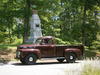
been venturing about in my “fordge”, went to change the oil.
Drained the crankcase, but oil wouldn’t drain from the filter housing. I had to pump it out.
Oil pressure is fine, and I read that there’s a bypass system.
But I would like to know what’s up?
It is a by-pass type oiling system, meaning that only a small part of the oil is filtered and gets "by-passed" from the rest of the system.
Unless your filter can has a drain plug, you guessed it, you'll have to suck it out. Suction gun works best.
I’ve heard Joseph Lucas described as “The Prince of Darkness”, he’s got nothing on Henry Ford’s “just add something to the Tin Lizzy” concept of engineering, 😳
Double clutching first gear is kinda fun, but geez, removing rear ends to drop transmissions? Pumping out oil?
Out of curiosity; I was reading how some folks don’t run filters, remove the can, block the housing off, and rely on oil changes every thousand miles. Does the system function without a filter?
My lawnmower don’t have a filter, my old sportster didn’t have a filter, my UL flathead didn’t have
Originally Posted by fordf348
I use a turkey baster, but not today
Where there’s a will, there’s a way.
I haven’t changed the oil in a while because I haven’t run the car engine.
I can’t remember if I pumped oil the last time or not,
the turkey baster idea reminded me, Happy Thanksgiving to everyone!
Out of curiosity; I was reading how some folks don’t run filters, remove the can, block the housing off, and rely on oil changes every thousand miles. Does the system function without a filter?
Model T's and A's didn't have filters, and neither did a lot of early engines. Filtering engine liquids (I use the term liquid because sand, salt, and ground glass are also fluid.) is an evolutionary process that has yet to be perfected. To change the oil every thousand miles simply states that you don't know why, no science to back it up. Truth is that you could probably run much longer than that if you went by spectrographic oil analysis recommendations.
Model T's and A's didn't have filters, and neither did a lot of early engines. Filtering engine liquids (I use the term liquid because sand, salt, and ground glass are also fluid.) is an evolutionary process that has yet to be perfected. To change the oil every thousand miles simply states that you don't know why, no science to back it up. Truth is that you could probably run much longer than that if you went by spectrographic oil analysis recommendations.
The talk about running without a filter is on the V8's where it was an option from the factory. No way I'd run without one. I had my oil analyzed twice, both times with around 4,000 miles on Mobil1 synthetic. The analysis showed it could have gone much longer. (These were after a rebuild, clean engine to begin with).
I believe this is from the Early Ford Club V8 Times magazine:
"A bypass filter like the original will remove finer particles than a "full flow" type filter
Most ring and bearing wear is caused by particles under 20 microns
a bypass filter will remove 98% of 2 micron sized particles
A full flow filter most likely will open the internal bypass valve on cold startup and not filter till the oil thins some, then ---
40% at 10 microns
60% at 20 microns
90% at30 microns
97% at 40 microns
87% capture rate for single pass
the "full flow" filter has to be a compromise between filtering and flow, the ideal setup would be a combination of full flow and bypass
The million-mile Mercedes only had a bypass filter"
The talk about running without a filter is on the V8's where it was an option from the factory. No way I'd run without one. I had my oil analyzed twice, both times with around 4,000 miles on Mobil1 synthetic. The analysis showed it could have gone much longer. (These were after a rebuild, clean engine to begin with).
I believe this is from the Early Ford Club V8 Times magazine:
"A bypass filter like the original will remove finer particles than a "full flow" type filter
Most ring and bearing wear is caused by particles under 20 microns
a bypass filter will remove 98% of 2 micron sized particles
A full flow filter most likely will open the internal bypass valve on cold startup and not filter till the oil thins some, then ---
40% at 10 microns
60% at 20 microns
90% at30 microns
97% at 40 microns
87% capture rate for single pass
the "full flow" filter has to be a compromise between filtering and flow, the ideal setup would be a combination of full flow and bypass
The million-mile Mercedes only had a bypass filter"
Whelp, guess I’ll keep the filter (and get a turkey baster)
thx Bob...I sent out a sample to Wix over a month ago, no results yet. I think I still have the old oil from that change.
I sent out 18 samples every month for lube oil, coolant, fuel, and hydraulics. Got all results back within two weeks (not Wix). So thinking something went wrong in your case. Might give Amazon a shot and Wix a call.
The picture at the top of this thread isn't a V8, it is an H series six. I don't think you can remove the filter off an H the way you can from a flathead V8.
Rezvani's Latest Post-Apocalytic Monster Is a Ford F-150 Raptor Underneath
Slideshow: Called the Fortress, the 850-horsepower pickup combines Raptor underpinnings with military-inspired features, survival equipment, and a starting price of $285,000.