When you click on links to various merchants on this site and make a purchase, this can result in this site earning a commission. Affiliate programs and affiliations include, but are not limited to, the eBay Partner Network.
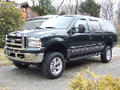
2000 Ford Excursion 6.8 V10. #2 cylinder intermittent spark. New coils , new plugs properly gapped and swapped injectors. Still misfire under a load cylinder 2. No CEL. Cleaned throttle body and MAF. Checked all wiring from PCM to harness for plugs and injectors. Also, PCM was taken apart to ensure no water intrusion. Removed coil for #2 and grounded out against motor and can see intermittent spark with multiple coils tried. I’m thinking it’s mechanical due to no codes and no CEL. OBDII shows no codes. Cylinder compression equal throughout. At my wits end.
Taking your above mentioned actions into account, I would go back over the wiring and electrical connectors plugs (and clips) to the COPs. Look for poorly seating electrical connectors and or questionable wire to connector pin connections and dirty contacts at those points. With it being intermittent the electrical pathway is at least sometimes good, so search for something that could be responsible for the interruptions, like dirty connections or corrosion at the wire to pin joints. Ensure that the COP electrical plug and its retaining clip are seating fully and latching with no play in them.
Good luck and keep us posted on your progress.
This is an old TSB:
ACTION The misfiring cylinder must be identified through Self-Test misfire codes or through WDS Power Balance. Rule out base engine problems, rule out fuel problems, and then look at ignition problems (be sure to rule out coil primary circuit issues). Once the above steps have been completed, and the issue is in the secondary part of the ignition system, the oscilloscope procedure outlined in this TSB can isolate the difference between a coil or spark plug problem.
Rule out coil primary circuit issues before proceeding to coil secondary issues such as the spark plug, coil boot, or possibly the coil. Use the WDS Oscilloscope with the COP kit to determine if the issue is the coil or the spark plug.
Started testing wiring to coil pack 2. Full continuity and no resistance on wire to capacitor. Oddly, other side of coil connector is showing 98 ohms from capacitor wire to pcm wire. Only cylinder that is like this. If there was a pcm issue, would it not show a CEL? By the way, key off. When unplugging harness from PCM, it goes away. I did have an issue with water intrusion in the fuse panel which has since been fixed. Could it be a remnant issue from that?
Started testing wiring to coil pack 2. Full continuity and no resistance on wire to capacitor. Oddly, other side of coil connector is showing 98 ohms from capacitor wire to pcm wire. Only cylinder that is like this. If there was a pcm issue, would it not show a CEL? By the way, key off. When unplugging harness from PCM, it goes away. I did have an issue with water intrusion in the fuse panel which has since been fixed. Could it be a remnant issue from that?
For cylinder number 2, it looks like it would be PCM pin number 78. Correlated with code P0352.
If you had water into your PCM, then that is the most likely cause of your problems, but without testing it is impossible to say for sure.1. CHECK FUNCTIONALITY OF SUSPECT COIL DRIVER (CD) CIRCUIT
Disconnect suspect coil (determined from the table).
Connect incandescent test lamp between IGN START/RUN and suspect CD circuit (determined from the table) at the coil on plug harness connector.
Disable fuel pump by disconnecting inertia fuel shutoff switch.
Observe incandescent test lamp while cranking engine.
Is the test lamp blinking consistently?
Yes
KEY OFF. GO to 2
2. CHECK IGN START/RUN VOLTAGE TO SUSPECT COIL
Key on, engine off.
Measure voltage between IGN START/RUN circuit at the coil on plug harness connector and ground.
Is voltage greater than 10.0 volts?
Yes
KEY OFF. GO to 3
3. CHECK SUSPECT CoilDriver CIRCUIT FOR OPEN IN HARNESS
Disconnect PCM.
Measure resistance of suspect CoilDriver circuit between PCM harness connector pin (determined from the table) and coil on plug harness connector.
Is resistance less than 5 ohms?
Yes
GO to 4
4. CHECK SUSPECT CD CIRCUIT FOR SHORT TO VPWR IN HARNESS
Key on, engine off.
Measure voltage between suspect CD circuit at the PCM harness connector and ground.(PCM pin number 78)
Is voltage less than 1.0 volt?
Yes
KEY OFF. GO to 5.
5. CHECK SUSPECT CD CIRCUIT FOR SHORT TO GROUND IN HARNESS
Measure resistance between suspect CD circuit at the PCM harness connector and ground.
One odd thing that I noticed is that there is good voltage and the circuit is blinking while turning over the motor. However, the suspect circuit shows a solid 14 volts while the vehicle is running. No intermittences in voltage when testing a the cop plug. All other coil circuits are intermittent. This would be an indication that the coil is not firing on every revolution. Leaning towards the PCM but no codes. Is that a possibility?
One odd thing that I noticed is that there is good voltage and the circuit is blinking while turning over the motor. However, the suspect circuit shows a solid 14 volts while the vehicle is running. No intermittences in voltage when testing a the cop plug. All other coil circuits are intermittent. This would be an indication that the coil is not firing on every revolution. Leaning towards the PCM but no codes. Is that a possibility?
If the PCM controls that power flow, then that is the problem. Strange that there are no codes. Do you have ForScan? If you can monitor the live data, it may give you a better picture of what is wrong, but it seems all signs point to the PCM. You could sent it in to a place like this. PCM Repair and see if that can be fixed.
Chasing these electrical problems can be a massive pain without live data or a PICO scope. Good Luck!
Ordered a used pcm so I can send mine out to get repaired. Will I need to do anything with the PATS key or will the truck still recognize my old keys?
PATS uses the Powertrain Control Module (PCM) to enable or disable the engine. The PATS module communicates with the PCM over the Standard Corporate Protocol (SCP) communication network in order to enable engine operation. The PATS module and the PCM use sophisticated messages in order to prevent theft. The PATS and PCM share security data when first installed together, making them a matched pair. After this security data sharing, these modules will not function in other vehicles. The PCM shared security ID is remembered even if the battery is disconnected. The PATS module also stores the vehicle key identification code, even if the battery is disconnected. There are special diagnostic repair procedures in this workshop manual that may be carried out if either a new PATS module or the PCM needs to be installed.
The Security Access Procedure is used to obtain Passive Anti-Theft System (PATS) security access. PATS security access must be granted to erase ignition keys, enable/disable the spare key programming switch (PID SPARE_KY) or perform a parameter reset for PATS, and may be required to program ignition keys. The Security Access Procedure invokes an inherent 10-minute time delay prior to granting security access during which the diagnostic tool must remain connected to the vehicle. Once security access has been granted, a security access command menu is displayed which offers various command options (refer to PATS Configuration Command Index).
Possibly with ForScan, but you might have to have a special scan tool or a dealer reprogram it for you.
The PCM was bad. Had a new one programmed to my VIN and no further issues. Note for those reading this, if you have PATS keys (chip keys) you will need to have a locksmith or dealer reset you PCM parameters and reprogram your old keys.
locksmith cost $90
Rezvani's Latest Post-Apocalytic Monster Is a Ford F-150 Raptor Underneath
Slideshow: Called the Fortress, the 850-horsepower pickup combines Raptor underpinnings with military-inspired features, survival equipment, and a starting price of $285,000.