When you click on links to various merchants on this site and make a purchase, this can result in this site earning a commission. Affiliate programs and affiliations include, but are not limited to, the eBay Partner Network.
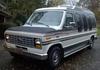
i6 300 on a 1982 ford econoline. Local garage says engine is missing. Perhaps I don’t have a discerning enough ear bc I don’t hear it. I DO hear a clicking/knocking on the higher end that could be lifter or valve? I know compression was about 15% lower on one of the cylinders. Anyway, maybe one of you more experienced engine guys can listen and let me know if you hear it missing at all?
Find a shop that'll do an oscilloscope analysis of your plugs as they're firing---that would determine if you have an ignition issue. If one of your cylinders is down about 15% on compression that's one thing--what sorts of numbers are you getting during the wet and dry compression tests?
There are several ways to check for a misfire. Start at the front or rear of the engine and remove one spark plug wire for a few seconds and then replace it for a few seconds. Repeat this a couple of times and listen for changes in the engine sound as well as vibrations/skipping. Do this one cylinder at a time till you have checked them all. If one of the cylinders has a problem, it will make little difference, if any, when you remove the spark plug wire.
Inspect each spark plug. If one or more cylinders is misfiring, it should show up on the plugs unless they are very new..
Do a cylinder leak down test. You will need a compressor and you can get the tester from a loaner program at one of the parts stores.
lots of videos on how to do a leak down test if you have never done one. It will tell you if you have weak rings or bad valves.
Did you do the compression test with a warm engine? Repeat after squirting a couple of squirts oil in each cylinder to help seal the rings. The oil will only seal the piston rings so if the reading on the low cylinder stays the same, you probably have a burnt valve.
From what I remember correctly, max differences in compression should be no more then 20% of each other. Not sure what normal compression an a 4.9 is but I have always heard that below 100psi, time to rebuild.
Hmmm I don't know I'd be grabbing the spark plug wires while the engine is running to pull them free----last time I did that it rocked my old *** something fierce---like almost 20 years ago.
The compression numbers don't look too bad and as Annaleigh says they're close enough to being considered as okay. The cylinder leak down test would be next.
Isn't this engine subject to distributor and PIP issues due heat and such?
I had one of these engines in an '88 E150 that I'd unknowingly caused a rocker arm issue over the two winters I owned it. As a work truck I'd leave it idling sometimes upwards of 4 hours a day keeping my windshield parts and materials warm while working outside. At idle the oil pressure isn't sufficient to properly lubricate the front two cylinders and with the engine siting at a slight nose-high attitude the rocker arms worn out fairly quickly--the van already had over 180K miles of unknown maintenance when it came to live with me. That situation didn't cause any real issues but I scrapped it without doing any bit of investigating of the rocker arm issue.
Anyway good luck with this---hope its nothing too severe or unrepairable.
And you never went back for more JWA?
Well I remember my fathers sun machine came with a pair of composite pliers used just for removing the plug wires while running diagnostics. They sell insulated pliers just for removing the plug wires. If I remember correctly, we had a rubber mat on the concrete floor and were told to avoid touching any metal parts on the vehicle when ever possible. The best thing to do is remove the plug wires and use a bit of dielectric grease on them so they slide of and on easy. That way when using a puller, its quite simple. With an inline 6 and all of that room, should be a breeze..
Interesting about the rocker arms and the engine not supplying enough oil. wonder if it wold have made a difference to install a high flow oil pump? My 1990 TC blew a head gasket and while I had the top half off of the 5.0 engine, I found most of the rocker arms and pivots worn. I replaced all of the pivots and rocker arms, took the lifters apart and cleaned them, cleaned the push rods, back flushed all we could with kerosene and put it all back together. BTW the head gasket fail was the result of a broken head bolt.
Also, have you checked the timing on the ignition?
JWA mentions the PIP sensor that is used in the EECIV systems but your ignition system should be the Duraspark II system which uses a pick-up coil in the distributor. Now like the PIP, the pick up coil can cause some strange issues as it is on its way out. Unlike the distributor with the PIP sensor, Your distributor does not have to be taken apart to replace the pick up coil. There should be a "Reluctor Wheel" down in the distributor that is removable by lightly prying it up on both sides and then you have access to the pick up coil. Be careful not to loose the little guide pin that keeps the reluctor in place on the shaft.
You know a good test for you to do before you get much deeper in, is a combustion gas leak test. This test will tell you if you have any sort of head gasket leak. Bad head gasket leaks don't always show up as water in the oil or white smoke out the exhaust. This test tells you if you have any combustion gas seeping back into the cooling system. That happens when the head gasket or a cracked block or cylinder head leaks combustion gas into the cooling jacket.
This test along with all the others will give you an excellent picture of the health of your engine.. You can get this tool from the parts stores as a loaner tool.
I have no clue at all about any Ford engine prior to '97, the first year of the Modular Motors---what I said about the PIP ect was just repeating things I've read about the earlier Ford engines.
The oiling issue I mention was due the slight angle the I-6 engines, nose up as installed. At the extended idle times my van endured added to the lower oil flow to the front two cylinders----I'm not sure there would be too much to do except NOT let it idle for so long.
And no I did not go back for more fun with plug wires---didn't see the need. If I were to deal with that type ignition system again I'd use an insulated screwdriver to look for cracks in the insulation first. From there I'd maybe find a set of those non-conductive pliers OR simply have someone else deal with that problem.
Well my learning specialty is on the 85 and 88 E150's. I have learned a great from others participating at FTE. I think in 84 was when the pip sensors were starting to be used in some of the E150's and by 85, The E150 with a 5.0 was given an electronic Feedback carburetor and TFI ignition controlled by a EEC IV computer system and that was when all the 5.0's received a pip sensor. The E150 with a 5.8 was a little slow receiving a pip. It used a carb up until 1987 and finally received its pip and EF
i in 1988.
As to the other comment JWA,, When you said "it rocked my old *** something fierce" My brain went off subject and I wasn't thinking about spark plug wires. And that is where the " And you never went back for more" came from!
I pondered the same joke, thought better of it, somebody would have beat me to it.
I second JWA's oscilloscope suggestion. It can eliminate a lot of the "could be this, might be that, or how about.." They are really slick (even if you think your rig is already running well.) They aren't expensive (used) but the real value is someone who can interpret the waveform patterns. See if there's a local shop that has one.
A mechanic's vacuum gauge is also the only way to fly for diagnostics and tune-up.
Rezvani's Latest Post-Apocalyptic Monster Is a Ford F-150 Raptor Underneath
Slideshow: Called the Fortress, the 850-horsepower pickup combines Raptor underpinnings with military-inspired features, survival equipment, and a starting price of $285,000.