





Brake fluid flush.

Laughing Gas


Joined: Jan 2017
Posts: 1,216
Likes: 94
I've had brakes go out because of water in the fluid not fun...even if that never happened I change every fluid before some would say it "needs" to be. this avoids supplementary issues from just running fluid that is tired/ has contaminants present from wear.
Hotshot


Joined: Aug 2001
Posts: 16,220
Likes: 399
From: Odessa, Delaware

Post Fiend
Joined: Nov 2001
Posts: 6,748
Likes: 118
From: Tallassee, ALabama
You only need a scan tool to bleed the brakes if the HCU has been replaced. Then you follow the ABS bleed procedure, otherwise it is the simple 4 corner brake bleed procedure.

Tuned
Joined: Aug 2012
Posts: 261
Likes: 67
From: SW Cook County, Illinois
That is correct,👍🏁
Hotshot
Joined: Dec 2014
Posts: 17,827
Likes: 3,111
From: Jersey Shore
The entire brake fluid thing has gotten crazy in the USA.
Going back a few decades, during on-going discussions within SAE we discussed the issue but also noted that many did not follow the procedure that was laid out in the owner's manuals, and at times people put petroleum-based products into the master cylinder to keep it up. Also, there were discussions about how to warn owners that the brake pads were wearing out. The initial focus was using the mechanical "squealers" that attached to the pads, but that was ineffective. Also during the '90s there were instances of pickup trucks losing their brakes due to fluid boil. It happened on other vehicles too, but the disc/drum pickup trucks with their front bias were really bad.
At the end of the day, the SAE committees came up with a compromise, and like all compromises, everyone left the table unhappy.
Because of the lack of maintenance, to address the brake fluid boil the adaptation of phenolic pistons to insulate the fluid from the brake pads was universally adopted across all weight classes and vehicle manufacturers. Our company came up with an insulating layer that went between the friction material and steelback. That was incorporated into the early '99-04 brake pads, and initially, even the front pads had a stainless steel heat shield that was added by the caliper manufacturer.
There also were rubber compound changes to the brake hoses and M/C diaphragm to make them more resistant to air transfer. And there were additive packages to improve the life of brake fluid.
To address the pad wear-out warning, a float sensor was incorporated in all master cylinders. That proves to be a very ineffective solution as you can have individual foundation brakes wear out pads due to movement failures or in the aftermarket a change in the wear balance due to friction material formulation changes that let the front or rear brakes wear out first. The volume change in the master is supposed to account for all pads in a combined manner. It doesn't work well when you have one foundation brake on a corner go steelback to the rotor as many of us have. No wear-out warning light.
So the check-off list rids us of needing to do the periodic maintenance of brake fluid. They didn't follow this in Europe, European vehicles still have the schedule in the owner's manual, along with the need for DOT 4 in most cases. In about 3-4 years DOT 3 and 4 end up at the same boiling point.
Or does it. It certainly took the obligation out of the manufacturer's hands and allowed everyone to improve their JD Powers score for maintenance, which actually was the first blood.
Brake fluid turns dark due to water and copper absorbtion. Where does the copper come from? The brazing of the tubes from the flat stock into a tube. It's better at this then it was, but by about 6 years it's where you don't really want it, the additives for anti-corrosion have worn out depending on temp exposure. But the SAE guess was that brakes wore out around 30-40k miles, people would put on new calipers, brake fluid would be changed, and maintenance solved.
So we might not have the same worry about fluid boil that we used to, unless you have over-extended the original design load, changed to a more metallic brake pad, or have issues of hysteresis from slide pins, pistons hanging, or pads rusting in the brackets.
But although you can get away with it, I wouldn't be one to wipe my hands and say "no problem here" based on the owner's manual, it certainly didn't have the best practice in mind.
The Europeans, BMW, VW, Audi ... the guys that run the alps, sort of normal driving but with a trailer, every 2 years or 20-30k miles, DOT 4. But what do they know ......
Going back a few decades, during on-going discussions within SAE we discussed the issue but also noted that many did not follow the procedure that was laid out in the owner's manuals, and at times people put petroleum-based products into the master cylinder to keep it up. Also, there were discussions about how to warn owners that the brake pads were wearing out. The initial focus was using the mechanical "squealers" that attached to the pads, but that was ineffective. Also during the '90s there were instances of pickup trucks losing their brakes due to fluid boil. It happened on other vehicles too, but the disc/drum pickup trucks with their front bias were really bad.
At the end of the day, the SAE committees came up with a compromise, and like all compromises, everyone left the table unhappy.
Because of the lack of maintenance, to address the brake fluid boil the adaptation of phenolic pistons to insulate the fluid from the brake pads was universally adopted across all weight classes and vehicle manufacturers. Our company came up with an insulating layer that went between the friction material and steelback. That was incorporated into the early '99-04 brake pads, and initially, even the front pads had a stainless steel heat shield that was added by the caliper manufacturer.
There also were rubber compound changes to the brake hoses and M/C diaphragm to make them more resistant to air transfer. And there were additive packages to improve the life of brake fluid.
To address the pad wear-out warning, a float sensor was incorporated in all master cylinders. That proves to be a very ineffective solution as you can have individual foundation brakes wear out pads due to movement failures or in the aftermarket a change in the wear balance due to friction material formulation changes that let the front or rear brakes wear out first. The volume change in the master is supposed to account for all pads in a combined manner. It doesn't work well when you have one foundation brake on a corner go steelback to the rotor as many of us have. No wear-out warning light.
So the check-off list rids us of needing to do the periodic maintenance of brake fluid. They didn't follow this in Europe, European vehicles still have the schedule in the owner's manual, along with the need for DOT 4 in most cases. In about 3-4 years DOT 3 and 4 end up at the same boiling point.
Or does it. It certainly took the obligation out of the manufacturer's hands and allowed everyone to improve their JD Powers score for maintenance, which actually was the first blood.
Brake fluid turns dark due to water and copper absorbtion. Where does the copper come from? The brazing of the tubes from the flat stock into a tube. It's better at this then it was, but by about 6 years it's where you don't really want it, the additives for anti-corrosion have worn out depending on temp exposure. But the SAE guess was that brakes wore out around 30-40k miles, people would put on new calipers, brake fluid would be changed, and maintenance solved.
So we might not have the same worry about fluid boil that we used to, unless you have over-extended the original design load, changed to a more metallic brake pad, or have issues of hysteresis from slide pins, pistons hanging, or pads rusting in the brackets.
But although you can get away with it, I wouldn't be one to wipe my hands and say "no problem here" based on the owner's manual, it certainly didn't have the best practice in mind.
The Europeans, BMW, VW, Audi ... the guys that run the alps, sort of normal driving but with a trailer, every 2 years or 20-30k miles, DOT 4. But what do they know ......
Hotshot
Joined: Aug 2001
Posts: 16,220
Likes: 399
From: Odessa, Delaware
FTE Stories
Ford Trucks for Ford Truck Enthusiasts

Top 10 Most Expensive Ford Trucks Ever Sold on Bring a Trailer
Joe Kucinski
2027 Ford Super Duty Buyer's Guide (Every Model, Engine, & Package)
Brett Foote
Top 10 Ford Truck Tragedies
Joe Kucinski
AEV FXL Super Duty - the Super Duty Raptor Ford Doesn't Make
Brett Foote
Lobo Vs Lobo: Proof the F-150 Lobo Should Be Even Lower!
Michael S. Palmer
Ford's 2001 Explorer Sportsman Concept Looks For a New Home
Verdad Gallardo
10 Best Ford Truck Engines We Miss the Most!
Joe Kucinski
2026 Shelby F-150 Off-Road: Better Than a Raptor R?
Brett Foote
2027 Super Duty Carhartt Package First Look: 12 Things You NEED to Know!
Michael S. Palmer
Tuned

Joined: Nov 2003
Posts: 454
Likes: 8
From: CT
I too bleed the system every few years.
I use
https://www.harborfreight.com/brake-...der-92924.html
takes me about an hour from start to finish to do all corners.
Although I know noone who bleeds their brakes. I have seen brake fluid in cars that is as dark as crude oil
I use
https://www.harborfreight.com/brake-...der-92924.html
takes me about an hour from start to finish to do all corners.
Although I know noone who bleeds their brakes. I have seen brake fluid in cars that is as dark as crude oil
Hotshot
Joined: Aug 2001
Posts: 16,220
Likes: 399
From: Odessa, Delaware
I too bleed the system every few years.
I use
https://www.harborfreight.com/brake-...der-92924.html
takes me about an hour from start to finish to do all corners.
Although I know noone who bleeds their brakes. I have seen brake fluid in cars that is as dark as crude oil
I use
https://www.harborfreight.com/brake-...der-92924.html
takes me about an hour from start to finish to do all corners.
Although I know noone who bleeds their brakes. I have seen brake fluid in cars that is as dark as crude oil
Mountain Pass

Joined: Jan 2013
Posts: 140
Likes: 14
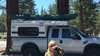
I used this kit recently on two vehicles where i had to replace the rear calipers; including the superduty. It makes brake bleeding a 1-person job. The other bottle is the reservoir for clean fluid and it sits on top of the master cylinder so that you don't have to keep topping off the master cylinder reservoir with clean fluid. With the old 2-person brake bleed you run the risk of damaging rubber seals in the master cylinder when the pedal stroke by your assistant exceed the normal range of motion. I have to add that my kit had trouble pulling fluid to the rear brakes without me giving a little push on the brake pedal; still a 1-person job. My front brakes did not need the pedal assist because the vacuum unit is closer to the master cylinder. Overall I give the kit two thumbs up.
Hotshot
Joined: Aug 2001
Posts: 16,220
Likes: 399
From: Odessa, Delaware
I used this kit recently on two vehicles where i had to replace the rear calipers; including the superduty. It makes brake bleeding a 1-person job. The other bottle is the reservoir for clean fluid and it sits on top of the master cylinder so that you don't have to keep topping off the master cylinder reservoir with clean fluid. With the old 2-person brake bleed you run the risk of damaging rubber seals in the master cylinder when the pedal stroke by your assistant exceed the normal range of motion. I have to add that my kit had trouble pulling fluid to the rear brakes without me giving a little push on the brake pedal; still a 1-person job. My front brakes did not need the pedal assist because the vacuum unit is closer to the master cylinder. Overall I give the kit two thumbs up.

Laughing Gas
Joined: Oct 2017
Posts: 922
Likes: 7
... or forscan.. which is free.
Laughing Gas
Joined: Oct 2017
Posts: 922
Likes: 7
Brake fluid should be flushed EVERY two years with the type specified in your manual. DO NOT put DOT4 in a vehicle equipped with DOT3. Brake fluid is under EXTREME pressure and temperatures and it can boil/burn at the calipers even under normal operation. PLUS it attracts moisture
DOT3 and DOT 4 can be mixed, no problem at all. For the small difference in price use DOT4. Has a higher boiling point.
Laughing Gas
Joined: Oct 2017
Posts: 922
Likes: 7
And were does it say in the mechanics bible to flush the brake fluid every two years or any interval? I suspect over 75% or more of the vehicles on the road in the USA have NEVER had the brake system flushed.
Brake fluid is designed to be at high temps and high pressure. This is normal situation else the brake system would have been designed differently as the new innovations have appeared in the automotive world. Now days, most people or shops rarely remove the master cylinder cap to check the fluid level since most all have "plastic" fluid reservoirs that you can visually see the fluid level. And even if you do remove it, the amount of moisture absorbed would be minuscule.
SO, you can flush yours and do what ever you want, I personally think it is not a maintenance item since your owner's manual does NOT specific a fluid flush as it does for oil or your ATF.
Brake fluid is designed to be at high temps and high pressure. This is normal situation else the brake system would have been designed differently as the new innovations have appeared in the automotive world. Now days, most people or shops rarely remove the master cylinder cap to check the fluid level since most all have "plastic" fluid reservoirs that you can visually see the fluid level. And even if you do remove it, the amount of moisture absorbed would be minuscule.
SO, you can flush yours and do what ever you want, I personally think it is not a maintenance item since your owner's manual does NOT specific a fluid flush as it does for oil or your ATF.
Now as far as performance go I do like to flush them every couple years. They still work good enough but I'd like it to be 100%. If it was a difficult job or an expensive job I might not do it that often but it's SO easy to do and costs SO little in fluid. Plus I clean and lube the slide pins at the same time. Never have issues w brakes.