When you click on links to various merchants on this site and make a purchase, this can result in this site earning a commission. Affiliate programs and affiliations include, but are not limited to, the eBay Partner Network.
First and foremost I hope all of you stay healthy during this virus outbreak. I have some big concerns regarding the state of my cooling system and engine, I would appreciate every piece of advice, thanks in advance.
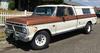
18 years old,(please bare with me here), quick learner and mechanically inclined. Owner of a '74 f100 with a 60's era 390FE, said to be rebuild recently.
It has a 160 thermostat, but I doubt the functioning of this thermostat. When I got the truck, the temperature didn't reach the middle of the gauge, during the (mild) winter I proceeded to drive with a piece of cardboard blocking 1/3 of my radiator, the temp got hotter, nearly reached the middle of the gauge,I ran it like this for a while. I hope I didn't ran it too hot considering the issues I'm currently having:
Specs on the cooling system:
160 thermostat
3 row aluminium radiator
Massive electric fan that pulls a ton of air.
Service history on thermostat and waterpump is unknown.
Truck uses coolant, not a huge amount, but significant enough to take into consideration. Has a tiny leak but it can't leak the amount of coolant that it's 'loosing'.
Engine barely uses oil, and the oil is as clean as can be (on the dipstick and under filler cap)
The truck has always blown a solid amount of white smoke during warmup, once warmed up all clear. I figured this would be condensation due to the truck being parked in a barn with relatively high humidity.
Recently I have been starting to monitor the cooling system, I watched the radiator without the cap on during warmup.
I noticed that the radiator gets rather hot, almost too hot to touch, while coolant level isn't ricing and the pump isn't flowing any coolant at all. You couldn't feel any coolant in the upper rad hose but the hose did get very hot too.
Once warmed up further it would start to move a little amount of coolant, but not a big solid heavy stream.
I also noticed some white smoke coming from the radiator with a very distinct sweet coolant smell.
Today, the pressure exceeded the cap and started to blow out coolant out of the overflow tube, I don't have a tank to put it into.
I noticed that there was white smoke coming from the exhaust, my hand got wet when holding it. Didn't smell like coolant specifically.
Last week I did bled the system entirely following the proper procedures.
What could be the problem? Faulty head gasket(s)? Crack in the head(s)? Should I perform a leakdown and/or compression test?
I will pull the plugs tomorrow and will post the results here.
First and foremost I hope all of you stay healthy during this virus outbreak. I have some big concerns regarding the state of my cooling system and engine, I would appreciate every piece of advice, thanks in advance.
18 years old,(please bare with me here), quick learner and mechanically inclined. Owner of a '74 f100 with a 60's era 390FE, said to be rebuild recently.
It has a 160 thermostat, but I doubt the functioning of this thermostat. When I got the truck, the temperature didn't reach the middle of the gauge, during the (mild) winter I proceeded to drive with a piece of cardboard blocking 1/3 of my radiator, the temp got hotter, nearly reached the middle of the gauge,I ran it like this for a while. I hope I didn't ran it too hot considering the issues I'm currently having:
Specs on the cooling system:
160 thermostat
3 row aluminium radiator
Massive electric fan that pulls a ton of air.
Service history on thermostat and waterpump is unknown.
Truck uses coolant, not a huge amount, but significant enough to take into consideration. Has a tiny leak but it can't leak the amount of coolant that it's 'loosing'.
Engine barely uses oil, and the oil is as clean as can be (on the dipstick and under filler cap)
The truck has always blown a solid amount of white smoke during warmup, once warmed up all clear. I figured this would be condensation due to the truck being parked in a barn with relatively high humidity.
Recently I have been starting to monitor the cooling system, I watched the radiator without the cap on during warmup.
I noticed that the radiator gets rather hot, almost too hot to touch, while coolant level isn't ricing and the pump isn't flowing any coolant at all. You couldn't feel any coolant in the upper rad hose but the hose did get very hot too.
Once warmed up further it would start to move a little amount of coolant, but not a big solid heavy stream.
I also noticed some white smoke coming from the radiator with a very distinct sweet coolant smell.
Today, the pressure exceeded the cap and started to blow out coolant out of the overflow tube, I don't have a tank to put it into.
I noticed that there was white smoke coming from the exhaust, my hand got wet when holding it. Didn't smell like coolant specifically.
Last week I did bled the system entirely following the proper procedures.
What could be the problem? Faulty head gasket(s)? Crack in the head(s)? Should I perform a leakdown and/or compression test?
I will pull the plugs tomorrow and will post the results here.
Any help would be appreciated very much!
Winston
Sometime you can learn a lot by "reading" the spark plugs. Please post what you find and a photo of all 8 if possible.
A compression test would be another good diagnostic test. If you do it follow all the procedure correctly.
It would be good if you you could check the functioning of the thermostat. Put it in a pot of water with a known good thermometer on your stove and watch how it opens as you raise the temperature of the water.
Lack of circulation is usually not the fault of the water pump. Pumps should be changed when they leak or when the bearing gets loose and/or noisy.
If you think there is congestion in the radiator you can look for it (cool spots) with an infrared thermometer.
A high humid environment during warmup might be responsible for what you've observed.
If you want to catch the overflow, a container can be added, but the cap will likely have to be changed if you want the coolant to return to the radiator. Otherwise leave the coolant level about an inch down from the cap's seat.
An engine running too cool usually does less damage than one running too hot.
Blown head gaskets and/or a cracked cylinder head can cause overheating. Usually exhaust gas bubbles are visible in the coolant.
What level are you keeping the coolant at ? if you're trying to keep it full that's not going to work it will puke some out until it reaches it's desired level. This is normal on old rigs that don't have an overflow tank.
It is unlikely you have an internal leak if it's not getting in the oil.
Unlikely but it is possible to burn coolant without any getting into the crankcase.
It will burn white smoke out of the exhaust if head gasket is bad. Steam is different, at warmup it will dissipate. Coolant burns white smoke, doesn't dissipate, and smells nasty. Check all spark plugs and look for any that are super clean. A compression test will tell the tale too.
It's unlikely. where is water going to get into the cylinder that it won't get into the oil ? nothing is impossible, but it's so unlikely it should not be considered as one of the first things to look at.
Tomorrow I have an appointment at my local shop to get it aligned, I'll ask them to do a compression test, and pressure rise the radiator. I will check the thermostat upcoming weekend.
I pulled the plugs: #4 has oil on top of it due to a leaky valve cover. Pictures are below.
While looking through the plug holes piston look pretty clean, walls are kind of shiny. The pistons have the 0.40 stamped on them from the 40 thousands overbore.
But no obvious sitting water.
Also included is a picture of the coolant level in radiator. Have not refilled it since the puking yesterday.
Oil on the dipstick looks clean, pictured included, it does drip easily off of the dipstick, I'm running 15W40.
The truck does not overheat, unless I sit still at a stoplight with the fan turned off, in that case there is zero airflow so therefore it heats up.
Again it doesn't run hot as of so far, but the upper rad hose gets very hard, can squeeze it for like 1/4 inch. There is no spring in it.
planning to take it on a drive this afternoon to see how it performs.
Dipstick reading Overhead view Driver side bank Passenger side bank As seen here, #2&4 have some oil Coolant level
Sometime you can learn a lot by "reading" the spark plugs. Please post what you find and a photo of all 8 if possible.
A compression test would be another good diagnostic test. If you do it follow all the procedure correctly.
It would be good if you you could check the functioning of the thermostat. Put it in a pot of water with a known good thermometer on your stove and watch how it opens as you raise the temperature of the water.
Lack of circulation is usually not the fault of the water pump. Pumps should be changed when they leak or when the bearing gets loose and/or noisy.
If you think there is congestion in the radiator you can look for it (cool spots) with an infrared thermometer.
A high humid environment during warmup might be responsible for what you've observed.
If you want to catch the overflow, a container can be added, but the cap will likely have to be changed if you want the coolant to return to the radiator. Otherwise leave the coolant level about an inch down from the cap's seat.
An engine running too cool usually does less damage than one running too hot.
Blown head gaskets and/or a cracked cylinder head can cause overheating. Usually exhaust gas bubbles are visible in the coolant.
Thanks for the extensive advice, I posted the pictures of the plugs!
Your water level is fuller than any of my rigs run. it's fine.
In my opinion a compression test would be a waste, I'm not sure why everyone wants to do a compression test for everything.
I think you might be looking for a problem that doesn't exist. your oil is fine, if you're not getting water in your oil you're not going to hurt anything by driving it. just drive it and if your water level stays in sight forget about it.
Tomorrow I have an appointment at my local shop to get it aligned, I'll ask them to do a compression test, and pressure rise the radiator. I will check the thermostat upcoming weekend.
I pulled the plugs: #4 has oil on top of it due to a leaky valve cover. Pictures are below.
While looking through the plug holes piston look pretty clean, walls are kind of shiny. The pistons have the 0.40 stamped on them from the 40 thousands overbore.
But no obvious sitting water.
Also included is a picture of the coolant level in radiator. Have not refilled it since the puking yesterday.
Oil on the dipstick looks clean, pictured included, it does drip easily off of the dipstick, I'm running 15W40.
The truck does not overheat, unless I sit still at a stoplight with the fan turned off, in that case there is zero airflow so therefore it heats up.
Again it doesn't run hot as of so far, but the upper rad hose gets very hard, can squeeze it for like 1/4 inch. There is no spring in it.
planning to take it on a drive this afternoon to see how it performs.
Dipstick reading Overhead view Driver side bank Passenger side bank As seen here, #2&4 have some oil Coolant level
Your dipstick oil looks excellent. While I don't know what part of the world you're in, 15W-40 should be a good choice on viscosity. Try to choose an oil that has sufficient additives (zinc) to protect your flat tappet cam if that's what's in the engine.
The pistons may have had 0.040 on them (not 0.40) for a 40 thousand overbore. Clean pistons and shiny cylinder walls are both good signs.
The plugs look reasonable. The insulators are light, but that may be due to them being new plugs. The shell perimeters on #2 & #5 are a bit darker than the others, but likely nothing to be overly concerned about.
The coolant level looks reasonable considering the puke. It's not necessary to fill it any more in the absence of an overflow bottle. If it doesn't get significantly lower you may not have a problem.
It's normal for the engine to get hot when the fan is not operating and the vehicle is not moving. If the cooling system is pressurized that will account for the hard upper radiator hose. It should be less hard without the pressure. If it's always hard it may be time for a new hose assuming that it's the original type molded hose.
I just replaced the head gaskets on my 390 due to water in the oil.
it turns out the old and somewhat rubbery intake gasket, which has water passages through it, had leaked water into the front cylinder on the driver side. The head gaskets were actually still good. In fact they were factory gaskets while the intake was after market.
a leaky intake will give you coolant loss and white smoke and may or may not get water into the oil. In my case it did because I ignored it a bit too long. Don’t be like mike.
Figured I owe you guys an update: There is no white smoke anymore, it happened once and I guess I just kind off freaked out. Also bled some air out of the radiator hoses, now the hoses are way less hard, thermostat seems to work good. Coolant level drops slightly after a couple of hours of driving but not much to worry about I guess.
I'll keep a close eye on the oil and coolant. Also thinking about installing a multigauge kit with oil pressure and temp.
Thanks all for the useful comments and advice! I really appreciate it.
If it keeps dropping that's a problem, but if it seeks it's level and stays there drive on.
This.
It should sit high enough to cover the core and will look low to someone used to modern cooling systems. If you add enough to bring it to the neck and it drops back down to just above the core and stays there, it's working as it should. The exception is if you have a functioning coolant recovery tank and a cap with a good seal. My radiator level is right at the cap with the recovery tank sitting between cold and hot fill.
You probably had air in the system that kept the thermostat from opening in time or at all. That will lead to high pressure in the cooling system, 15 psi for a standard cap. I once blew the upper radiator hose due to a stuck thermostat. That might be enough to push water into a cylinder or past a weak intake gasket and cause white smoke. In my case, it was pushing past the intake so a compression test wouldn't have shown a leaking head gasket.
I've recently become a fan of vacuum cooling system fillers. They use shop air to remove the air in the cooling system then use that vacuum to pull in coolant. It even caused a freeze plug that was almost rusted through to show itself. With pressure, there was enough gunk in the system to plug the leak but when I pulled a vacuum on it, the plug began leaking right away not letting the vacuum build up. The system had held pressure with the pressure tester just before pulling the vacuum.
This Hennessey Takes the Expedition Tremor's Off-Roading Capability to the Next Level
Slideshow: The VelociRaptor Expedition gains a lift, upgraded suspension, Brembo brakes, and trail-ready equipment while retaining the stock 440-horsepower EcoBoost V6.
Rezvani's Latest Post-Apocalyptic Monster Is a Ford F-150 Raptor Underneath
Slideshow: Called the Fortress, the 850-horsepower pickup combines Raptor underpinnings with military-inspired features, survival equipment, and a starting price of $285,000.