When you click on links to various merchants on this site and make a purchase, this can result in this site earning a commission. Affiliate programs and affiliations include, but are not limited to, the eBay Partner Network.
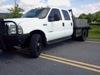
While driving my '01 F350 I had a failure that has covered my entire engine compartment with oil. Before I begin looking for the cause and beginning repairs I would like to clean the entire engine and surrounding compartment. Any suggestions of how to clean this mess without damaging wires, sensors or other electronic components will be appreciated!
Thanks for the input! The HPOP was at the top of the list for the failure. I will see if it is as easy as replacing o-rings without cleaning first. If this is the problem I can then replace the lost oil, and clean the engine as you suggest while it is running. Have a great day!
Turbo pedestal o-rings and EBPV o-rings are two more potential high volume leak points.
Before using a pressure washer, I would try with a regular water hose after letting the degreaser sit for half an hour on a warm engine. Before that, even, get plenty of rags and physically soak up as much oil in teh valley as possible... there are some deep pockets which will hold a good bit of oil.
The several times I've spiffied up my engine bay, I just used the regular water hose pressure with outstanding results - Engine OFF. Make sure to cover the PS pump reservoir cap and if applicable, your air intake filter (if running an open/exposed element like the 6637).
Thanks for the list of other suspects! It may be time to replace all of the suspect o-rings as they are all the same age. This will help prevent a breakdown in the middle of nowhere like I experienced Tuesday. Have a great day!
If you leave the engine running while cleaning it, and it is profusely leaking oil whilst running, then
I would fix the O ring that is actually leaking first. The quickest way to find which O ring is actually leaking is to use diesel engine oil compatible fluorescent tracer dye... and that involves running the engine again too, so no point in cleaning up the existing oil that already spilled. Fluorescent tracer dye doesn't need to have clean surfaces in order to spot a leak. That's what the dye is for... spotting. Not like the dog Spot in the photo above. But more like direct and to the exact pin point of the leak. Instantly.
Professional mechanics who work at shops during normal business hours need a special (expensive) tracer light in order to see the leaking dye pour out of where it is leaking from. But DIY'ers have the benefit of access to their own vehicles at night, so if you run the tracer dye at night with a cheap drug store black light bulb, and all other lights turned off, that will be just as effective, if not more effective, than the fancy high dollar tracer light. Plus, a night time viewing under black light gives a global view of the entire engine bay, making it easier to spot multiple leaks simultaneously, where those leaks may emit with varying degrees of effusion, as indicated by the varying degrees of reflected intensity of the fluorescent dye oozing out.
I'd only fix what was broken, unless to gain access to what is broken involves the removal of other parts anyway... then it makes sense to reseal those parts with new rings. My money is on SkySkiJason's prognosis of HPOP fitting or plug, based on the description in the original post. When the same thing happened to me, I used tracer dye with a blacklight at night, and immediately found the leak at the plug on the HPOP pump/housing. I changed that plug O ring, and only that plug O ring, back in 2007, and haven't had any other leaks in the HPOP system in the 13 years since. That means my hose Orings are now entering their 21st year in service. I'd say they are now eligible for pension whenever they decide to retire.
Thanks for the advice! I was doing 65 MPH and jumped on the throttle to pass a car when all hell broke loose. My first indication of a problem was the smell of oil in the cab, followed by a visual of white smoke in my mirrors. The "Service Engine Soon" light came on before I could get it off the road. This all happened in less than 60 seconds. I lifted the hood, with the engine still running, and could see what looked like a small white mist or smoke being blown upward right behind the fuel filter housing. I quickly shut the engine down and checked the oil level. Nothing on the dip stick.
Here's the rest of the story. I had my wife, 2 married daughters, son-in law and 5 grand kids with me. We were in two vehicles so we loaded everyone, but me, into my son-in-laws Chevy truck and I sent the entire family home while I stayed with my broken truck. I was stranded along a 2-way highway on the west desert of Utah, until my son-in law could return with a trailer. It was about 2 1/2 hours round trip. My wife later told me the Grand Kids were worried about leaving grandpa all alone with a broken truck and asked her what I would do in the desert, all alone, with night beginning to fall. My wise wife eased my grand kids worries by telling them " Grandpa will swear a lot and pray a little while he is alone". She knows me all too well after 40 years of marriage.
@Gary (UT) Pretty much EXACTLY what happened in my case, without the additional burden of family though.
I was driving the truck alone, loaded with equipment, following a coworker who was driving a smaller, nimbler mini van. We reached the entrance to the freeway, and I dropped the hammer to make it up the on ramp with enough road speed to blend into freeway traffic.
It had been a while since I had driven the diesel any appreciable distance that would call for rapid acceleration, as I had been using a lighter, nimbler gasoline powered GMC more often during that time period. So the blast up the on ramp was a sudden wake up call for an otherwise well rested oil fired motor. Boom, oil smell, white smoke in mirrors, and I knew right away what had happened. I pulled over, called the coworker to go on, called the wife to bring me 6 or 8 gallons of oil, and ended up using every drop of it for the very slow city street journey home, with several oil refill stops along the way.
The leak was right behind the fuel filter housing, more biased toward the driver's side, which turned out to be a plug on the HPOP lower reservoir/housing assembly in front end of the valley. A lot of guys (and service shops) charge to change out the entire set of HPOP orings and even the hoses. I just changed the one O ring on that plug, and then cleaned up the mess, and have continued to run for more than a decade and counting. I knew that I exacerbated the issue by not running the engine for a while, and then romping on it to get up the onramp. I don't do that anymore.
Rezvani's Latest Post-Apocalyptic Monster Is a Ford F-150 Raptor Underneath
Slideshow: Called the Fortress, the 850-horsepower pickup combines Raptor underpinnings with military-inspired features, survival equipment, and a starting price of $285,000.