



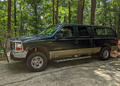


Injector service.

Thread Starter
|
Mountain Pass
Joined: Sep 2007
Posts: 167
Likes: 0
From: Stewartsville, Mo.
Injector service.
I've had my 2000 7.3 for 10 years now and it has 224,000 miles on it and have not had any injector service since I've had it. I'm not having any problems with them but is there a service interval? I'm not thinking about replacing them as I have plenty of power for what I need after adding 4"SS exhaust, DP Tuner with tow codes and a new billet turbo compressor wheel. Spring is going to bring on camping season and I need to be ready. I have no current idea what my mpg's are as I've purchased a different travel trailer and haven't towed a significant distance since adding the new compressor wheel.

Lead Driver


Joined: Jan 2006
Posts: 7,308
Likes: 250
From: Hartford, WI

Is it a bad thing to service? I have done it on a 99 E300 Turbodiesel. Around 100K. Picked up about 1 mpg. I service the injectors on my gas cars every 100K. There IS a flow difference in the before and after results as evidenced by the service facility. 20 or 30 cc, IIRC. I did it initially at 50K and then at 100K and see what sort of difference there is which helped me decide what the interval might be.

Hotshot

Joined: Mar 2014
Posts: 10,750
Likes: 1,065
From: Douglassville, PA
Is it a bad thing to service? I have done it on a 99 E300 Turbodiesel. Around 100K. Picked up about 1 mpg. I service the injectors on my gas cars every 100K. There IS a flow difference in the before and after results as evidenced by the service facility. 20 or 30 cc, IIRC. I did it initially at 50K and then at 100K and see what sort of difference there is which helped me decide what the interval might be.

Laughing Gas

Joined: Jun 2017
Posts: 835
Likes: 126
From: CSRA, SC
Is it a bad thing to service? I have done it on a 99 E300 Turbodiesel. Around 100K. Picked up about 1 mpg. I service the injectors on my gas cars every 100K. There IS a flow difference in the before and after results as evidenced by the service facility. 20 or 30 cc, IIRC. I did it initially at 50K and then at 100K and see what sort of difference there is which helped me decide what the interval might be.
Trending Topics
Lead Driver
Joined: Jan 2006
Posts: 7,308
Likes: 250
From: Hartford, WI
https://fuelinjectorconnection.com/c...-iroc-firebird
- 1) Injectors are externally cleaned, visually inspected
- 2) We test injectors for resistance, shorts, and current draw.
- 3) We perform a leak test, spray pattern, and flow rate testing on one of our 3 ASNU flow benches. All data is recorded and sent to you.
- 4) Remove filter baskets, o-rings, and pintle caps. Metal injectors are bead blasted to remove old paint and rust from the injector body.
- 5) The injectors are placed in a heated ultrasonic bath to insure that the injector is free of dirt and contamenants that could hinder the rest of the process.
- 6) The injectors are now put into another ultrasonic system while they are pulsed allowing the ultrasonic energy to dislodge any particles and build-up inside the injectors.
- 7) The injectors are now back flowed to remove all debris, etc.
- 8) The injectors are now returned to the flow bench for retesting of all functions. The data from this test is INCLUDED in detail with your injectors.
- 9) The injectors are now refinished with high temp paint. the stainless steel injectors are polished to a high finish.
- 10) One of our techs. now reassembles the injector, using all new parts.
- 11) The injectors are then vac sealed and packaged for shipment
FTE Stories
Ford Trucks for Ford Truck Enthusiasts

3 Best / 3 Worst Parts of Modern Ford Ownership
Brett Foote
10 Amazing Upgrades That Solve Common Ford Truck Owner Headaches
Pouria Savadkouei
Every 2026 Ford Engine Explained
Brett Foote
10 Ugly Ford Trucks That We Still Kinda Love
Joe Kucinski
10 Things Every Truck Owner NEEDS (2026 Edition)
Michael S. Palmer
Rezvani's Latest Post-Apocalyptic Monster Is a Ford F-150 Raptor Underneath
Verdad Gallardo
Top 10 Most Expensive Ford Trucks Ever Sold on Bring a Trailer
Joe Kucinski
2027 Ford Super Duty Buyer's Guide (Every Model, Engine, & Package)
Brett Foote
Top 10 Ford Truck Tragedies
Joe Kucinski
Lead Driver
Joined: Jan 2006
Posts: 7,308
Likes: 250
From: Hartford, WI
If it ain't broke don't fix it. Granted there are lots of different ways for our injectors to start down the road of reduced performance since they are so....sophisticated. Poppet wear reduces armature clearance, injector o-rings start to fail causing oil to mix into the fuel which makes your HPOP work harder to hold commanded pressure, injector hold down bolts loosen up making loud noises...if you don't have one of the telltale signs I'd say run em until you do. I'll be fixing my armature clearance and hot torquing my hold down bolts sometime in January. I might need to do the o-rings too but I I'm going to hold off on that right now.

Lead Driver

Joined: Sep 2005
Posts: 9,399
Likes: 188
From: Norco,CA
https://fuelinjectorconnection.com/c...-iroc-firebird
- 1) Injectors are externally cleaned, visually inspected
- 2) We test injectors for resistance, shorts, and current draw.
- 3) We perform a leak test, spray pattern, and flow rate testing on one of our 3 ASNU flow benches. All data is recorded and sent to you.
- 4) Remove filter baskets, o-rings, and pintle caps. Metal injectors are bead blasted to remove old paint and rust from the injector body.
- 5) The injectors are placed in a heated ultrasonic bath to insure that the injector is free of dirt and contamenants that could hinder the rest of the process.
- 6) The injectors are now put into another ultrasonic system while they are pulsed allowing the ultrasonic energy to dislodge any particles and build-up inside the injectors.
- 7) The injectors are now back flowed to remove all debris, etc.
- 8) The injectors are now returned to the flow bench for retesting of all functions. The data from this test is INCLUDED in detail with your injectors.
- 9) The injectors are now refinished with high temp paint. the stainless steel injectors are polished to a high finish.
- 10) One of our techs. now reassembles the injector, using all new parts.
- 11) The injectors are then vac sealed and packaged for shipment
Lead Driver
Joined: Jan 2006
Posts: 7,308
Likes: 250
From: Hartford, WI
If you have access to a testing facility, it is good to see what happens. I checked what I was getting before I sent it out and checked it after. That way I can see what he says is wrong or right so he doesn't just print off a bunch of self serving numbers.
Lead Driver
Joined: Sep 2005
Posts: 9,399
Likes: 188
From: Norco,CA
You know I just went to his site, that is gas injectors? You say you send your diesel to? They have to come a part to do what he says he does. In that case, just send them off to be rebuilt every 100K. Not trying to argue, just saying.
Lead Driver
Joined: Jan 2006
Posts: 7,308
Likes: 250
From: Hartford, WI
I send them my gas injectors and last few times, I sent the diesel ones to Diesel Forward. They will test them and clean and replace the O-rings or gaskets as needed. If they are FUBAR, you might have to pay to get a new one.

Thread
Thread Starter
Forum
Replies
Last Post
mta5002414
1999 - 2003 7.3L Power Stroke Diesel
31
Dec 15, 2019 11:58 AM
cabloom300
1999 - 2003 7.3L Power Stroke Diesel
24
Aug 19, 2014 08:05 AM