When you click on links to various merchants on this site and make a purchase, this can result in this site earning a commission. Affiliate programs and affiliations include, but are not limited to, the eBay Partner Network.
Alrighty, on my 78 f100 I have done alot of work to it in the past couple months, new carb, lifters, distributer, recurve kit, egr delete. Been through alot of different problems all of which are resolved. A new one came up recently after I had a starter go out.
When I go to start the truck warm or cold doesn't matter it will not crank smoothly until the seat belt light goes off. If you try to crank it before it will turn over very slowly almost like the timing is too fast. I know for sure the timing is fine I have been through that too many times. As soon as the seat belt light goes out it starts perfect and fires up better than ever. I don't mind waiting for the light to go out but I am looking for some input on why this is going on, anyone who tries to start my truck that doesn't know about my issue thinks my battery is dead.
Ha! Is it originally a communist-era California truck? Jokes aside that sounds like a one off problem and you're the first to have it. Without knowing the specifics of the truck, or how much rewiring has been done. Its sounds like a couple of systems have been crossed and the seat belt indicator is drawing power away from the starter circuit. And that sounds ludicrous. But if the seat belt warning were interrupting the signal from the ignition switch? Or if you had computer controlled timing, the seatbelt warning was powering the advance side of the wiring. If you hold the key over and the seat belt light is blinking and its turning over super slow.... if you hold the key over will the seat belt light go out and the starter spin up and the truck fire right up, or do you have to keep the ignition in the run position, then wait for the light to go out before you can start it. I guess the short and sweet would be, will the seat belt light stay on until you let off the key, or can you hold her in crank and wait for it to bust off?
Also, if you feel accommodating, post the specifics of all mods involving wiring and what ignition system, starter and solenoid you are using. And just because it makes me happy, post some pictures. I love to look at sixes.
But it seems to me like something is backfed, so if you have access to wiring diagrams, trace the seat belt warning circuit and see if it's rubbing wires, or grounded out anyway. Wouldn't hurt to do a load test while the indicator is lit, I recommend this one, and if you would the first to try it, the author may cry happy tears. https://www.ford-trucks.com/forums/1...w-starter.html
Ok a little history on the truck, 78 f100 300 with C6 says Canada import inside the door. No wiring has been done, with the exception of halo headlights and a stereo system. All dash wiring is in fantastic shape, never needed work. Ignition is all stock, my ICM has a blue tab, i believe that is duraspark 2? This truck was in fantastic condition when i bought it, it was completely stock all the way down to having the original ignition coil.
Timing has been limited to 20 degrees mechanical starting with 14 degrees initial, vac advance is disconnected. Not sure why i haven't reconnected it.
When starting the truck i turn the key on and wait for the light to go out, once it does it will turn over smooth and fire right up. Try to turn it before the light goes out and it will crank hard and slow.
Now... an article i just read claims duraspark 2 modules feature a starting timing retard to decrease the stress on the starter. Could this system be working against me somehow?
And.. here is another odd thing that has been happening, when i have been driving the truck long enough for it to get warm and i shut it off, when i turn the key back to the on position, the engine will fire and you can feel and hear it. very very odd feeling.
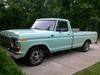
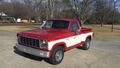
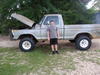
Anyways here's some pictures of the truck, just fer giggles
Good looking truck. That engine looks familiar. Probably from when I was looking at as many as I could to pick out a paint scheme for mine. Anyway, I was under the impression it was duraspark I that retarded during cranking. Lets see if we can get @matthewq4b to pop in and see if he will set us straight on the duraspark modules and explain the retard function. Maybe ask real nice for his opinion on your one of a kind problem.
Alrighty, on my 78 f100 I have done alot of work to it in the past couple months, new carb, lifters, distributer, recurve kit, egr delete. Been through alot of different problems all of which are resolved. A new one came up recently after I had a starter go out.
When I go to start the truck warm or cold doesn't matter it will not crank smoothly until the seat belt light goes off. If you try to crank it before it will turn over very slowly almost like the timing is too fast. I know for sure the timing is fine I have been through that too many times. As soon as the seat belt light goes out it starts perfect and fires up better than ever. I don't mind waiting for the light to go out but I am looking for some input on why this is going on, anyone who tries to start my truck that doesn't know about my issue thinks my battery is dead.
thank you in advance
The curious issue, The only modules that had crank retard were the Duraspark I modules (red strain relief) and the Duraspark II modules with the white strain relief. Now this of course only applies to factory units who knows what the aftermarket has done.
So I would check the power feeds to the DS II box. There should be no power on the Red wire at the DS II box during crank So I would check to see if you are getting power on that during crank with the seat belt buzzer on. If you are not then you can rule out the DS II module. I would get a helper to give you a hand
Disconnect the starter relay so the engine will not crank, and disconnect the DS module to test for power, get your helper (while you are checking for power on the red feed wire for the module) to turn the ignition key/switch to run, you should get power on the red wire. then before the seat belt buzzer goes out, have them turn the ignition switch to crank, power should dorp out on the red wire if it does not wait to see if it drops out after the seat belt buzzer turns off. If you get no power at all on the red wire in the crank position you can rule out the DS II module.
That's a clean truck. Super neat that is has a/c and factory sway bar.
Before you tear into the truck too far, I recommend trying to isolate what component is causing this starting issue. My guess is the seatbelt light has nothing to do with it, but something is just screwy for a similar amount of time. I assume for these tests that your battery is new or new-ish (less than three years old), and your battery cables and power/ground connections have been checked or cleaned. Both of these will affect how much current can be drawn by the entire electrical system.
If it's a faster "bogged-down" type of cranking, my guess would be an ignition timing issue. The auto-firing upon key-on makes this more likely. Pull the coil to distributor wire and try to start it. If this fixes the slow cranking problem it is some kind of timing issue, whether caused by a malfunctioning component or something that got overlooked in all the refurbishing that's been done.
If it's a dead battery type of slow cranking, some component may be drawing an abnormal amount of current upon key-on (although it is unlikey small components could do this unless the battery is weak). Unhook the coil and try to start it. If it still is slow starting, hook the coil back up and unplug the ignition control module. If it still is slow starting, hook the ignition control module back up and unplug the blower fan - and on and on until you run out of stuff or find the culprit.
Once you have identified a problem, then you can begin diagnosis. Don't assume that a new part is working fine - they usually do, but sometimes they're junk out of the box.
Note that these simple tests are not meant to be conclusive, just to get going in the right direction. For example: if unplugging the ignition control module makes it start right, it may not be drawing too much current; instead a shorted wire or broken connection may be overriding the startup timing retard feature, or advancing the timing somehow. Once you have a likely culprit, the advice in earlier posts on this thread will be useful for deeper diagnosis. But until you're ready to dig into it, you can just plug everything back in and use the truck like you have been.
thanks to everyone for the info and advice, i am determined to find it, something i did come across is that the aftermarket ICM is from oriellys, Oriellys has never sold me the best parts and i am in the search for a new duraspark control box. I am also looking for a motorcraft voltage regulator, mine is original and has alot of corrosion everywhere.
The auto firing is very strange, i reaaaalllly need to replace my damper to ensure my marks are correct, i just want to know if radiator has to come out first, or if i can just pull it off and put the new one on, i have done it before, just depends on how stuck it is on this engine.
My father said my belts were too tight, not quite sure if that explains the time before it will crank smooth, i agree with the seat belt light being a coincidence.
Another wiring issue i have is with my electric choke, my choke heats up wayyyy too fast, its almost immediate. and i removed the exhaust pre heater line.
That's a clean truck. Super neat that is has a/c and factory sway bar
Not a factory sway bar- installed a year ago with two inch drop springs in the hope that the lift of the sway bar minus the drop from the springs would oput it back at stock height to not screw with camber, well didnt go as planned and now i have cupping on the inside of the tires and excessive inside tread wear, that is a seperate thread
thanks to everyone for the info and advice, i am determined to find it, something i did come across is that the aftermarket ICM is from oriellys, Oriellys has never sold me the best parts and i am in the search for a new duraspark control box. I am also looking for a motorcraft voltage regulator, mine is original and has alot of corrosion everywhere.
The auto firing is very strange, i reaaaalllly need to replace my damper to ensure my marks are correct, i just want to know if radiator has to come out first, or if i can just pull it off and put the new one on, i have done it before, just depends on how stuck it is on this engine.
My father said my belts were too tight, not quite sure if that explains the time before it will crank smooth, i agree with the seat belt light being a coincidence.
Another wiring issue i have is with my electric choke, my choke heats up wayyyy too fast, its almost immediate. and i removed the exhaust pre heater line.
On the choke it sounds like it has electric asst. being you had the heat piping. Where does it get power from and the type of connection spade or pin?
Dave ----
Choke did have exhaust tubing and electric assists is wired in by flat square connectors, not sure the actual term, Also I confirmed the duraspark two has timing retard by applying 12 volts to the white wire, reduces about 5 degrees.
Going to order a balancer to ensure proper base timing
The choke is wired to stock wire, you would think it would go through the temp gauge relay or something similar. Needs a sensor to shut it off at some point
That is a good point FuzzFace2. Sometimes the choke circuit gets erroneously wired into a "hot with KEY ON" circuit instead of to the alternator stator winding which does not see a full 12 volts. The choke will heat up as soon as the key is turned on whether the engine is running or not, leading to too early choke off condition. The choke needs to get power ONLY when the engine is actually running.
Another way around that is by using a two pole oil pressure sending switch as is used on the EFI engines. It has one NO terminal and one NC terminal. By routing the choke wire to the NO terminal the choke will get voltage only when there is oil pressure built up. A relay in the circuit may help to lengthen the life of the contacts too.
Choke did have exhaust tubing and electric assists is wired in by flat square connectors, not sure the actual term, Also I confirmed the duraspark two has timing retard by applying 12 volts to the white wire, reduces about 5 degrees.
Going to order a balancer to ensure proper base timing
The choke is wired to stock wire, you would think it would go through the temp gauge relay or something similar. Needs a sensor to shut it off at some point
See below what you need to do.
Originally Posted by The Frenchtown Flyer
That is a good point FuzzFace2. Sometimes the choke circuit gets erroneously wired into a "hot with KEY ON" circuit instead of to the alternator stator winding which does not see a full 12 volts. The choke will heat up as soon as the key is turned on whether the engine is running or not, leading to too early choke off condition. The choke needs to get power ONLY when the engine is actually running.
Another way around that is by using a two pole oil pressure sending switch as is used on the EFI engines. It has one NO terminal and one NC terminal. By routing the choke wire to the NO terminal the choke will get voltage only when there is oil pressure built up. A relay in the circuit may help to lengthen the life of the contacts too.
The thing is the choke he has with the spade does not get a full 12 volts so running it thru a oil psi switch so it will only get power when running will also make the choke pull off to fast.
He needs to measure the volts on that wire both key on not running (no volts) and then running (5-6 volts).
Once he knows that he will need to hook up that heating piping and then adjust the choke thinking more rich a notch for a start.
Dave ----
Heating pipe was broken off in manifold, end d up grinding it Dow. And welding shut. I am switching to efi exhaust soon anyways
Tonight I am going to work on testing to make sure my ignition is retarting on start up. And seeing if I have any draws on the battery when starting
You still need the heat piping to get the choke to open all the way and it is not hard to do with the EFI pipes .......... I know as I have done it and the choke works great on my 81.
You really just need the copper line and not the heat tube repair kit.
A few wraps of the copper line around the manifold to pick up heat
1 end gets hooked to the choke housing with the insulating cover from the kit.
The other end get hooked to the carb as stock to get fresh clean air in.
With the electric part getting power from the ALT stater for the 6 volts to asst. in choke opening.
With everything in place you don't even see the copper line.
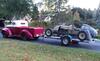
Also note in the picture of the copper wrapped around the manifold you can see the intake water heater plate.
I have had the truck out in 40*f and raining and not even a hint of icing of carb or fuel drop out of the air.
If this started with the new starter, check those connections first. Maybe the mounting bolts aren't as tight as they should be and you are getting a less than ideal ground. Or the hot cable from the solenoid?
This Hennessey Takes the Expedition Tremor's Off-Roading Capability to the Next Level
Slideshow: The VelociRaptor Expedition gains a lift, upgraded suspension, Brembo brakes, and trail-ready equipment while retaining the stock 440-horsepower EcoBoost V6.
Rezvani's Latest Post-Apocalyptic Monster Is a Ford F-150 Raptor Underneath
Slideshow: Called the Fortress, the 850-horsepower pickup combines Raptor underpinnings with military-inspired features, survival equipment, and a starting price of $285,000.