




Wiring light question
Thread Starter
|
Fleet Mechanic


Joined: Feb 2007
Posts: 1,252
Likes: 113
From: Mandan, ND

Wiring light question
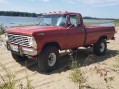
Have no brake lights or turn signals. One thing I found odd while troubleshooting is that the front marker lights (under headlights) go off when headlights turn on. Is that normal?
Second question, is how does the brake light switch work on the 1967? An odd set up for sure. Does it connect when pressure is off the bumper (pedal depressed)? Or does it break the circuit when pedal depressed?
Turn signal indicators light up when headlights are on. To me that indicates wiring issues or a bad ground in the cluster.
Lots of the wiring looks original, but there is a molex connector behind the dash. Dont think that was OEM...Will have to see how much I want to repair this, v putting in a new wiring harness (pricey).
Thoughts?
Second question, is how does the brake light switch work on the 1967? An odd set up for sure. Does it connect when pressure is off the bumper (pedal depressed)? Or does it break the circuit when pedal depressed?
Turn signal indicators light up when headlights are on. To me that indicates wiring issues or a bad ground in the cluster.
Lots of the wiring looks original, but there is a molex connector behind the dash. Dont think that was OEM...Will have to see how much I want to repair this, v putting in a new wiring harness (pricey).
Thoughts?

Lead Driver


Joined: Jul 2017
Posts: 9,606
Likes: 1,175
From: San Jose, CA
In '67 that was common for the running lights to go back off when the main beams came on.
Not sure about your truck in particular, but it was often easily changed to being on with the headlights by moving a wire from one position to another within the headlight switch's connector.
I did that mod on my '66 Corvair back in the early '70's to keep them on. Lots of guys with the '66 to '69 Broncos do the same.
We just had a discussion about the brake lamp switch this week. I think it was a '68 in that discussion, but not sure. Seems that some older trucks used a typical plunger type switch (cylinder shaped on it's own bracket), while other years used the pressure style that is square shaped and installed over a stud on the pedal itself.
I believe that either type connects the two wires together, rather than breaking a circuit. These are not that sophisticated and simply close a circuit.
But that makes them easy to test as well. Put an ohm-meter's probes on the two connectors and see if you get continuity when you press the pedal.
Alternately you can check for 12v on one wire, and if you find power you can simply jumper the two wires together temporarily. This should light up the brake lights as long as the turn signal switch is in the middle position.
Good luck!
Paul
Not sure about your truck in particular, but it was often easily changed to being on with the headlights by moving a wire from one position to another within the headlight switch's connector.
I did that mod on my '66 Corvair back in the early '70's to keep them on. Lots of guys with the '66 to '69 Broncos do the same.
We just had a discussion about the brake lamp switch this week. I think it was a '68 in that discussion, but not sure. Seems that some older trucks used a typical plunger type switch (cylinder shaped on it's own bracket), while other years used the pressure style that is square shaped and installed over a stud on the pedal itself.
I believe that either type connects the two wires together, rather than breaking a circuit. These are not that sophisticated and simply close a circuit.
But that makes them easy to test as well. Put an ohm-meter's probes on the two connectors and see if you get continuity when you press the pedal.
Alternately you can check for 12v on one wire, and if you find power you can simply jumper the two wires together temporarily. This should light up the brake lights as long as the turn signal switch is in the middle position.
Good luck!
Paul
Thread Starter
|
Fleet Mechanic
Joined: Feb 2007
Posts: 1,252
Likes: 113
From: Mandan, ND
Thanks Paul!
Yeah, 67 was a odd switch style, not a plunger. So back under the dash I go with a multi meter! Someone really did a hack job on the wiring, so we will see what comes out of this weekend...
Yeah, 67 was a odd switch style, not a plunger. So back under the dash I go with a multi meter! Someone really did a hack job on the wiring, so we will see what comes out of this weekend...
Lead Driver
Joined: Jul 2017
Posts: 9,606
Likes: 1,175
From: San Jose, CA
Cool. Even though I hated those switches initially (looks like this: https://www.wildhorses4x4.com/produc...co-brake-pedal) I've come to appreciate their simplicity and the fact that they still work just fine for a long time.
I like the plunger because they're adjustable, but never felt like I had to change the old style for the new because of that.
With this type there are two male connector spade terminals in sort of a "V" angle, with a matching plastic plug/connector with female spade connectors. You can test those ways mentioned.
With the meter on ohms you can see if the switch closes when you push the pedal. With it on volts you can check for power at one female terminal in the connector. It should be hot at all times.
If you find power at one you can make a small jumper wire to connect the two wires to see if the brake lights come on.
If not.... Plan B goes into effect!
Paul
I like the plunger because they're adjustable, but never felt like I had to change the old style for the new because of that.
With this type there are two male connector spade terminals in sort of a "V" angle, with a matching plastic plug/connector with female spade connectors. You can test those ways mentioned.
With the meter on ohms you can see if the switch closes when you push the pedal. With it on volts you can check for power at one female terminal in the connector. It should be hot at all times.
If you find power at one you can make a small jumper wire to connect the two wires to see if the brake lights come on.
If not.... Plan B goes into effect!
Paul
Lead Driver
Joined: Jul 2017
Posts: 9,606
Likes: 1,175
From: San Jose, CA
And speaking of lights...
I don't I've seen it talked about lately, but whenever you have your tail lights and running lights apart, it's a great time to paint the buckets/reflectors white.
Some were lucky enough to have that white coating fully covering the reflector and still in great shape. Others, not so much.
If you're in that latter category like all of my trucks have been, some flat-white paint known to be high in titanium-dioxide (a white pigment in most paints maybe) and spray away. Makes the whole rear lamp illuminate more evenly and brightly even with standard bulbs.
I found a spray paint with the titanium dioxide content listed on an actual label affixed to the can. So I bought that and it's been working great for years. I did an experiment with aluminum paint, chrome paint, chrome reflective tape, and gloss white appliance paint (didn't have flat white at the time) and the white won hands down. I thought the chrome tape was going to be the ticket, but it was not even close. Might have done better if the shape of the reflector was different, but we don't have that choice so I always paint mine.
Now I've got the flat white, which according to texts on the subject is the way to go. I'm still using the gloss in my '71 and happy with it, but the others have the flat white and work great too.
Sidetrack I know, but figured I'd bring it up since you might have things apart at some point and time on your hands to mess around with the stuff should it be needed.
Paul
I don't I've seen it talked about lately, but whenever you have your tail lights and running lights apart, it's a great time to paint the buckets/reflectors white.
Some were lucky enough to have that white coating fully covering the reflector and still in great shape. Others, not so much.
If you're in that latter category like all of my trucks have been, some flat-white paint known to be high in titanium-dioxide (a white pigment in most paints maybe) and spray away. Makes the whole rear lamp illuminate more evenly and brightly even with standard bulbs.
I found a spray paint with the titanium dioxide content listed on an actual label affixed to the can. So I bought that and it's been working great for years. I did an experiment with aluminum paint, chrome paint, chrome reflective tape, and gloss white appliance paint (didn't have flat white at the time) and the white won hands down. I thought the chrome tape was going to be the ticket, but it was not even close. Might have done better if the shape of the reflector was different, but we don't have that choice so I always paint mine.
Now I've got the flat white, which according to texts on the subject is the way to go. I'm still using the gloss in my '71 and happy with it, but the others have the flat white and work great too.
Sidetrack I know, but figured I'd bring it up since you might have things apart at some point and time on your hands to mess around with the stuff should it be needed.
Paul
Ford Parts Specialist
Joined: Nov 2006
Posts: 88,826
Likes: 787
From: Simi Valley, CA

C9OZ-13480-A .. Stop Lamp Switch (Motorcraft SW-881) / Obsolete
1967 F100/350 // 1966/68 Fairlane/Torino/Falcon/Comet // 1967/77 Bronco // 1970/74 Maverick/Comet // 1975/77 Maverick/Comet without power brakes.

Trending Topics
Thread Starter
|
Fleet Mechanic
Joined: Feb 2007
Posts: 1,252
Likes: 113
From: Mandan, ND
FTE Stories
Ford Trucks for Ford Truck Enthusiasts

3 Best / 3 Worst Parts of Modern Ford Ownership
Brett Foote
10 Amazing Upgrades That Solve Common Ford Truck Owner Headaches
Pouria Savadkouei
Every 2026 Ford Engine Explained
Brett Foote
10 Ugly Ford Trucks That We Still Kinda Love
Joe Kucinski
10 Things Every Truck Owner NEEDS (2026 Edition)
Michael S. Palmer
Rezvani's Latest Post-Apocalyptic Monster Is a Ford F-150 Raptor Underneath
Verdad Gallardo
Top 10 Most Expensive Ford Trucks Ever Sold on Bring a Trailer
Joe Kucinski
2027 Ford Super Duty Buyer's Guide (Every Model, Engine, & Package)
Brett Foote
Top 10 Ford Truck Tragedies
Joe Kucinski
Thread Starter
|
Fleet Mechanic
Joined: Feb 2007
Posts: 1,252
Likes: 113
From: Mandan, ND
Turns out it was just a fuse! Took the brake switch out and cleaned it up anyway. Flasher is intermittent, so need a new one of those. Last two wiring things are horn and a bad wire for the rh taillight.
For those searching in the future, brake light and turn signal is on one circuit.
For those searching in the future, brake light and turn signal is on one circuit.

Lead Driver
Joined: Jul 2017
Posts: 9,606
Likes: 1,175
From: San Jose, CA
I was wondering about the fuses, but in all of my vehicles that I've actually fiddled with the brake wiring, the brake lights were powered through the headlight switch so are not fused in the fuse panel.
Instead they are protected by the headlight's built in circuit-breaker.
Glad you found the initial issue. Hopefully it was just a fluke and you won't end up with other blown fuses.
And if we did not mention it here in your thread (it's been brought up a couple of times in the last couple of weeks though) it's a good practice with any glass-tube fuse panels to remove all the fuses periodically and clean the contacts. Then put them back in.
Just doing this keeps the contacts in much better shape for passing electricity through them.
Paul
Instead they are protected by the headlight's built in circuit-breaker.
Glad you found the initial issue. Hopefully it was just a fluke and you won't end up with other blown fuses.
And if we did not mention it here in your thread (it's been brought up a couple of times in the last couple of weeks though) it's a good practice with any glass-tube fuse panels to remove all the fuses periodically and clean the contacts. Then put them back in.
Just doing this keeps the contacts in much better shape for passing electricity through them.
Paul

Tuned
Joined: Oct 2014
Posts: 406
Likes: 2
From: Tucson Arizona
As a side-note but of some little importance concerning the circuit breaker in the switch.
The damned things get old and if, like myself and many others have found, one uses halogen or higher wattage lights then one can experience the sudden loss of headlights while driving.
This can be very disconcerting on twisty turny roads. I highly recommend that you put a relay in the system to take the power load off of the switch.
I wired mine to use both the low and high beams when I hit the high beams. Plus I have a pair of old KC hi-lites wired in too. When I hit the high beams I really hit the high beams.
One can find several references to this with a search. If you want to know how to wire them as High+low then let me know.
The damned things get old and if, like myself and many others have found, one uses halogen or higher wattage lights then one can experience the sudden loss of headlights while driving.
This can be very disconcerting on twisty turny roads. I highly recommend that you put a relay in the system to take the power load off of the switch.
I wired mine to use both the low and high beams when I hit the high beams. Plus I have a pair of old KC hi-lites wired in too. When I hit the high beams I really hit the high beams.
One can find several references to this with a search. If you want to know how to wire them as High+low then let me know.
I was wondering about the fuses, but in all of my vehicles that I've actually fiddled with the brake wiring, the brake lights were powered through the headlight switch so are not fused in the fuse panel.
Instead they are protected by the headlight's built in circuit-breaker.
Glad you found the initial issue. Hopefully it was just a fluke and you won't end up with other blown fuses.
And if we did not mention it here in your thread (it's been brought up a couple of times in the last couple of weeks though) it's a good practice with any glass-tube fuse panels to remove all the fuses periodically and clean the contacts. Then put them back in.
Just doing this keeps the contacts in much better shape for passing electricity through them.
Paul
Instead they are protected by the headlight's built in circuit-breaker.
Glad you found the initial issue. Hopefully it was just a fluke and you won't end up with other blown fuses.
And if we did not mention it here in your thread (it's been brought up a couple of times in the last couple of weeks though) it's a good practice with any glass-tube fuse panels to remove all the fuses periodically and clean the contacts. Then put them back in.
Just doing this keeps the contacts in much better shape for passing electricity through them.
Paul
FTE Legend

Joined: Nov 2015
Posts: 30,935
Likes: 4,124
From: Angier, NC
And speaking of lights...
I don't I've seen it talked about lately, but whenever you have your tail lights and running lights apart, it's a great time to paint the buckets/reflectors white.
Some were lucky enough to have that white coating fully covering the reflector and still in great shape. Others, not so much.
If you're in that latter category like all of my trucks have been, some flat-white paint known to be high in titanium-dioxide (a white pigment in most paints maybe) and spray away. Makes the whole rear lamp illuminate more evenly and brightly even with standard bulbs.
I found a spray paint with the titanium dioxide content listed on an actual label affixed to the can. So I bought that and it's been working great for years. I did an experiment with aluminum paint, chrome paint, chrome reflective tape, and gloss white appliance paint (didn't have flat white at the time) and the white won hands down. I thought the chrome tape was going to be the ticket, but it was not even close. Might have done better if the shape of the reflector was different, but we don't have that choice so I always paint mine.
Now I've got the flat white, which according to texts on the subject is the way to go. I'm still using the gloss in my '71 and happy with it, but the others have the flat white and work great too.
Sidetrack I know, but figured I'd bring it up since you might have things apart at some point and time on your hands to mess around with the stuff should it be needed.
Paul
I don't I've seen it talked about lately, but whenever you have your tail lights and running lights apart, it's a great time to paint the buckets/reflectors white.
Some were lucky enough to have that white coating fully covering the reflector and still in great shape. Others, not so much.
If you're in that latter category like all of my trucks have been, some flat-white paint known to be high in titanium-dioxide (a white pigment in most paints maybe) and spray away. Makes the whole rear lamp illuminate more evenly and brightly even with standard bulbs.
I found a spray paint with the titanium dioxide content listed on an actual label affixed to the can. So I bought that and it's been working great for years. I did an experiment with aluminum paint, chrome paint, chrome reflective tape, and gloss white appliance paint (didn't have flat white at the time) and the white won hands down. I thought the chrome tape was going to be the ticket, but it was not even close. Might have done better if the shape of the reflector was different, but we don't have that choice so I always paint mine.
Now I've got the flat white, which according to texts on the subject is the way to go. I'm still using the gloss in my '71 and happy with it, but the others have the flat white and work great too.
Sidetrack I know, but figured I'd bring it up since you might have things apart at some point and time on your hands to mess around with the stuff should it be needed.
Paul
FYI on the 80-86 flare sides the factory tail lights were sprayed white inside. You can no longer get factory lights but the Grote replacements are really close (different plugs) and are not painted white.
I say late because I used the silver reflective duct tape on the insides of my new Grote lights.
I did not do a before or after as I did not want to mount the lights and then pull them to do the tape.
The only other upgrade I might do is LED bulbs in the lights.
Dave ----
Lead Driver
Joined: Jul 2017
Posts: 9,606
Likes: 1,175
From: San Jose, CA
Dang, a day late, eh Dave? Well at least you still did something and the chrome tape stuff is probably better than what you would have had if you left them as-is.
Ford was using white paint for a long time. My original '71 buckets had some, but it was such a small spritz in the center that it was almost laughable. My '79 was a little better, but only on one side.
That said, I have seen some that were fully coated. Guess it was just how fast the assembly conveyor belt for the lamps was running that day. Or if someone hadn't kept the spray heads clean?
Heck, maybe back then it was done by a human and some days were more consistent than others.
Paul
Ford was using white paint for a long time. My original '71 buckets had some, but it was such a small spritz in the center that it was almost laughable. My '79 was a little better, but only on one side.
That said, I have seen some that were fully coated. Guess it was just how fast the assembly conveyor belt for the lamps was running that day. Or if someone hadn't kept the spray heads clean?
Heck, maybe back then it was done by a human and some days were more consistent than others.
Paul