When you click on links to various merchants on this site and make a purchase, this can result in this site earning a commission. Affiliate programs and affiliations include, but are not limited to, the eBay Partner Network.
Pulled my bed, cleaned, primed, and painted rear of frame with Rustoleum 7777. Turned out nice
Also got my $50 CL F26E tank in place and partially installed a B&W gooseneck hitch. I need to do some fabricating to make it work with my Airlift bags though. Don't want to have to buy a whole new set of inboard ones. Not sure about anyone else, but I had to remove my bumper pull hitch to put the tank in place.
This was my answer to the vent issue: a -12 AN rollover fitting. This will serve filling most of the tank, but I'll retain the factory small one on the top. We'll see how it works. Don't mind the bulkhead lines facing backward; just haven't cut new slots for the flange tabs.
This will prompt me to finally relocate my exhaust also. I plan to route it to a larger muffler in the giant wasted space under the passenger side of the cab, outboard of the frame. I'll dump it out the side in front of the rear tire. Anybody else run their exhaust that way?
A coworker also offered to sell me a Bradford flatbed (I believe) for $800. It's for a long bed but I've been kicking that idea around too. Oh and I also started putting a locker in the front. Kinda irritated that three bolt holes in the cover didn't quite line up. I contacted OX and they were very polite and offered to replace it immediately, but I decided it would be easier to just drill the holes out slightly larger. They assured me my warranty wouldn't be affected It is nice that it has separate fill and drain plugs, and the cover's beefy as hell.
Stay tuned for more of what happens to one without a life or a truck payment...
First time the old turd's moved in about a month. Not mobile for long though.
Because I finally pulled the rear end. Got the 4.10s out and I'm waiting on some bolts to install them onto a new Truetrac for the 10.5" housing. Also plan to take the metric hubs to the machine shop tomorrow to get the 8x6.5" bolt pattern drilled.
The machinist told me to bring in a rotor (I bought ones for a 2002 E-van) to match the pattern from, as well as a lug stud in order to save some shop time.
Once I get that together, I'll finally install my SD B code rear springs, with overload. Stealing spring blocks and overload bumps from this gem I picked up for $1500. I'll start parting it out soon too.
Thanks! It's a slow work in progress to say the least.
I need some opinions now. I'm to the point where I need to machine some 10.5 hubs for the 8x6.5" bolt pattern. I initially planned to have the flanges drilled between the existing metric holes. When I set the hubs up on the bench, I was pretty surprised to see the difference, and it has me second guessing my plan completely. Check it out:
Quite a difference if you haven't had these next to each other. This should be proof enough that the hubs are NOT interchangeable (10.25 at left).
10.25 flange major thickness (at existing lug hole)
10.5 flange major thickness. (Again, existing [metric] lug hole location)
And finally, the 10.5 flange minor thickness (between lug holes, where I had planned to drill)
It's pretty disappointing to get to this point and realize that the conversion isn't as awesome as I had hoped. I just wish I wasn't losing about 50% of my flange thickness by going the easy route.
Now my disclaimers. I am not a mechanic, engineer, machinist, or even someone who has much drivetrain experience at all; this has been a learn as I go deal. So, do I need to sweat the ~0.428" differences in flanges? I know some others have done it that way, without any negative results that I've seen.
Or should I go a different route:
1.) Got4wd's method of offset drilling and using different studs, shown here: 10.5 Swap
2.) Weld up the lug holes, and have them redrilled for 8x6.5"
Also, I am here to CONFIRM that when doing this conversion, the stock wheel pilot on the 10.5 hub WILL NOT FIT factory mag wheels from the 90's. Hopefully my working through this will add some clarity for others, since the thread where I first learned of this got left somewhat open-ended.
Anyways, there are 2 pilots on each hub. Red lines indicate pilot for wheel. Blue lines indicate pilot for brake rotor/drum. The hub shown is off a 10.5.
Now unfortunately, I don't have a caliper with jaws as deep as the radius of the hub. So I can't get exact diameters. But, in the link to the forum I showed in my last post, someone posted dimensions there (p.11 or 12 IIRC?). But like I said I can't verify them.
What I can say is that a 2002 E-van rotor WILL FIT both hubs. Both the pilot and the lug pattern on the 10.25, and just the pilot on the 10.5. I tried to put the 10.5 hub in one of my wheels and it won't fit without machining the pilot on one or the other.
Just for an added visual, here's the difference when I overlaid the E rotor (again 8x6.5") on the 10.5 hub.
Absolutely love the truck, just wondering because I’m curious what’s the difference between the D60 and the 05+ axle swap and why would you pick one over the other. I have no idea if they even are different, just asking
Well, there are some different generations of Dana 60 that Ford used. Somebody may be able to correct me here, but they started using them around '90 for front axles again after screwing with TTB in the '80s. These were leaf sprung, and stayed that way until 04-05 when a coil setup came about. So, they still offered a Dana 60 after '05, just with a different suspension. There are pros and cons to each generation.
In short, pre-'05 axles are much simpler and easier to install into a '90's truck because everything can be bolted on. I chose a '97 axle for that reason. Simplicity, durability, and cost; not much goes wrong with leaf springs. The 05+ is more involved of a conversion, but I've heard the ride and turning radius are much better.
If I did the swap over again, I'd probably have just done a set of 2001-'04 axles because that would have been the easiest and a fair amount cheaper to get what I'm after (rear discs, solid front axle, super duty springs). Unfortunately, I didn't really think about that possibility until I was already involved with the '97 axle. Hope that answers your question
Been a while since I've made some progress. It's been a wild summer.
Nearest lightning fire at noon the day it blew up. (August? or September? Can't even remember now)
And at 2:30PM. For reference it's the same metal building on the right in both pictures.
And the next morning prepping to hold it
But anyways, I had to make some progress because I'm changing jobs and won't have sweet shop access anymore. Got the bed on and it's alllmost street legal.
Some more progress:
This will prompt me to finally relocate my exhaust also. I plan to route it to a larger muffler in the giant wasted space under the passenger side of the cab, outboard of the frame. I'll dump it out the side in front of the rear tire. Anybody else run their exhaust that way?
XW
I had my exhaust routed this way on my old truck and I'll just say that be prepared for your nice shiny wheel to go black within a few hours of driving depending on how much your truck smokes. Even if it doesn't, it'll still collect the soot over time.... just food for thought.
I had my exhaust routed this way on my old truck and I'll just say that be prepared for your nice shiny wheel to go black within a few hours of driving depending on how much your truck smokes. Even if it doesn't, it'll still collect the soot over time.... just food for thought.
Really? I've had mine routed this way for 2 or 3 months now and I haven't seen any soot. Though I drive my truck like an old man.
Installed a new fan clutch, 6.0 fan, and rerouted the heater core hose from the pump.
For the 6.0 fan, I can confirm that it fits without damaging anything. Even with a Fluidampr. The Fluidamper fan spacer has to be removed though.
I got the idea of the hose reroute from obs solutions website, where they replace the straight barbed fitting with bent AN fittings. That lets you route the hose under your accessory bracket to the passenger side, and toward the firewall bundled with the other heater hose. I think it looks cleaner that way, and hopefully won't cause any problems. I think I have about $20 in fittings shown.
The stock fitting is a straight -10 ORB to 5/8" Barb. The new fittings are a -10 ORB to -10 AN adapter, and a 120 degree -10 AN to 5/8" barb adapter.
About a year and a half ago, I also converted to hydroboost brakes. I believe I used a questionably remanufactured rock auto booster and master cylinder for F-superduty, as that was all I could find. Of course, the booster didn't come with a rod.
Luckily, I found an outfit in Sacramento, CA which sells various hydroboost components that are otherwise rare. It's a trim to length kit though, which was the most tedious part of the swap (except for fixing up the pedal tree). If recollection serves, I ended up grafting a part of the aftermarket rod onto the adjustable part of the vacuum booster rod after grinding the aftermarket one too short.
Looks a little neater under the hood without the vacuum can.
All in all, I was kind of underwhelmed by the results. The pedal feel, like I've read in many other forum posts, is pretty firm. Even with the pedal rod adjustment, there really isn't much pedal travel before the brakes are ON. It's not bad, but just took some getting used to.
On a positive note, it works great with the 10.5 rear discs. The truck stops great now.
I need to make some progress. I have an upcoming trip in about 8 days. In a moment of poor judgement, I promised my in-laws (out-laws) the use of the truck camper for an annual trip. That was a success as a Christmas gift, and I hoped that it would spur me to get the thing road worthy. Note that it's about a 5 hour drive up to high elevation to make it to the destination. The most it's been on the street lately is about 20 minutes. By posting here, I hope to light another posterior fire so it doesn't feel like an impossibility.
What I need to finish:
Sway bar install: To round out my Dana 60 and RSK conversion, I finally found a sway bar. Since it's an F-250, and the axle I bought came without the bar, it hasn't been a bolt in affair.
The axle was missing the cast provision for locating the passenger side u-bolt clamp, and the frame needs holes for the end-link brackets. The links also need lengthening for the lift in order to prevent contact with the sway bar. In short, I need to attach sway bar to axle, drill frame for link brackets, and extend the end links to avoid track bar contact.
I ended up finding a bolt shank and grinding it to the almost correct diameter, and welding that to the axle tube. It was a balance of decent-enough bead to hold it on, and maintaining the diameter of the stud for the u-bolt hole. It worked out okay. Another side note: I POR-15'ed the axle and RSK bracket when I installed them. I wouldn't do that again after the amount of money and prep time for the product and all the chemicals. Next time I'll just brush on rustoleum and call it good. Easier touchup that way too.
Next, I currentlydon't have 4 wheel drive. While I hope to not need it, the extended forecast models are flirting with snow on the way to the destination.
A couple years ago now when I did the RSK, I had completely rebuilt the D60 I got before hand. Every bearing, bushing, seal, balljoint, etc. was replaced. I made a mistake during reassembly though, and when I first tested the 4x4 on pavement in a snow storm, there was a growling in the front end. I got over a summit, hopped out, and the pinion area was hot. I attributed that to an improper shim stack from a crush sleeve eliminator.
Instead of just leaving well-enough alone and fixing that simple problem, I decided to really confound it and install a locker. I got that close but never finished the install due to moving and changing jobs. So here I am a couple years later, with limited notes on what shim combos I used, finally suffering for my screw-it-I'll-discount-my-future-it's-good-enough-for-now-ism.
Another confounding part of the initial growl problem was not having the F-350 front driveshaft. I don't know for sure that my CSE measurements were wrong? I have read that some folks have problems with a D60 swap and no double cardan at the transfer case side. I'll address that someday but not in the next 8.
My plan is to put new bearings, check my pattern, and assemble, and hopefully have emergency 4x4 in case of getting stuck. I'll take chains though.
Camper tie-downs: I have a fairly light camper. It's a popup cabover style, and weighs around 1200# fully dressed. I don't want to share what I did for front tie-downs last time, but let's just say with years come wisdom. I bought some used happijac brackets that at least put some grade 8's in tension rather than shear. Unfortunately, they're the type that bolt to the front of the bed, and I need to pull the bed back to install them.
HVAC: A couple years ago, a leaking heater core necessitated replacement. I did that, along with a coolant flush and replacement with some hot shot secret extended life coolant. Well, something went haywire with the reinstallation, and I no longer have direction controls for my air. Defrost doesn't work. So, I need to dig back into that and diagnose it.
Gauge install: I need to finish wiring up pyro and boost gauges.
Fuel Tank: I found a 38 gallon rear tank ($50 on craigslist) a couple years back, and mostly installed it while I did my rear-end work. The mounting bolts that came with it (and the hokey steel pipe spacers) were short to the point that I only had a few threads of engagement into the nut s. I need to procure some slightly longer mounting bolts to make that road worthy.
And that leads me into the progress I have made in this effort up to now...
Exhaust: With the extra depth of the rear tank and being tired of the chintzy diamond eye kit I had, I decided to go with a Donaldson "big truck muffler" (40 or 42 inch I believe), and reroute my previously dumped exhaust to aft of the back tire. This required some creative geometry to have any sort of clearance between the tail pipe and tank.
I used a liberal amount of heat-shielding. A Stick on fiberglass insulator on the tank, and a lasagna of VHT paint, header wrap, and another VHT coat on the pipe. I will say that the VHT 'flameproof' I used is good for a 40-60 degree reduction versus uncoated according to my horror fraught brand thermometer gun.
I'm not entirely satisfied with the geometry, but I can't make welds to the standards I prefer on light gauge tubing with only a flux-core wire machine. Once I find an affordable tank, I'll redo it someday.
Air bags: Back when I first redid the rear end, I installed a B&W gooseneck hitch so I could borrow work's trailer on the weekends. That meant no more air bags, so I put some overload springs on from a '90 F-350 I scrapped. As it turns out, those springs weren't quite the right shape, and overload springs are nothing compared to airbags for the towing I do. So I recently removed the hitch (no longer have access to nice trailers), and reinstalled my air bags.
Another side note: I would not do Air Lift brand bags again, but opt for Firestone. At the time, I sprung for the high end internal bumpstop and stainless hardware model of air lift, but it didn't hold up to even a mild amount of road salt. So I stripped and ground as much pitting from the brackets as I could, rattle-canned, and reinstalled the air lifts. I do have a Viair dual needle gauge and pneumatic valves, and fully intend to install a compressor to be able to adjust without an external air hose someday.
Intercooler: This install took me longer than I'd like to admit. I've had a factory aluminum IC (NOS, craigslist, $100) that I've moved with 3 or 4 times now. I ended up pulling all the front aesthetics off, found some core support cracks, fixed those, repainted, and then hung the IC. My method entailed replacing the hood latch strap with tensioned flat stock (cut a hair long so it has some spring to it, and therefore support), and cutting and shortening the hood lever. I used Carson Stauffer pipes which are dandy and affordable, but when I went to install the E99 plenum, I discovered the interference between that and my fuel bowl. I had never read that in ANY other IC install threads, but apparently you need E fuel to use an E99 plenum. Anyways, The intercooler is in, but not yet used.
Glow plug relay, wiring: I have been frustrated with some startup smoke since I installed my Rosewood 160s. I thought it might be the GPR since I hadn't replaced it during my ownership of the truck. I opted for the White-Rodgers unit. That led me on a goose chase of nearly roached wiring, which I've gone through, cleaned, and replaced to some extent. I pulled the harness from the 47 or however many pin connector to the engine, cleaned and inspected each wire, and reloomed to each termination. Same with fender relay to alt and GPR. I also converted to SD UVCH type connections, which I'll go into more below. Next step will be new battery and starter cables, but I'm also in escrow so I'm pinching pennies for that one. Anyhow, the GPR didn't fix the smoke.
Turbo: I installed a KC300X. I bought it a few years ago, and like the IC moved with it 3 or 4 times. The better half somehow didn't appreciate it as house decor, so I finally put the thing in. Another side note on this, it's the "first gen," bought not too long after KC released them, in 63/70/0.84 dimensions. They apparently are onto the "gen 2" now, but don't have any published differences I could find From KC I also bought bellowed up pipes (more below), and a EBPV delete pedestal. I installed the SD UVCH because the turbo intake contacted and put more pressure than I liked on the stock connector.
During the install, the "cheap" up pipes were fine, but the supplied allen head bolts stripped after I looked at them wrong. A word of advice to those who get the off-brand pipes: get your own verified grade 8 fasteners. I also thought it was amusing that the kit fasteners included ny-lock nut s, which melted after the first startup. They're not coming loose.
I then took it on a drive up the local 7% ~4 mile grade to see how it did. Not only could I pull the grade without a sweat in 5th, I could accelerate and 70+MPH was easy. Once I got home, I was thrilled to find oil covering my transmission and everything behind it. I worked up the gumption to pull everything back apart, expecting to find a botched o ring or something, but it was a lot more aggravating than that. The little NPT plug for the oil galley in back of the pedestal had a laughable amount of thread sealant and was maybe finger tight. After some extra turbo removal practice it no longer leaks.
Rezvani's Latest Post-Apocalyptic Monster Is a Ford F-150 Raptor Underneath
Slideshow: Called the Fortress, the 850-horsepower pickup combines Raptor underpinnings with military-inspired features, survival equipment, and a starting price of $285,000.


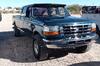
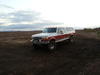


 It is nice that it has separate fill and drain plugs, and the cover's beefy as hell.












 From KC I also bought bellowed up pipes (more below), and a EBPV delete pedestal. I installed the SD UVCH because the turbo intake contacted and put more pressure than I liked on the stock connector.