When you click on links to various merchants on this site and make a purchase, this can result in this site earning a commission. Affiliate programs and affiliations include, but are not limited to, the eBay Partner Network.
‘95 F150 4.9L I-6 Replaced battery that tested dead, less than 1 year old under warranty. Afterwards, gauge reads on the low side, on the first upright of the “N” in Normal, which seems abnormal to me. Off to Autozone for an alternator test. Passed 3 times. Now it gets interesting: the guy I deal with seems the best of the bunch, but he bears a resemblance to Larry Fine of the Three Stooges which may color my attitude about his advice. I asked if the voltage regulator tested ok and he tells me the voltage regulator is now in the Engine Control Module, which was news to me. Back home, my Haynes depicts my alternator with an exterior voltage regulator. Is this guy right or am I getting the old Nyuk, Nyuk, Nyuk here? Cannot tell you what the gauge read before all this, but then, like with appalachain-american roof repair, it wasn’t raining yet. Any suggestions or advice would be most welcome.
get a volt meter, start the truck check the voltage at battery terminals, then turn on all lights, fan blower on high, radio, etc.. under full load at idle you should have about 12.8 volts. The gauges on the trucks are not all that accurate.
I asked if the voltage regulator tested ok and he tells me the voltage regulator is now in the Engine Control Module, which was news to me. Back home, my Haynes depicts my alternator with an exterior voltage regulator.
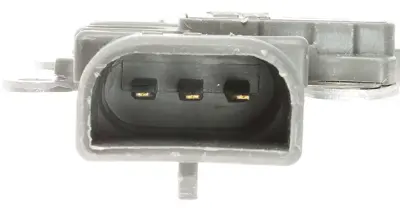
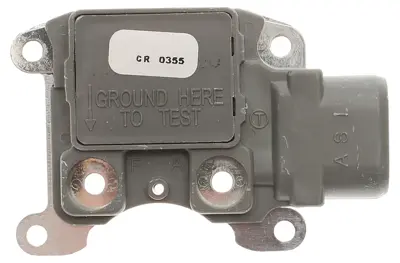
Both wrong. The VR is part of the alternator, but is easily removed and replaced. Indeed it is the most common failure point of the alternator, so it's nice that it is easily R&R'd. I always carry a spare in the glovebox.
As others have suggested, check the voltage at the battery with the engine running. The gauge reading is certainly directing you in the direction of a failed VR, but verify with actual data rather than an inaccurate gauge.
the guy I deal with seems the best of the bunch, but he bears a resemblance to Larry Fine of the Three Stooges which may color my attitude about his advice. I asked if the voltage regulator tested ok and he tells me the voltage regulator is now in the Engine Control Module, which was news to me. Back home, my Haynes depicts my alternator with an exterior voltage regulator. Is this guy right or am I getting the old Nyuk, Nyuk, Nyuk here?
OK, place the edge of your hand along the bridge of you nose and you won't get poked in the eye.
Voltage regulators have found their way into the engine control modules in the very latest "improvements" that technology brings us, but thankfully, that is not the case with your generation of Ford truck. As mentioned, the correct answer is that the voltage regulator is integral to your alternator. Keep in mind this also means you do not have an external voltage regulator, nor should you want one. Also mentioned is that you should check your battery voltage with a voltmeter. Technically, the gauge in your dash is a voltmeter, but what is meant here is a piece of test equipment, not part of your truck. Decent multimeters are relatively inexpensive and reasonably accurate. Battery voltage with the engine not running should be about 12.8 volts, idling should be about a volt higher and running at speed should not exceed about 14.5 volts. One check I like to do is to compare odd results with another meter. Sometimes, the test equipment fails too.
Scndsin: no, no battery light at KOEO. Voltage readings: 12.25v at rest, 11.8 at idle, no load, 11.7 w/ lights and blower at idle. I've attached a drawing from Haynes showing what my alternator resembles. Is the thing labeled "integral regulator" what I am calling a voltage regulator? Is is serviceable/replaceable?
Last edited by Ford Breakdown; Jul 22, 2019 at 08:04 PM.
Reason: add image and spelling
Is the thing labeled "integral regulator" what I am calling a voltage regulator? Is is serviceable/replaceable?
Yes. Easily removed and replaced. You might even be able to do it without removing the alternator from the engine, but probably best to just get the alternator on the bench and then you'll see how easily it is replaced.
Scndsin: no, no battery light at KOEO. Voltage readings: 12.25v at rest, 11.8 at idle, no load,
I just went through this, one of the plugs in the back of instrument cluster was not seated. Same voltage readings described, same reading on the factory gauge.
The bulb for the battery light may be burned out, but that shouldn't matter.
There's supposed to be a resistor parallel to the indicator bulb to insure this, but if you got no warning light & the bulb is good, you may not have voltage to excite the alternator.
Just sayin' you might want to explore this before more parts swapping/replacing.
I'll start there Scndsin, wondered what your gnomic question was about. May very well be, as previous owner had put a rebuilt alternator on and it *looks* good as new. Thanks everyone for weighing in and I will report back.
I think that if you don't have 12 vlts at terminal "I" (key on,engine off) on I think, green/red stripe wire, plug at alt, you won't ever have charging.
(edit) the bulb may just be burned out, but if the voltage ain't there (via resistor on back of cluster) won't matter what you change.
Same problem bit me on the *** with mustang in my sig when the ignition switch began to split & I had random voltage losses across the board.
Scndsin is absolutely spot on. I finally took my truck for a charging system test and they initially said alternator. They swapped out the alternator and no joy. They then disassembled the instrument cluster and started testing for the condition Scsdsin described. They never did find the fault, but cut their losses by running a new circuit from where they had good voltage to the integral regulator. My mechanic is a mensch and did not make me take the new alternator. Thank you Scndsin and everyone who contributed.
This Hennessey Takes the Expedition Tremor's Off-Roading Capability to the Next Level
Slideshow: The VelociRaptor Expedition gains a lift, upgraded suspension, Brembo brakes, and trail-ready equipment while retaining the stock 440-horsepower EcoBoost V6.