When you click on links to various merchants on this site and make a purchase, this can result in this site earning a commission. Affiliate programs and affiliations include, but are not limited to, the eBay Partner Network.
All:
I have an issue with my 1986 Ford F-150 that I need your help and insights in order to direct me to the best course of action. I want to give you some background information first so that you have as much detail as possible before opining. I am not a mechanic so I know little about engines, transmissions, etc. Truck: 1986 Ford F-150 2X4, 5.0 EFI, I am the 4th owner.
Miles: 150,000 – just turned
Transmission: AOD. I think that the transmission fluid has never been changed but I have no proof of that. It’s dark. I can’t tell if it smells “burned” or not. Fluid level seems fine. However, there has always been a little leak around the transmission plan. The TV cable always has a drop of fluid on it.
Issue: I picked up my truck from the garage where it was getting two new valve cover seals as there was oil leaking on the block. When I drive it home I noticed two things. One, the truck idles very high. There is no tachometer in the truck so I cannot tell what the RPMs are accurately but it stays high even if I wait for it to lower on its own or try to goose the gas pedal to get the idle to return to normal. Second, and more importantly, when the truck downshifts at the 35 MPH mark it shifts very hard into the lower gear. It has never done that before. It does not shift hard when accelerating. The problem only appears when decelerating at 35-25 MPH.
So the question is why is the hard downshift happening? I know that when the garage put the valve covers on that they had to take off parts. Could the garage have taken off the TV cable and not adjusted it properly when reinstalling? Could this be the cause of the high idle and rough shift? Reading the Haynes manual it seems to me that adjusting the TV cable does have some part to play in gears shifting properly.
Or maybe could it be that the transmission is dying? (I hope not.)
I am not sure that I could even fix this issue on my own but with your help I might be able to tell a mechanic that this is what I think is the problem.
I hope that this is enough information for you all to chime in and offer assistance. If not, let me know and I will try to get you more detail.
The high idle is going to make the tranny shift hard. Hold one foot on the gas pedal and the other on the brake and any car or truck is going to shift hard. Find out why the idle is high. Sounds like they left a vacuum hose loose to me.
Thanks for your response. I appreciate it. I looked at the vacuum tree and did not see any vacuum lines cracked, etc. It still idles high so it is going back to the garage so that they can fix what they did.
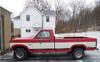
Want to get the Red Rider back on the road and running well.
You guys are all generous sharing your knowledge with everyone here.
If it didn't start until several things were cleared out of the way by someone changing valve covers (on something that's now theirs and they don't give a dang about), pull your hood and start looking really closely, maybe even posting pix. They have overlooked something that ESP won't tell us?
I went out, opened the hood and took some photos of the vacuum tree and anything else I though that I could identify as a vacuum line. Again, you are dealing with someone who knows nothing about this stuff. Heck, I do not know what vacuum line does what. If you could tell me on the Vacuum Tree what line does what that would help me a lot for the future. I am a visual person and the drawings I see in the Haynes manual do nothing for me.
Here is another photo. Again, to my eye all looks well. All lines are deeply seated and I see no cracks. I have no idea what these lines do. The far right one has always been "capped" to my knowledge.
Last photo.
I think these are vacuum lines. Do Not know what the metal thing is on near the fuel injection rail is but the hose seems in well.
I followed most of the lines where they connected and they all seem fine to me. I have not gone under the truck (I have an oil change bay in my garage she is parked over so I can easily do so.) . I need to know what to look for. I guess the obvious is a hose hanging down or a massive tear. The less obvious would be a small tear?
Sorry for all these seemingly stupid questions, but my Dad was no mechanic so I had no one to learn this from.
Any help/insights are appreciated.
Vacuum tree. All look like they are in tight. Identify (please!) what they do. Starting with the one wrapped in plastic, then going up top and then the hidden one on the bottom.
I can’t tell from pix and not recalling how my plenum on my 5.0 in my old 87 mustang was I sold years ago. So, I can’t recall if you can remove valve covers without pulling intake assy. Can you go to box auto part store and get their vacuum gauge assy for free under loaner tool program and see if needle is moving to indicate vacuum leak.
or can you pick up cheap harbor freight one and see? If you find no loose r cracked vacuum lines, and if they did have to remove your plenum to pull driver side valve cover, it sounds like they didn’t reseal intake properly and that’s your vacuum leak causing shift issues.
or if you have hand held blue propane bottle, while engine runs, use live propane without flame of course, just gas, to go around base of intake everywhere. If you do have vacuum leak, propane will sniff it out for you by obvious idle change. It is easier to control where propane goes than carb cleaner but you can also go that route.
Oh, and just since you mentioned, the thing on fuel rail is fuel pressure regulator. Have faith and patience and you’ll figure it out. Might still require you to take it back and ask them to recheck their work. Just remember, if the issue didn’t start until their repair, he is human too, and has overlooked in his reassembly. A vacuum gauge will inform you visually or propane will inform you audibly.
my dad never did much beyond mowing and painting, so, I’m still learning too. The kind folks on internet and YouTube sure help a lot. Hang in there!
Update. Got the truck back from the garage. It was the intake. The seal was faulty so they replaced it for free and charged me nothing. The Red Rider drove home well. Shifted perfectly - not rough at all. So I now think with two new valve cover gaskets, new intake gasket, that I can now begin to tinker with other things with it to make her look more like she did when she came off the line in May of 1986.
Thanks to everyone who helps me with their suggestions. It really helps me to learn from your expertise. This is a terrific site and I am glad that I joined.
Have a happy Memorial Weekend and remember those who gave all. (2nd LT, USAF, J.R. Glunt, KIA, 29 May 1944).
Rezvani's Latest Post-Apocalyptic Monster Is a Ford F-150 Raptor Underneath
Slideshow: Called the Fortress, the 850-horsepower pickup combines Raptor underpinnings with military-inspired features, survival equipment, and a starting price of $285,000.