When you click on links to various merchants on this site and make a purchase, this can result in this site earning a commission. Affiliate programs and affiliations include, but are not limited to, the eBay Partner Network.
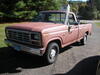
So I recently picked up my truck that was still at my grandfather property for about 2 years. Now that I'm starting to look at what needs to be fixed/replaced I noticed that the spark plugs were in bad shape for whatever reason, mostly fouled from the bad carb flooding the motor. I know that since I'm not running a stock 302 (Mild Cam, 202 Heads, upgraded pistons) that I would need to run a spark plug with a higher "Heat Range" than stock.
So what would be better for my kind of setup? I see plugs with Heat range from 6 up to 14.
Being this isn't the Original EFI 302 & I'm running a Non-Computer controlled 302 is there a big difference in spark plug between years?
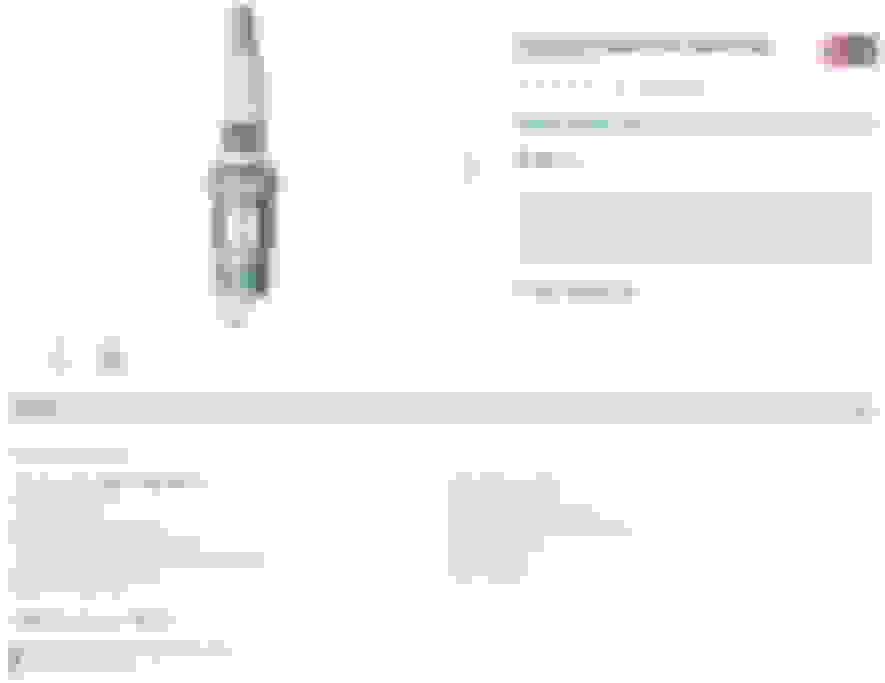
I was looking at these Champion Copper Plus
I'm running a mildly built 302 with GT40 heads and for plugs I'm using Autolite 764. I believe they are what the 93 Mustang Cobra called for...and maybe the 5.0 Explorers, I'm not sure.
Performance engines use a cooler heat range plug, not hotter. But without regard to that it's important to understand fouled plugs are generally not an indication that a hotter plug is needed. Very common mistake. What it usually means 9 times out of 10 is the carburetor needs tuning, or weak ignition, or both.
I suppose a very tired engine with poor oil control, burning lots of oil, low compression etc, a hot plug will allow it to limp along for a while. I don't believe that's the issue here right? So the idea is generally to setup a baseline. Use the stock plug, and tune the carburetor so that it is burning clean in all configurations, from idle to cruise, wide open throttle etc. A wideband O2 sensor is useful for this because of modern gas, it does not color the way leaded gas did. Then when that's straight take a careful look at the plugs in terms of heat range indications and maybe make a change.It's actually recommended by carb tuners to start out with a cold plug and work up. The worst thing that can happen with too-cold of a plug heat range wise, is fouling the plug. Too hot a plug on the other hand though can cause pre-detonation. This is not the same thing as spark-knock or "ping", and is very destructive. The plug tip itself only needs to get hot enough to reach a self-cleaning temperature, any hotter than that is not optimal as it will start lighting off the incoming fuel charge.
Performance engines use a cooler heat range plug, not hotter. But without regard to that it's important to understand fouled plugs are generally not an indication that a hotter plug is needed. Very common mistake. What it usually means 9 times out of 10 is the carburetor needs tuning, or weak ignition, or both.
I suppose a very tired engine with poor oil control, burning lots of oil, low compression etc, a hot plug will allow it to limp along for a while. I don't believe that's the issue here right? So the idea is generally to setup a baseline. Use the stock plug, and tune the carburetor so that it is burning clean in all configurations, from idle to cruise, wide open throttle etc. A wideband O2 sensor is useful for this because of modern gas, it does not color the way leaded gas did. Then when that's straight take a careful look at the plugs in terms of heat range indications and maybe make a change. It's actually recommended by carb tuners to start out with a cold plug and work up. A hot plug can cause pre-detonation. This is not the same thing as spark-knock or "ping" and is very destructive. The plug itself only needs to get hot enough to reach a self-cleaning temperature, any hotter than that is not optimal.
I know colder plugs are used more for Supercharged/Turbocharged applications, not so much for mild built NA motors
No, this engine probably has 5K miles most on it.
I know the old carb had issues with flooding the motor at time causing the Plugs to Foul, that's the main reason I asked about the Heat range is so the plugs get hot enough for optimal detonation but also self'cleaning (Prevent fouling)
I'm running a mildly built 302 with GT40 heads and for plugs I'm using Autolite 764. I believe they are what the 93 Mustang Cobra called for...and maybe the 5.0 Explorers, I'm not sure.
That plug does fit the Cobra, You don't have any fitment issues? When i looked it up for an F150 it claimed it didn't fit the vehicle.
That plug does fit the Cobra, You don't have any fitment issues? When i looked it up for an F150 it claimed it didn't fit the vehicle.
They fit just fine. I can't comment on the fitment issues with your cylinder heads, I was just sharing what plug I was running so you could compare heat ranges. My 302 is 9 or 9.1:1 compression, with GT40 Explorer heads on it, Comp cam, Edelbrock Performer intake, and Holley 4bbl. I had it dyno-tuned and AFR set-up, so I was just trying to give you something to compare to since the Autolite 764 seems to work well for me. You may need a plug with different threads, but the 764 heat range is working fine for me and the plugs are nice and clean.
So I recently picked up my truck that was still at my grandfather property for about 2 years. Now that I'm starting to look at what needs to be fixed/replaced I noticed that the spark plugs were in bad shape for whatever reason, mostly fouled from the bad carb flooding the motor. I know that since I'm not running a stock 302 (Mild Cam, 202 Heads, upgraded pistons) that I would need to run a spark plug with a higher "Heat Range" than stock.
So what would be better for my kind of setup? I see plugs with Heat range from 6 up to 14.
Being this isn't the Original EFI 302 & I'm running a Non-Computer controlled 302 is there a big difference in spark plug between years?
I was looking at these Champion Copper Plus
I would avoid the champions to be honest. Thier quality has been hit and miss for several years now, it is not uncommon to get a bad from them.
NGK/AC Delco (The Delcos are made by NGK some Pt#'s Delphi) , Autolite/Motorcraft (both made by Honeywell) and Bosch are about the best on the market.
My Defualts have always been Bosch, Autolite/Motorcraft.
Performance engines use a cooler heat range plug, not hotter. But without regard to that it's important to understand fouled plugs are generally not an indication that a hotter plug is needed. Very common mistake. What it usually means 9 times out of 10 is the carburetor needs tuning, or weak ignition, or both.
I suppose a very tired engine with poor oil control, burning lots of oil, low compression etc, a hot plug will allow it to limp along for a while. I don't believe that's the issue here right? So the idea is generally to setup a baseline. Use the stock plug, and tune the carburetor so that it is burning clean in all configurations, from idle to cruise, wide open throttle etc. A wideband O2 sensor is useful for this because of modern gas, it does not color the way leaded gas did. Then when that's straight take a careful look at the plugs in terms of heat range indications and maybe make a change. It's actually recommended by carb tuners to start out with a cold plug and work up. A hot plug can cause pre-detonation. This is not the same thing as spark-knock or "ping" and is very destructive. The plug itself only needs to get hot enough to reach a self-cleaning temperature, any hotter than that is not optimal.
X2
Start with the stock heat range plug.
Do your tuning and then if need be adjust heat range. My guess if the motor is not burning oil it will take the stock heat range plugs.
Dave - - - -
I know the old carb had issues with flooding the motor at time causing the Plugs to Foul, that's the main reason I asked about the Heat range is so the plugs get hot enough for optimal detonation but also self'cleaning (Prevent fouling)
Right, but the stock heat range is going to be pretty close in your application, and maybe even a bit on the hot side. The heat range has nothing to do with spark intensity, only how fast (or slow) heat is returned to the cooling system. So we want the plug to get hot enough to burn off deposits, and no more. When on a long summertime highway trip at extended high speeds a cooler heat range is usually not a bad idea. Leaner fuel mixtures, advanced ignition timing, and higher (hotter) output ignition systems can also mean stepping down from the stock heat range. The OEM had to use a "one size fits all" approach, city driving is different than highway use. If it was flooding before, returning it to a correct AFR is going to raise temps quite a lot. You will see this on the plug ground strap right away.
The plug ground strap will show a transition area in color about halfway, around the bend, when the heat range is in the "zone". The porcelain color isn't really an indication of heat range (or anything else for that matter) and shouldn't be used for plug reading as such, believe it or not.
Jetting is observed at the base ring of the plug and maybe the first thread. Nowhere else. Wide open throttle is indicated deep inside the plug, where the porcelain transitions to the plug shell. A strong light and magnifier is useful here. But get the ignition timing straight and carb tuned first, before thinking about changing heat ranges. It can get kind of tedious changing plugs out and around. Can also experiment with one or two cylinders using different plugs.
I like NGK plugs simply for the fact they have a wide range of heat ranges for any given plug. This is not the case for some other brands, not anymore. And heat ranges don't translate well across brands necessarily. And they now claim a single plug is equal to and replaces three heat ranges. Maybe. The application or cross-reference charts will say a 45 is equal to a BF32 is equal to Smedlap B4X and it's all BS. Now they will fit and run, but that's not the same thing as heat range, but there is no direct linear heat range progression available, with the NGK it's straightforward, each click higher 1 thru 10 equals a step colder plug in heat range and they are consistently good, long lasting spark plugs.
I have a 75 302 block with e truck heads flat top pistons a mild cam 600 holley, hei distributor, headers. will autolite ar24 work ok? its in a 94 ranger just a daily driver. What is the best gap?
I have a 75 302 block with e truck heads flat top pistons a mild cam 600 holley, hei distributor, headers. will autolite ar24 work ok? its in a 94 ranger just a daily driver. What is the best gap?
Have you looked at those AR24 plugs? They are some sort of weird racing plug, I do not think you can gap them. Stock the engine came with a 25 heat range plug. Since you built this engine and it's not stock, you will have to experiment with the heat range of the plug, the type of plug, the initial timing setting, etc. If you put a normal plug in it, stock it was gapped at .044
Last edited by Franklin2; Dec 6, 2025 at 08:55 PM.
I looked up on O'Reilly and the said ap25 would work for 94 f150. I went with the head year not the engine. I'm sure it would work as a starting point. I wasn't sure where to start.
I looked up on O'Reilly and the said ap25 would work for 94 f150. I went with the head year not the engine. I'm sure it would work as a starting point. I wasn't sure where to start.
Since you have hopped it up a little bit, you could start with a 24 heat range plug. They make a ap24. I believe the p is for platinum. I am not against new fangled platinum and iridium plugs. Anything that makes them last longer is good in my book.
Same with the gap. You can open the gap up with that HEI and you might get better performance, but you will have to change them more often. The .044 gap is a compromise between performance and plug life.
This Hennessey Takes the Expedition Tremor's Off-Roading Capability to the Next Level
Slideshow: The VelociRaptor Expedition gains a lift, upgraded suspension, Brembo brakes, and trail-ready equipment while retaining the stock 440-horsepower EcoBoost V6.
Rezvani's Latest Post-Apocalyptic Monster Is a Ford F-150 Raptor Underneath
Slideshow: Called the Fortress, the 850-horsepower pickup combines Raptor underpinnings with military-inspired features, survival equipment, and a starting price of $285,000.