


Spindle Adapters for Disk Brakes.
Thread Starter
|
Lead Driver


Joined: Dec 2012
Posts: 9,717
Likes: 823
From: Wentzville, MO

Spindle Adapters for Disk Brakes.
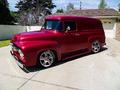
While waiting for my 56 in the bodyshop I decided to work on my newly acquired 53 Panel. I had to remove the wheels to work on the king Pins (frozen). I Found out there were no brake parts on either front wheel. I decided to just bite the bullet and install front disk brakes as well as king pins. King pins went well, other than machining is a little pricey $100.00 to remove & install the bushings and ream them. When I went to install the CPP inner wheel bearing adapter it just spins on the spindle. In their paperwork (and from prior installs) the adapters should need to be pressed on or heated to allow them to fit on the spindle snuggly. These spin with no resistance. I contacted CPP tech support and they sent me adapter specs and asked me to mic the ones I currently have.
Adapters ID Specs 1.3125 +.0000 / -0015
my Adapters are both 1.304
my spindle is 1.313
While CPP hasn’t given me a final response the Tech guy did say that I might have to use JB Weld on them. What do you all think about JB Weld on a spindle?
Adapters ID Specs 1.3125 +.0000 / -0015
my Adapters are both 1.304
my spindle is 1.313
While CPP hasn’t given me a final response the Tech guy did say that I might have to use JB Weld on them. What do you all think about JB Weld on a spindle?

Hotshot


Joined: Oct 2009
Posts: 16,173
Likes: 4,780
From: Burbank, WA
I contacted CPP tech support and they sent me adapter specs and asked me to mic the ones I currently have.
Adapters ID Specs 1.3125 +.0000 / -0015
my Adapters are both 1.304
my spindle is 1.313
While CPP hasn’t given me a final response the Tech guy did say that I might have to use JB Weld on them. What do you all think about JB Weld on a spindle?
Adapters ID Specs 1.3125 +.0000 / -0015
my Adapters are both 1.304
my spindle is 1.313
While CPP hasn’t given me a final response the Tech guy did say that I might have to use JB Weld on them. What do you all think about JB Weld on a spindle?
The tolerances may be small enough that it might not matter, but my first thought would be how to get the adapters centered on the spindle while the JB Weld cured. I see a hub wobble in your future. I don't think I would trust it in a load application like that. If they can't send you different adapters that fit tight, perhaps you might want to try different spindles.
Thread Starter
|
Lead Driver
Joined: Dec 2012
Posts: 9,717
Likes: 823
From: Wentzville, MO
Maybe I'm confused, but isn't 1.304 smaller than 1.313?
The tolerances may be small enough that it might not matter, but my first thought would be how to get the adapters centered on the spindle while the JB Weld cured. I see a hub wobble in your future. I don't think I would trust it in a load application like that. If they can't send you different adapters that fit tight, perhaps you might want to try different spindles.
The tolerances may be small enough that it might not matter, but my first thought would be how to get the adapters centered on the spindle while the JB Weld cured. I see a hub wobble in your future. I don't think I would trust it in a load application like that. If they can't send you different adapters that fit tight, perhaps you might want to try different spindles.
 but the adapters spin on the spindles? I’m using a HF INSIDE/OUT SIDE 6” digital caliper. Just checked the king pins. The bushing is smaller than the pin??? Guess I’ve gotta get a different caliper.

Fleet Mechanic


Joined: Jun 2015
Posts: 1,877
Likes: 295
From: Central Michigan
BJ, I put mine on and they also were a slip fit. It seems I asked around about it and was told to go ahead and try it, which I did. I now have the truck running and everything is great with the brakes. I used the plates and ordered new bearings/races and seals, and used Ford rotors and the Chevy calipers as they said. Only problem I had was the first calipers I got were for the light duty brake and weren't wide enough with the Ford rotors. Then I called their tech line and was told I needed the calipers of a 87 Chevy PU with HD brakes. Then it all worked good. It is in my build thread towards the front I think if you want to see it. Greg.
Fleet Mechanic

Joined: Jan 2004
Posts: 1,682
Likes: 1,460
From: Mendon, Massachusetts
Had the same issues with the kit I got from Speedway, they sent new adapters and they still didn't fit snug on the spindle. I ended up tack welding them so they would stay put. Also had to polish the outside dia. so the bearing would slide on without binding........... so far so good
Fleet Mechanic

Joined: Feb 2015
Posts: 1,665
Likes: 111
From: southwest missouri
BJ my adapters fit on the spindle loose enough where I can remove them but most of the time when I pull the rotor off the adapter stays in the rotor held by the seal.
Trending Topics
Thread Starter
|
Lead Driver
Joined: Dec 2012
Posts: 9,717
Likes: 823
From: Wentzville, MO
Thanks for the replies guys.
With the adapter loose I’d be afraid the adapter will spin and ruin the spindle.
It’s pretty bad that they can’t provide a product as intended. Their instructions clearly say press or heat the adapter to install on the spindle.
With the adapter loose I’d be afraid the adapter will spin and ruin the spindle.
It’s pretty bad that they can’t provide a product as intended. Their instructions clearly say press or heat the adapter to install on the spindle.
FTE Stories
Ford Trucks for Ford Truck Enthusiasts

Top 10 Most Expensive Ford Trucks Ever Sold on Bring a Trailer
Joe Kucinski
2027 Ford Super Duty Buyer's Guide (Every Model, Engine, & Package)
Brett Foote
Top 10 Ford Truck Tragedies
Joe Kucinski
AEV FXL Super Duty - the Super Duty Raptor Ford Doesn't Make
Brett Foote
Lobo Vs Lobo: Proof the F-150 Lobo Should Be Even Lower!
Michael S. Palmer
Ford's 2001 Explorer Sportsman Concept Looks For a New Home
Verdad Gallardo
10 Best Ford Truck Engines We Miss the Most!
Joe Kucinski
2026 Shelby F-150 Off-Road: Better Than a Raptor R?
Brett Foote
2027 Super Duty Carhartt Package First Look: 12 Things You NEED to Know!
Michael S. Palmer
Thread Starter
|
Lead Driver
Joined: Dec 2012
Posts: 9,717
Likes: 823
From: Wentzville, MO
Anybody got the factory measurements for a 53-56 F-100 spindle?
Hotshot
Joined: Oct 2009
Posts: 16,173
Likes: 4,780
From: Burbank, WA
That is exactly what will happen. It can lead to a dangerous condition of potential failure of any or all of the affected parts. Tack welding could be an option if proper replacements can't be procured. The adapter definitely needs to be solidly attached.
Believe Nothing
Joined: Jun 2004
Posts: 7,514
Likes: 398
From: W. Central FL.

I am certain there are engineering specification for fit on such applications. Sounds like the spacer was designed to be an interference fit. Be mindful the bearing inner race is designed to be a slip fit onto the spindle and when adjustment and lubrication are right, they don't spin on the spindles.
Personally, I would not weld nor use any JB Weld product that I am familiar with. They may have something new that I am unaware of. If I felt the clearance was too great for my comfort, I would investigate a sleeve or a product by "Loctite" that is used on worn splines. I've used the Loctite product on tractors and it held up well.
JB, did you ever get accurate dimensions?
Personally, I would not weld nor use any JB Weld product that I am familiar with. They may have something new that I am unaware of. If I felt the clearance was too great for my comfort, I would investigate a sleeve or a product by "Loctite" that is used on worn splines. I've used the Loctite product on tractors and it held up well.
JB, did you ever get accurate dimensions?
Hotshot
Joined: Oct 2009
Posts: 16,173
Likes: 4,780
From: Burbank, WA
I am certain there are engineering specification for fit on such applications. Sounds like the spacer was designed to be an interference fit. Be mindful the bearing inner race is designed to be a slip fit onto the spindle and when adjustment and lubrication are right, they don't spin on the spindles.
Personally, I would not weld nor use any JB Weld product that I am familiar with. They may have something new that I am unaware of. If I felt the clearance was too great for my comfort, I would investigate a sleeve or a product by "Loctite" that is used on worn splines. I've used the Loctite product on tractors and it held up well.
JB, did you ever get accurate dimensions?
Personally, I would not weld nor use any JB Weld product that I am familiar with. They may have something new that I am unaware of. If I felt the clearance was too great for my comfort, I would investigate a sleeve or a product by "Loctite" that is used on worn splines. I've used the Loctite product on tractors and it held up well.
JB, did you ever get accurate dimensions?

Cargo Master
Joined: Jun 2001
Posts: 2,571
Likes: 22
From: Oxford, Indiana


More Turbo

Joined: Apr 2015
Posts: 525
Likes: 57
From: Kenmore, NY
On my 51 F1, the instructions called for gluing the adapters to the spindles with Loctite. Like yours, mine were a little too loose for my comfort, so I chucked the spindles up on my lathe and knurled the spindles where the adapter sits. I had to heat the adapter and chill the spindle to assemble. I still used the Loctite just to be sure.
My lathe is a 14" with a 12" 4 jaw chuck. It took a little thought to come up with a way to chuck the spindles on center. No pictures.
My lathe is a 14" with a 12" 4 jaw chuck. It took a little thought to come up with a way to chuck the spindles on center. No pictures.
Thread Starter
|
Lead Driver
Joined: Dec 2012
Posts: 9,717
Likes: 823
From: Wentzville, MO
I thought about having the spindles knurled. Not sure what it would cost though. Also I didn’t remove the tie rod arms from my spindles and am not sure how to get them off now the spindles have been removed from the axles.