


Windshield washer help needed

Lead Gopher


Joined: Aug 2012
Posts: 10,066
Likes: 1,622
From: Seattle

There is nothing more refreshing than a reasonable and civil disagreement. I have the electric pump version on both my trucks so never had to think about the other type - it is fascinating though. I wish Car Talk was still on so those guys could snort, pun, and pontificate regarding the physics - maybe even get one of their professor guests to weigh in.
Who knows, maybe one of the one-way check valves was stuck in the wrong position and it allowed the bag to pressurize and maybe the bag was old and about to have a problem anyway. All I know is I got in trouble for messing around in the truck and blowing out the washer bag.
I was mostly trying to answer the questions from the thread starter but apparently made a funny about something that happened during my childhood that brushed people the wrong way.
My 2WD truck also has the electric washer pump. It's fancy.
Chad
Tuned
Joined: Oct 2018
Posts: 368
Likes: 6
Nothing ever brushes me terribly wrong, I'm too old for that kind of BS.
Just trying to set the record straight as to the hows and whys of operation in various systems.
Understanding HOW, helps when the repair needs be made.
Most (all?) of the systems on these old trucks are operating on a level not seen by the youth of today, and, as such, may not be fully understood. Us "old guys" are around to help, if our memory holds out...
Me, I still hold out for the old, and nothing I drive (wife's car not included, but it ain't That new), nothing is under 20 years old. The bike is 36 years old (Not a Harley; mine runs ), my truck is a '66.
And you should see my appliances, I regularly use stuff that is 100 years old, or older.
And there is not one thing about anything I own, inside or out of the house, that I cannot repair. Save for refrigeration, I just don't want to invest in the tooling.
Cosmo
Just trying to set the record straight as to the hows and whys of operation in various systems.
Understanding HOW, helps when the repair needs be made.
Most (all?) of the systems on these old trucks are operating on a level not seen by the youth of today, and, as such, may not be fully understood. Us "old guys" are around to help, if our memory holds out...
Me, I still hold out for the old, and nothing I drive (wife's car not included, but it ain't That new), nothing is under 20 years old. The bike is 36 years old (Not a Harley; mine runs
), my truck is a '66.And you should see my appliances, I regularly use stuff that is 100 years old, or older.
And there is not one thing about anything I own, inside or out of the house, that I cannot repair. Save for refrigeration, I just don't want to invest in the tooling.
Cosmo
Lead Gopher
Joined: Aug 2012
Posts: 10,066
Likes: 1,622
From: Seattle
I can appreciate that.
I am definitely still a young 'un. Learning new stuff every day and never afraid to say I was wrong. And you are correct that I was mistaken. It should not under normal circumstances "pressurize" the bag. I was jumping up and down on the bellows like a mad man.
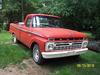
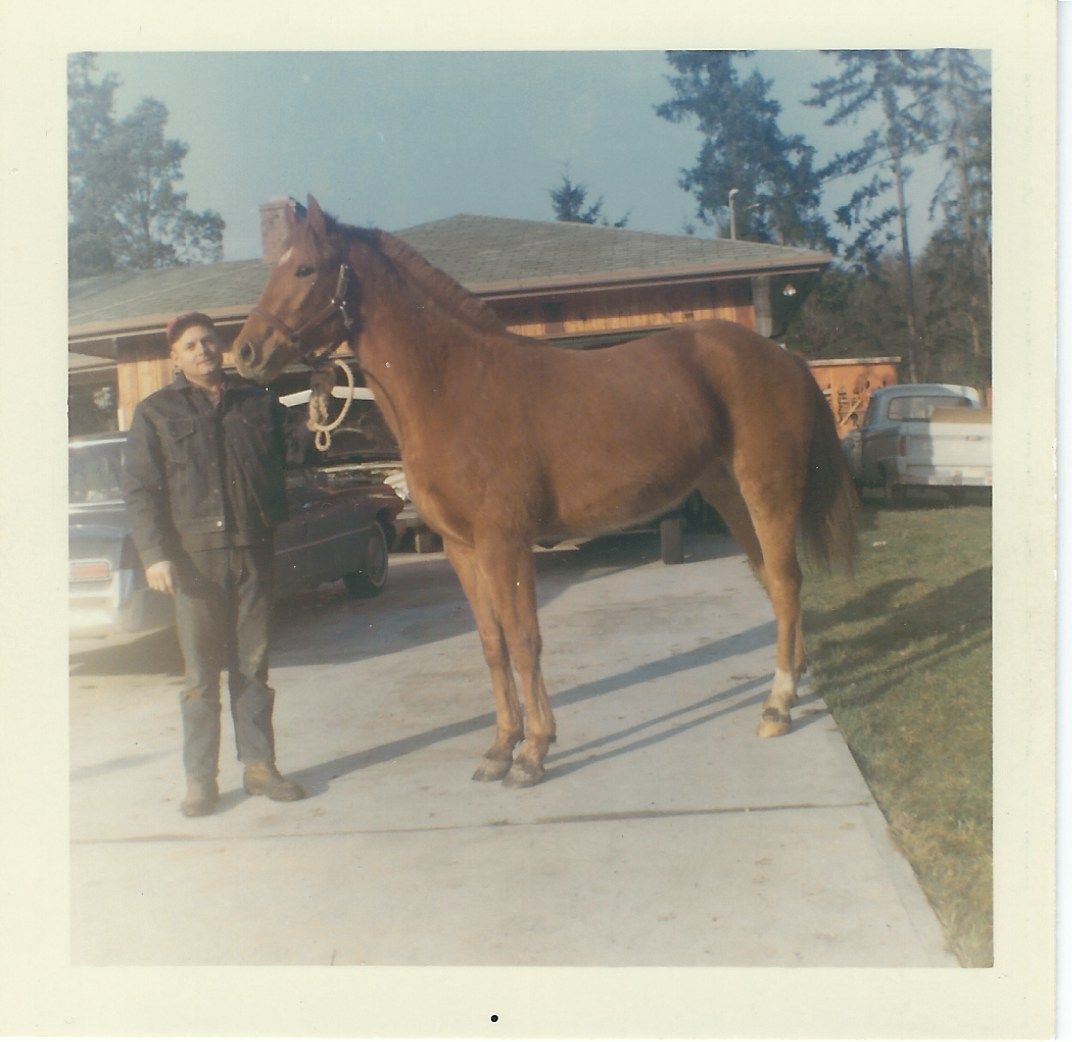
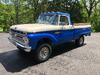
You can see the truck I did it in on the right side of our house here. My uncle is holding the horse reigns. It was some years after this picture was taken, of course.
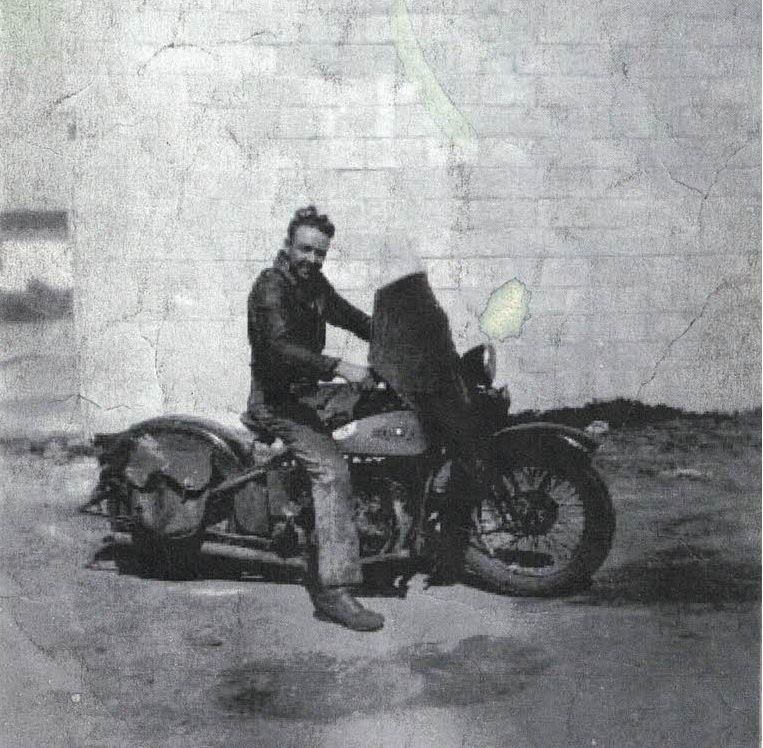
Now, my Dad. He's starting to get to be a little older. He's not riding Harleys any more, but here's a picture of him that is from when he was a young man in the 40's. Probably about 16 years old here. A 1946 Harley as far as he recalls.
Chad
I am definitely still a young 'un. Learning new stuff every day and never afraid to say I was wrong. And you are correct that I was mistaken. It should not under normal circumstances "pressurize" the bag. I was jumping up and down on the bellows like a mad man.
You can see the truck I did it in on the right side of our house here. My uncle is holding the horse reigns. It was some years after this picture was taken, of course.

Now, my Dad. He's starting to get to be a little older. He's not riding Harleys any more, but here's a picture of him that is from when he was a young man in the 40's. Probably about 16 years old here. A 1946 Harley as far as he recalls.

Chad
Lead Gopher
Joined: Aug 2012
Posts: 10,066
Likes: 1,622
From: Seattle
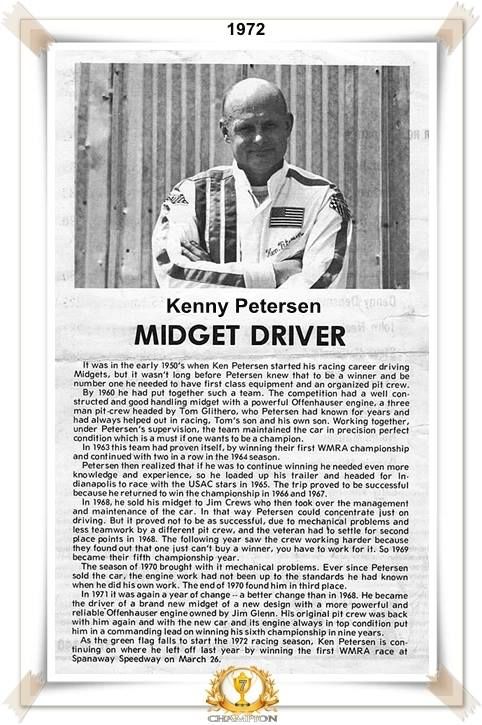
Just one more. The fella holding the horse reigns, my uncle Kenny. Is on Facebook! Well, his picture and some of the history. I worked with him for years on the race cars, too.
https://www.facebook.com/SuperMidgetsWMRA/photos/a.1955427804532678/1485489424859854/?type=3&theater
For those of you without Facebook.
Chad
https://www.facebook.com/SuperMidgetsWMRA/photos/a.1955427804532678/1485489424859854/?type=3&theater
For those of you without Facebook.

Chad
Fleet Mechanic


Joined: Nov 2005
Posts: 1,852
Likes: 437
From: Lehigh Valley, Penna.
Hopefully I didn't offend and for sure I'm not offended. I continue to learn new stuff all of the time and guys like Chad, ND, Randy, and others are a wealth of knowledge on this forum. The last time I worked one of these foot pumps was on a '68 Cougar I think and probably 40 years ago. Just didn't seam logical to me that the bag would pressurize to squirt fluid. My '66 has an electric pump and I don't recall my '60 and my uni even having washers but maybe I just forgot.

Thread Starter
|
Cross-Country
Joined: Oct 2018
Posts: 85
Likes: 0
From: Erie County
You guys are the best. And those drawings are amazing. What a treasure. Certainly my truck did not come with a washer system and I don't know why I'm set on installing one now. I think it is to stay attached to a time when things were simpler. Although, the lively discourse suggests that the foot pump design was not exactly simple. Anyway, I think I have enough to go forward. Look out swap meets, here I come. Tim

Laughing Gas
Joined: Sep 2012
Posts: 860
Likes: 13
From: Asheville, NC

I am glad Tim acquired sufficient information to press forward in his quest for a clean windshield! As I read through this I do not see that anyone offended nor that anyone was offended. That is what this format is for - to learn and understand. This thread is an excellent representation of the uses and comradery that this type of format should provide and perpetuate. I hate reading the threads where folks are sniping at one another. Prying through the memory banks and calling an old friend.....I remember when we were in auto mechanics in high school in the 80's we did a complete frame off restoration of a 50's Pontiac silver streak as a class project. The reservoir on that thing was a mason jar looking apparatus with a foot pump inside. I do remember that the line from the pump hooked to a tee on the top of the "mason jar", connected through cap to a nipple and a hose that went to the bottom of the jar - I suppose that the only way that worked was that the pump moved fluid.
Logistics Pro

Joined: Feb 2011
Posts: 3,522
Likes: 11
From: Townsend, MT
I am going to have to side with Chad on this one although he is either slightly off on a point or two or I am just not reading him right.
To start with, here is a list of verifiable facts that I just came up with on Old Green.
- The bellows has no check valve - air flows freely in and out only through the hose connection
- The bag does not have to be air tight for the system to work - it will draw and spray water out of a #10 can (in fact, my bag will not hold any pressure at all - it leaks around the neck)
- The check valve is in the "T" at the top of the bag
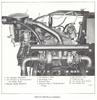
For the 1961-1966 Trucks the foot pump, if so equipped, only has a single output line connected to it. As you pump the bellows it is only pulling air into the washer bag to replace any lost fluid.
Now, think about that for a moment - if only air is being pulled into the bag, how is air pressure not the factor that forces the fluid out of the bag?
Chad
Now, think about that for a moment - if only air is being pulled into the bag, how is air pressure not the factor that forces the fluid out of the bag?
Chad
Here is how the system works. If anyone wants to argue, just know that you are wrong.
When you press the bellows, the medium in the bellows and connected hose is forced through said hose and into the "T". The check ball in the "T" forces the said medium to exit the "T" via the line going to the windshield washer nozzles.
When you let off the bellows, vacuum is created as the bellows begin to rise. This vacuum raises the check ball in the "T" and "sucks" whatever medium that is in the bag up the draw straw and into the line connected to the bellows.
Press the bellows and the check ball drops and the pressure created by the bellows forces the medium out the line from the bellows, into the "T", and then into the line going to the nozzles.
One may ask why, when the bellows pulls a vacuum, does it lift out of the bag instead of pulling back out of the nozzles? From what I can see, it does slightly pull from the nozzles, but because the nozzles are small enough, they create enough of a pressure drop to cause most of the medium to be pulled form the bag.
Now as to the question of what medium is where: The system will pump water, methanol, nitrogen, oxygen, etc. - in other words, any reasonably quick flowing fluid. For now, let's say the bag is filled with plain old hydrohydroxic acid and all of the lines are filled with nitrogen, oxygen, water vapor, and trace amounts of other gasses to start with.
When you press the bellows the first time, air is expelled through the lines and out the nozzles. When you let off, water is drawn out of the bag and into the line connected to the bellows. Now this is where the question seems to be: will the water reach the bellows, or will the bellows remain dry?
My rough work say that the bellows have about three cubic inches of displacement but almost one half of a cubic inch is lost due to sucking back through the nozzles for a usable displacement of two and one half cubic inches when lifting water from the bag.
In other words, 2.5 cubic inches of water will be sucked out of the bag into the line connecting the bag and bellows. Is this enough to completely fill the line and cause some water to be spilled into the bellows itself?
The line connecting to the bellows is about 5/16" diameter which makes for a cross sectional area of .0767 square inches. To have a volume of 2.5 cubic inches stored in this hose, it takes about 32 linear inches of said hose. My system has well over double that length of hose connecting the bellows to the bag, so in theory, no water can ever enter the bellows, and in my system, never does.
The only way for water to ever make it to the bellows is if the hose were on grade the whole way to the bellows with no dips and some residual water was left in the line that could then run down the line to the bellows due to gravity.
Any questions?
FTE Stories
Ford Trucks for Ford Truck Enthusiasts

3 Best / 3 Worst Parts of Modern Ford Ownership
Brett Foote
10 Amazing Upgrades That Solve Common Ford Truck Owner Headaches
Pouria Savadkouei
Every 2026 Ford Engine Explained
Brett Foote
10 Ugly Ford Trucks That We Still Kinda Love
Joe Kucinski
10 Things Every Truck Owner NEEDS (2026 Edition)
Michael S. Palmer
Rezvani's Latest Post-Apocalyptic Monster Is a Ford F-150 Raptor Underneath
Verdad Gallardo
Top 10 Most Expensive Ford Trucks Ever Sold on Bring a Trailer
Joe Kucinski
2027 Ford Super Duty Buyer's Guide (Every Model, Engine, & Package)
Brett Foote
Top 10 Ford Truck Tragedies
Joe Kucinski
Lead Gopher
Joined: Aug 2012
Posts: 10,066
Likes: 1,622
From: Seattle
I've got all the parts sitting on the bench and hopefully a little later today I can hook it all up like it is in the truck with the bellows below the level of the bag and I can try it and see if I end up with the pump and line full of fluid or not. Simple test.
Chad
Chad

Fleet Mechanic
Joined: Aug 2016
Posts: 1,480
Likes: 6
From: Great White North
I am a semi youngin' here and have enjoyed this thread. I have only owned modern trucks including a 66 standard cab, a 66 custom cab and a 66 Ranger which all have a push button on the dash. As for taking sides I like Rednecks story the best, no offence Chad. Food for thought nothing fluid moves in a pipe or tube unless there is air behind it somewhere. This might explain the check valve. Next time you have a drink straw put it on your drink to fill the straw. Put your finger on the top to seal it and then lift it out of the drink. It is up to you where to spray it when you remove your finger. As for the "medium" getting to the bellows I would think that one side would have to be wet to push through the tubing. If both sides are wet you likely have a hole in the diaphragm. I am thinking in terms of how an expansion tank works in hydronic heating.
Lead Gopher
Joined: Aug 2012
Posts: 10,066
Likes: 1,622
From: Seattle
I am a semi youngin' here and have enjoyed this thread. I have only owned modern trucks including a 66 standard cab, a 66 custom cab and a 66 Ranger which all have a push button on the dash. As for taking sides I like Rednecks story the best, no offence Chad. Food for thought nothing fluid moves in a pipe or tube unless there is air behind it somewhere. This might explain the check valve. Next time you have a drink straw put it on your drink to fill the straw. Put your finger on the top to seal it and then lift it out of the drink. It is up to you where to spray it when you remove your finger. As for the "medium" getting to the bellows I would think that one side would have to be wet to push through the tubing. If both sides are wet you likely have a hole in the diaphragm. I am thinking in terms of how an expansion tank works in hydronic heating.
I might not get to this test today but I will.
Chad
Lead Gopher
Joined: Aug 2012
Posts: 10,066
Likes: 1,622
From: Seattle
For all I know the foot pump/washer system was his thesis paper in his first quarter sophomore year, too....
Chad
Fleet Mechanic
Joined: Nov 2005
Posts: 1,852
Likes: 437
From: Lehigh Valley, Penna.
Very good analysis of the system. Is the pump below the level of the bag? If it is and you get a crack in the rubber it would likely siphon fluid out of the bag and leak inside the cab.