



Real World Testing and Evaluations

Thread Starter
|
Junior User
Joined: Jan 2019
Posts: 85
Likes: 1
Real World Testing and Evaluations
Reading on this forum about real problems people are having with their new F 250 ( specifically Ande with his 2019 6.2 gas engine problem, frozen door locks, etc) Whatever happened to real world testing and evaluation on new models before even being put into mass production. I just purchased a 2019 F 250 FX 4 6.2 L CC and after reading about the new F 250’s I had to ask this question. My previous truck a brand new 2015 F 150 Lariat 4x4 5.0L 6 speed auto with all the new technology and bells and whistles. My 2015 F 150 had many problems. Panoramic moon roof rattle problem from day one. At 40,000 miles the bearing on water pump went out. After two tears of ownership all 4 rims replaced because the fake chrome on the PVD rims were flaking off. The new electronic technology was impressive at first but as I learned under real world driving conditions was not refined enough. Blind spot monitoring would go into a fault mode in heavy rain on the highway.The collision avoidance system would go off when passing through an overpass shadow on the highway. Lane keeping would not go off till halfway into the on coming traffic lane. The powered remote tailgate would open by itself for no apparent reason. Thank goodness I do not have this technology on my 2019 F250 6.2. I joined the F 150 online forum with my 2015 F 150 and talked about all this and learned from others.
In that forum I notices a Ford rep. by the name of Crystal that chimed in to help people trying to get certain warranty work done that was having problems. It seemed she regularly monitored the forum. I guess with it being a complete new redisgn of Fords F 150, Ford wanted to follow along to see how the new truck would be received by the new owners.
if their is a Ford rep. following this forum then why can’t Ford give a new F 250 (a new designed vehicle) to a Family to drive in real world conditions for testing and evaluation and then put their recommendations into the design before mass production of the vehicle begins.
Example: The 2009 F 150 door pocket and cup holder would hold a full size yeti tumbler with no problem. Door pocket cup holders today will not hold a basic water bottle standing straight. Yes this is a small nick pic but when you leave the house with your favorite beverage tumbler and travel many miles for a few days it makes a difference for convenience.
The head rest in the back seat of my 2019 F 250 XLT do not even fold down like they did in my 2015 F 150 Lariat allowing you full view through the back window. I guess Ford figures F 250 owners do not need to see out the back window. The cost difference between a XLT and a Lariat for 2019 is not justified just for fold down back seat head rest.
What is your opinion on having real world testing done by averag everyday people?
In that forum I notices a Ford rep. by the name of Crystal that chimed in to help people trying to get certain warranty work done that was having problems. It seemed she regularly monitored the forum. I guess with it being a complete new redisgn of Fords F 150, Ford wanted to follow along to see how the new truck would be received by the new owners.
if their is a Ford rep. following this forum then why can’t Ford give a new F 250 (a new designed vehicle) to a Family to drive in real world conditions for testing and evaluation and then put their recommendations into the design before mass production of the vehicle begins.
Example: The 2009 F 150 door pocket and cup holder would hold a full size yeti tumbler with no problem. Door pocket cup holders today will not hold a basic water bottle standing straight. Yes this is a small nick pic but when you leave the house with your favorite beverage tumbler and travel many miles for a few days it makes a difference for convenience.
The head rest in the back seat of my 2019 F 250 XLT do not even fold down like they did in my 2015 F 150 Lariat allowing you full view through the back window. I guess Ford figures F 250 owners do not need to see out the back window. The cost difference between a XLT and a Lariat for 2019 is not justified just for fold down back seat head rest.
What is your opinion on having real world testing done by averag everyday people?

Freshman User
Joined: Nov 2018
Posts: 35
Likes: 1
Not sure I agree with the sentiment. Having issues sucks for sure - especially after paying a pretty penny for a new truck. But I wouldn’t call the super duties problem ridden. I’ve had vehicles where it was nothing but problem after problem, and everyone else had the exact same problems, and the dealers were even like “ya these cars aren’t well made, nothing we can do.”
My experience to date with my 2018 F250 is that it runs flawlessly, and I’ve been notified via multiple methods of potential issues (door locks, engine block heater) before it becomes an issue - along with a “bring it to the dealer and we’ll fix it for you”
Love my truck!
My experience to date with my 2018 F250 is that it runs flawlessly, and I’ve been notified via multiple methods of potential issues (door locks, engine block heater) before it becomes an issue - along with a “bring it to the dealer and we’ll fix it for you”
Love my truck!

Cargo Master

Joined: Dec 2003
Posts: 2,182
Likes: 7
From: Saint Augustine, FL
I think I can answer your question. I have been a race engineer for many years and in the last 10+ I have been doing consulting work with the auto manufacturers. Much of what I do is vehicle testing and evaluation. Most of what I do is performance testing and not reliability testing but I do have some insight into those people and the work they do.
First; its necessary to understand that modern vehicles are complex machines. The cost of developing a new vehicle from scratch is a multi-Billion dollar undertaking. Testing is a major part of that cost. So don't think for a moment that there isn't real world testing. Failures are going to fall into one of two categories; Design or quality.
Design failures are pretty obvious: the design didn't meet the requirements of the application. This sounds pretty simple but is more complex than you might think. Engineers can't foresee all possible circumstances and do the best they can with the time and budget they have to make these system efficient, functional and affordable. I think the frozen door handle problem is a design failure. Or a combination of design failures. Door seals, latch mechanisms, latch cables etc....
Quality failures are a failure of either materials or manufacturing. This is where many of the problems arise. Managing the supply chain is a major component. The Takata airbag recall is a good example of this. The air bag supplier to many auto manufacturers were not manufacturing to the contract's specifications. JIT manufacturing requirements mean that the auto manufacturer much trust that the supplier is delivering as contracted. Another example is the early Ford TorqShift automatics that had planetary gear failures. They supplier was not welding the planet gear pinions per the design spec. The result was the planetary gear failed and required the transmission be replaced under warranty. The design was fine. The materials were fine. The process was fine, as specified. The supplier didn't follow through and the parts failed.
There is also the statistical failures. Assume there are a million parts in the truck. If one tenth of one percent of those parts fail, that's 1000 failures for every 1 million vehicles.
So compare any modern vehicle to a 30 or 40 year old vehicle and you'll see more complex vehicle by a couple of orders of magnitude.
First; its necessary to understand that modern vehicles are complex machines. The cost of developing a new vehicle from scratch is a multi-Billion dollar undertaking. Testing is a major part of that cost. So don't think for a moment that there isn't real world testing. Failures are going to fall into one of two categories; Design or quality.
Design failures are pretty obvious: the design didn't meet the requirements of the application. This sounds pretty simple but is more complex than you might think. Engineers can't foresee all possible circumstances and do the best they can with the time and budget they have to make these system efficient, functional and affordable. I think the frozen door handle problem is a design failure. Or a combination of design failures. Door seals, latch mechanisms, latch cables etc....
Quality failures are a failure of either materials or manufacturing. This is where many of the problems arise. Managing the supply chain is a major component. The Takata airbag recall is a good example of this. The air bag supplier to many auto manufacturers were not manufacturing to the contract's specifications. JIT manufacturing requirements mean that the auto manufacturer much trust that the supplier is delivering as contracted. Another example is the early Ford TorqShift automatics that had planetary gear failures. They supplier was not welding the planet gear pinions per the design spec. The result was the planetary gear failed and required the transmission be replaced under warranty. The design was fine. The materials were fine. The process was fine, as specified. The supplier didn't follow through and the parts failed.
There is also the statistical failures. Assume there are a million parts in the truck. If one tenth of one percent of those parts fail, that's 1000 failures for every 1 million vehicles.
So compare any modern vehicle to a 30 or 40 year old vehicle and you'll see more complex vehicle by a couple of orders of magnitude.
Thread Starter
|
Junior User
Joined: Jan 2019
Posts: 85
Likes: 1
I think I can answer your question. I have been a race engineer for many years and in the last 10+ I have been doing consulting work with the auto manufacturers. Much of what I do is vehicle testing and evaluation. Most of what I do is performance testing and not reliability testing but I do have some insight into those people and the work they do.
First; its necessary to understand that modern vehicles are complex machines. The cost of developing a new vehicle from scratch is a multi-Billion dollar undertaking. Testing is a major part of that cost. So don't think for a moment that there isn't real world testing. Failures are going to fall into one of two categories; Design or quality.
Design failures are pretty obvious: the design didn't meet the requirements of the application. This sounds pretty simple but is more complex than you might think. Engineers can't foresee all possible circumstances and do the best they can with the time and budget they have to make these system efficient, functional and affordable. I think the frozen door handle problem is a design failure. Or a combination of design failures. Door seals, latch mechanisms, latch cables etc....
Quality failures are a failure of either materials or manufacturing. This is where many of the problems arise. Managing the supply chain is a major component. The Takata airbag recall is a good example of this. The air bag supplier to many auto manufacturers were not manufacturing to the contract's specifications. JIT manufacturing requirements mean that the auto manufacturer much trust that the supplier is delivering as contracted. Another example is the early Ford TorqShift automatics that had planetary gear failures. They supplier was not welding the planet gear pinions per the design spec. The result was the planetary gear failed and required the transmission be replaced under warranty. The design was fine. The materials were fine. The process was fine, as specified. The supplier didn't follow through and the parts failed.
There is also the statistical failures. Assume there are a million parts in the truck. If one tenth of one percent of those parts fail, that's 1000 failures for every 1 million vehicles.
So compare any modern vehicle to a 30 or 40 year old vehicle and you'll see more complex vehicle by a couple of orders of magnitude.
First; its necessary to understand that modern vehicles are complex machines. The cost of developing a new vehicle from scratch is a multi-Billion dollar undertaking. Testing is a major part of that cost. So don't think for a moment that there isn't real world testing. Failures are going to fall into one of two categories; Design or quality.
Design failures are pretty obvious: the design didn't meet the requirements of the application. This sounds pretty simple but is more complex than you might think. Engineers can't foresee all possible circumstances and do the best they can with the time and budget they have to make these system efficient, functional and affordable. I think the frozen door handle problem is a design failure. Or a combination of design failures. Door seals, latch mechanisms, latch cables etc....
Quality failures are a failure of either materials or manufacturing. This is where many of the problems arise. Managing the supply chain is a major component. The Takata airbag recall is a good example of this. The air bag supplier to many auto manufacturers were not manufacturing to the contract's specifications. JIT manufacturing requirements mean that the auto manufacturer much trust that the supplier is delivering as contracted. Another example is the early Ford TorqShift automatics that had planetary gear failures. They supplier was not welding the planet gear pinions per the design spec. The result was the planetary gear failed and required the transmission be replaced under warranty. The design was fine. The materials were fine. The process was fine, as specified. The supplier didn't follow through and the parts failed.
There is also the statistical failures. Assume there are a million parts in the truck. If one tenth of one percent of those parts fail, that's 1000 failures for every 1 million vehicles.
So compare any modern vehicle to a 30 or 40 year old vehicle and you'll see more complex vehicle by a couple of orders of magnitude.
Steve thanks for in input as to how things are done in the automotive industry. I spent many years in the industrial inviroment and many years in the QA (quality assurance) arena. The QA arena is precise. If not people can get hurt or have catastrophic failures with equipment and systems. This all reminds me of Dr W.E. Deming. He was the single individual who helped propel Japan into the fore front of quality in mass production. Seeing Japan excel the American Industries started using some of Dr. Deming’s methods. Ford years ago actually used the motto Quality is Job One. Don’t know why that motto went away. As with Japan years ago word of mouth spreads quicker than anything else. The quality and longevity of their vehicles propelled them to the front and left the American automotive industry to play catch up. If the left hand talks to the right hand and both agree on design then real world testing is applied before mass production begins then problems later will be minimized. Yes parts supplier, subcontractors,etc have cut corners for their own reasons but inspections need to be put in place to find the components that do not meet the specs as written.
Last edited by Retiredout; Jan 24, 2019 at 01:06 PM. Reason: Left something out
Cargo Master
Joined: Dec 2003
Posts: 2,182
Likes: 7
From: Saint Augustine, FL
.... If the left hand talks to the right hand and both agree on design then real world testing is applied before mass production begins then problems later will be minimized. Yes parts supplier, subcontractors,etc have cut corners for their own reasons but inspections need to be put in place to find the components that do not meet the specs as written.
Yep. And I am always amazed when the system fails to catch something like the takata airbag problem. Or the TorqShift planetary problem.
But then the "system" is as prone to failure as the parts it is supposed to test.
Cargo Master
Joined: Dec 2003
Posts: 2,182
Likes: 7
From: Saint Augustine, FL
Trending Topics

Senior User
Joined: Jul 2018
Posts: 137
Likes: 0
I am a design and testing engineer at a company that extensively modifies/upfits vehicles. Steve's earlier points about design and manufacturing issues are right on the money. Just to add a bit more on this question:
There are a few reasons that this is not done.
-Prototypes are expensive, and making enough of them to give away to enough people to get a good survey result would be very costly.
-Arranging the group of people who would receive the vehicles is difficult. If you give them only to your most loyal customers, will you get accurate feedback? If you give them to random people, will incorporating their ideas earn you any new sales?
-New ideas are developed and tested internally that don't see the light of day in production vehicles right away or sometimes ever. We don't want company secrets getting out until we are ready to release them.
-Vehicles intended for customers have a much higher level of fit and finish than engineering prototypes. Usually because many of the parts used to assemble them are one offs, and hard tooling is not ordered until the design is locked. I suspect that if we gave out our testing vehicles for people to drive, we would get nothing but complaints about rattles and poor fitment of pieces.
-Liability. Who would own the vehicle and who would pay if it's in an accident? Prototypes might not be built to the same level of safety as a production vehicle.
I can't speak for Ford or any other OEM manufacturer. But at least for my company, it is much easier and cheaper to get customer input from surveys, focus groups, dealers, etc. and incorporate those ideas the best we can in the design process. Then have trained engineers evaluate the prototype vehicles before signing off on production.
if their is a Ford rep. following this forum then why can’t Ford give a new F 250 (a new designed vehicle) to a Family to drive in real world conditions for testing and evaluation and then put their recommendations into the design before mass production of the vehicle begins.
-Prototypes are expensive, and making enough of them to give away to enough people to get a good survey result would be very costly.
-Arranging the group of people who would receive the vehicles is difficult. If you give them only to your most loyal customers, will you get accurate feedback? If you give them to random people, will incorporating their ideas earn you any new sales?
-New ideas are developed and tested internally that don't see the light of day in production vehicles right away or sometimes ever. We don't want company secrets getting out until we are ready to release them.
-Vehicles intended for customers have a much higher level of fit and finish than engineering prototypes. Usually because many of the parts used to assemble them are one offs, and hard tooling is not ordered until the design is locked. I suspect that if we gave out our testing vehicles for people to drive, we would get nothing but complaints about rattles and poor fitment of pieces.
-Liability. Who would own the vehicle and who would pay if it's in an accident? Prototypes might not be built to the same level of safety as a production vehicle.
I can't speak for Ford or any other OEM manufacturer. But at least for my company, it is much easier and cheaper to get customer input from surveys, focus groups, dealers, etc. and incorporate those ideas the best we can in the design process. Then have trained engineers evaluate the prototype vehicles before signing off on production.
FTE Stories
Ford Trucks for Ford Truck Enthusiasts

Top 6 Best Deals Available on New Fords & Lincolns Right Now
Brett Foote
This Hennessey Takes the Expedition Tremor's Off-Roading Capability to the Next Level
Verdad Gallardo
Top 10 Fords at 2026 Carlisle Ford Nationals
Joe Kucinski
3 Best / 3 Worst Parts of Modern Ford Ownership
Brett Foote
10 Amazing Upgrades That Solve Common Ford Truck Owner Headaches
Pouria Savadkouei
Every 2026 Ford Engine Explained
Brett Foote
10 Ugly Ford Trucks That We Still Kinda Love
Joe Kucinski
10 Things Every Truck Owner NEEDS (2026 Edition)
Michael S. Palmer
Rezvani's Latest Post-Apocalyptic Monster Is a Ford F-150 Raptor Underneath
Verdad Gallardo
Cargo Master
Joined: Dec 2003
Posts: 2,182
Likes: 7
From: Saint Augustine, FL
I am a design and testing engineer at a company that extensively modifies/upfits vehicles. Steve's earlier points about design and manufacturing issues are right on the money. Just to add a bit more on this question:
There are a few reasons that this is not done.
-Prototypes are expensive, and making enough of them to give away to enough people to get a good survey result would be very costly.
-Arranging the group of people who would receive the vehicles is difficult. If you give them only to your most loyal customers, will you get accurate feedback? If you give them to random people, will incorporating their ideas earn you any new sales?
-New ideas are developed and tested internally that don't see the light of day in production vehicles right away or sometimes ever. We don't want company secrets getting out until we are ready to release them.
-Vehicles intended for customers have a much higher level of fit and finish than engineering prototypes. Usually because many of the parts used to assemble them are one offs, and hard tooling is not ordered until the design is locked. I suspect that if we gave out our testing vehicles for people to drive, we would get nothing but complaints about rattles and poor fitment of pieces.
-Liability. Who would own the vehicle and who would pay if it's in an accident? Prototypes might not be built to the same level of safety as a production vehicle.
I can't speak for Ford or any other OEM manufacturer. But at least for my company, it is much easier and cheaper to get customer input from surveys, focus groups,
alers, etc. and incorporate those ideas the best we can in the design process. Then have trained engineers evaluate the prototype vehicles before signing off on production.
There are a few reasons that this is not done.
-Prototypes are expensive, and making enough of them to give away to enough people to get a good survey result would be very costly.
-Arranging the group of people who would receive the vehicles is difficult. If you give them only to your most loyal customers, will you get accurate feedback? If you give them to random people, will incorporating their ideas earn you any new sales?
-New ideas are developed and tested internally that don't see the light of day in production vehicles right away or sometimes ever. We don't want company secrets getting out until we are ready to release them.
-Vehicles intended for customers have a much higher level of fit and finish than engineering prototypes. Usually because many of the parts used to assemble them are one offs, and hard tooling is not ordered until the design is locked. I suspect that if we gave out our testing vehicles for people to drive, we would get nothing but complaints about rattles and poor fitment of pieces.
-Liability. Who would own the vehicle and who would pay if it's in an accident? Prototypes might not be built to the same level of safety as a production vehicle.
I can't speak for Ford or any other OEM manufacturer. But at least for my company, it is much easier and cheaper to get customer input from surveys, focus groups,
alers, etc. and incorporate those ideas the best we can in the design process. Then have trained engineers evaluate the prototype vehicles before signing off on production.
There is a costs/benefit ratio to testing that is also considered. Time to market, cost of testing and manufacturing schedules often conflict.
I drive lots of cars and trucks for work and as rentals when traveling. Given the complexity of modern vehicles I am impressed with how most are actually very good. I have said in this very forum before: buy whichever truck you like the most. Its not likely to be a bad decision. The major manufacturers can't afford to build bad products, especially in the truck market. I would probably have been pretty happy if I had bought a new Ram instead of my Super Duty. Its not a bad truck. Its really a matter of degrees now.
Overall, I have been very impressed with Ford's design, build quality and performance over time. I think they are the best of the bunch now and have been for a while. The exception having been the 6.0 and 6.4 PSD engines.
Cargo Master
Joined: Dec 2003
Posts: 2,182
Likes: 7
From: Saint Augustine, FL
Incidentally, when I was doing a lot of work for Ford they gave me a new, current model, F150 to drive as a personal vehicle. I had a 2013, Lariat, FX4 6.2, a 2014 Lariat (2wd) 5.0 and a 2015 Lariat FX4 3.5 EB
Although they had serial numbers on them I am pretty sure they were test build trucks.

Tuned
Joined: Feb 2009
Posts: 400
Likes: 25
From: Queen Creek
Needs are different, people are different, you can't test everything to see if everyone likes it. Vehicles are designed to appeal to a large mass of people....there will always be the one off's. Your sentiment could be applied to every auto manufacturer out there. Cool thing is there are plenty of options to chose from....you don't like the Ford...get something from one of the other manufactures. It pays to do research and talk to real owners which this forum provides. I had a 2016 F150 that was flawless....I now have a special ordered F250 (see sig) that I couldn't be happier with. I would also add that problems get amplified on forums....you mainly hear from people with an issue they are trying to solve. The vast majority of people that are not experiencing issues are just racking up mile after mile of trouble free use. Not that many people starting threads just to talk about how awesome their truck is......but, you have a problem and people can't wait to get to the keyboard. This is a great group of helpful people, if I have any issues with my 2019, I will be sure to look here first for solutions.
Frmr Ford Trans Engr


Joined: Aug 1999
Posts: 24,739
Likes: 2,669
From: SE Florida
There is a lot of spot-on information in this thread.
For almost 19 years I was a development engineer/supervisor in automatic transmission engineering. I developed the calibration for the transmission, what is commonly called "tunes" on these forums. I always had prototype vehicles to do my work. You wouldn't want to drive them. They had more squeaks and rattles than you could believe. Door handles fell off, engines had problems, transmissions had problems, etc.
We didn't give vehicles to the average person for the reasons listed above, plus the average person doesn't put enough miles on their vehicles to make the testing worthwhile. We often did place vehicles with fleets where they would get a lot of miles.
When I left Ford in 2007 they were in the middle of a program to reduce the number of prototypes built, since these cost about $250,000 or more EACH. The goal was to do more computer modeling and testing on dynamometers instead of in vehicles. I don't know how that progressed because I left.
Another factor (in my never to be humble opinion) is that when I left on February 28, 2007, 14,000 other white collar workers left the company with me. Ford offered buyouts to 85% of the salaried workforce. They had a target of how many people needed to leave. I only knew two people that wanted a buyout offer and were told they were critical and wouldn't receive one.
The downside (again, my opinion) is that a HUGE amount of product and manufacturing knowledge left the company that day. No matter how much is written down, nothing can substitute for experience. I believe that led to quite a few errors in both design and manufacturing. Ford's quality scores dropped after 2007 and recalls increased. When I was a supervisor I had a mangler (the official title is manager, but that isn't what this person did) kept insisting that an engineer is an engineer is an engineer. You can take any engineer off of their job and bring in a different engineer and things will just continue as if nothing changed. I think that the buyouts proved that is incorrect.
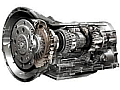
As for the Torqshift problem, I was there. The shafts that are inside the planet gears in the planetary gearset are staked in place. The staking operation is done in house, not by a vendor. That process got out of control which created staking that was too small. This in turn allowed the shaft to walk out. This went on for part of the 2004 model year before the problem was discovered and fixed.
For almost 19 years I was a development engineer/supervisor in automatic transmission engineering. I developed the calibration for the transmission, what is commonly called "tunes" on these forums. I always had prototype vehicles to do my work. You wouldn't want to drive them. They had more squeaks and rattles than you could believe. Door handles fell off, engines had problems, transmissions had problems, etc.
We didn't give vehicles to the average person for the reasons listed above, plus the average person doesn't put enough miles on their vehicles to make the testing worthwhile. We often did place vehicles with fleets where they would get a lot of miles.
When I left Ford in 2007 they were in the middle of a program to reduce the number of prototypes built, since these cost about $250,000 or more EACH. The goal was to do more computer modeling and testing on dynamometers instead of in vehicles. I don't know how that progressed because I left.
Another factor (in my never to be humble opinion) is that when I left on February 28, 2007, 14,000 other white collar workers left the company with me. Ford offered buyouts to 85% of the salaried workforce. They had a target of how many people needed to leave. I only knew two people that wanted a buyout offer and were told they were critical and wouldn't receive one.
The downside (again, my opinion) is that a HUGE amount of product and manufacturing knowledge left the company that day. No matter how much is written down, nothing can substitute for experience. I believe that led to quite a few errors in both design and manufacturing. Ford's quality scores dropped after 2007 and recalls increased. When I was a supervisor I had a mangler (the official title is manager, but that isn't what this person did) kept insisting that an engineer is an engineer is an engineer. You can take any engineer off of their job and bring in a different engineer and things will just continue as if nothing changed. I think that the buyouts proved that is incorrect.
As for the Torqshift problem, I was there. The shafts that are inside the planet gears in the planetary gearset are staked in place. The staking operation is done in house, not by a vendor. That process got out of control which created staking that was too small. This in turn allowed the shaft to walk out. This went on for part of the 2004 model year before the problem was discovered and fixed.
More Turbo
Joined: Mar 2018
Posts: 710
Likes: 58
I get it why they do their own in house testing. But if they torture test in all conditions imaginable like manufacturers claim, why do the common issues that lead to recalls, TSBs, field actions, etc not rear their ugly head during these tests that should be more extreme then everyday use? Or do they find the problems but have production dates to meet?
Senior User
Joined: Nov 2018
Posts: 319
Likes: 0
From: Cheboygan Mi
I think we started this thread talking about real world testing of the vehicle, reliability, all cost’s and time factors considered, I have to wonder sumtimes about the testing methods and environments. (Frozen doors and tailgates), I live in northern michigan, there is a test facility about 70 miles north and I see lots of camoed and secret vehicles on the highway, but if the trucks were driven say six months in rain, snow etc these problems would arise and be dealt with. But in reality it is, get it on the market ASAP, AINT GOT TIME FOR DAT