When you click on links to various merchants on this site and make a purchase, this can result in this site earning a commission. Affiliate programs and affiliations include, but are not limited to, the eBay Partner Network.
I remember having this discussion with my chief engineer one time. Not long after we launched a new model car we had a customer complain that when she made a right turn at a certain corner that car would not accelerate for a very long time. I sent an engineer to ride with her since she only lived a few miles from our office. She couldn't make it happen with the engineer present. A couple weeks later Ford bought the vehicle back because she still was unhappy. We got the vehicle for testing.
.
Experience is a huge component of practical engineering. Race Engineers learn this early on. Honda used to run their best engineering candidates through their motorsports group for that reason. Sadly, that's no longer the case.
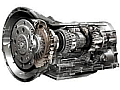
I used to own a couple of Aamco Transmission centers (for about 8 years) and saw lots of crazy stuff with automatics. My favorite was a lady that brought her car into one of my shops to have it checked. She said that, at stoplights, it wouldn't accelerate when first pressed the throttle but after a short delay would slam into gear. We did the usual checks (fluid full and in good condition) and test drove the car, finding no issues. After several attempt to duplicate the problem I went and drove the car. We had a defined test drive route that permitted a technician to run the transmission through its entire range of function, on good pavement.
I couldn't duplicate the problem and rode with the owner to see if she could demonstrate the problem. After negotiating several stop signs I told her "see, it doesn't seem to be doing it now". She said matter-of-factly: "those are stop signs, it only does it at stop lights". I laughed and said that the car doesn't know the difference in a sign and a light. Her reply; "This one does". Well sure enough, it did it at lights and not signs. Turns out it was based on how long the car sat stationary. The pump was loosing its prime after a brief idle and after raising the rpm the pump primed, built pressure and slammed into gear at 2000 rpm. Lesson learned.
nobody would ever argue otherwise. but freezing water is almost a daily thing for alot of us. functioning latches should be high on the list of things that just have to work without question. water and snow in all the body gaps during the day and freezing at night is a everyday thing for me. you can see right behind the wheel
Because you drive in a lot of water and slush during the day do yo have the electrical gremlins on the 2017 model design with water getting into the wiring harness plug under the right rear bumper area that has been posted in this forum?
nobody would ever argue otherwise. but freezing water is almost a daily thing for alot of us. functioning latches should be high on the list of things that just have to work without question. water and snow in all the body gaps during the day and freezing at night is a everyday thing for me. you can see right behind the wheel
Absolutely. I used to look at that in my driveway when I lived in the cold. I don't do that anymore. Extreme cold to me now is under 60F.
In my development days at Ford I traveled in northern Canada every January to develop the transmissions to operate in the extreme cold. The coldest I ever tested in was -48F. And no, that wasn't wind chill. That was actual temperature. Wind chill does not affect vehicles, only temperature does.
One of my friends was a door latch Technical Specialist at Ford. That's a person with management level pay and benefits but still works as an engineer with no management responsibilities. That's because their knowledge and abilities are highly prized. He left Ford with a buyout the same day I did. He kept pointing out to me the door latch recalls that happened several years after he left. It seems that without him and the others in his area that knew what was what they couldn't engineer a door latch to save their jobs. Clubwagon, this is the guy you PMed me about.
One of my friends was a door latch Technical Specialist at Ford. That's a person with management level pay and benefits but still works as an engineer with no management responsibilities. That's because their knowledge and abilities are highly prized. He left Ford with a buyout the same day I did. He kept pointing out to me the door latch recalls that happened several years after he left. It seems that without him and the others in his area that knew what was what they couldn't engineer a door latch to save their jobs. Clubwagon, this is the guy you PMed me about.
As I was reading this; when you said "door latch specialist" I assumed, and then you said "buyout", and I knew EXACTLY who that was.
I hadn't seen this thread before, so many good points. I managed vehicle testing for 25 years, a supplier to Ford and other companies. It wasn't a curse, I gave up two promotions to stay there.
We had prototypes now and again. Even had the luxury of one of my test drivers crunching a $250,000 prototype in Los Angeles. In less then 24hrs the manufacturer swept in and collected the carnage. As stated, you don't want to daily drive a prototype, and if you think Ford prototypes are bad you need to sit in a Chrysler prototype. Installing a 1/2" bolt into the shift lever to get it to work didn't make it into production. Plus when they have that red button on top of the dash, it's not a Russian Reset.
Mark mentioned the issue of experienced people being offered bailouts. I saw that twice within the Ford organization and both times it really hurt them. And I'm sensitive to the issue. My company closed both of the test facilities I was in charge of because they could do it cheaper on a dyno rather than a vehicle, except for 25 years I had a history of proving the dyno tests wrong. The groups average employee years of service was 21, and I saw the same happen in other R&D divisional groups at the time. Problems recycle about every 10 years and you loose the "we've had this before" experience that can cut through the fog.
There are two issues that plagued my piece of the pie, and I'm sure others. You just can't test for everything. The consumer has a huge variation in operating parameters, and the two cited transmission issues demonstrate that. We were testing a new friction material formulation for the Explorer before my site was closed. I'm one of those crazed managers who worked in the shop and drove the vehicles, much to the chagrin of my supervisors. I required my engineers to do the same, to me hands on is extremely important if you are going to analyze issues. But the point of the story is I could generate brake noise at one particular point of the day, mid morning. The route was a circular route and you passed this area 4 times per day. Most of the other test drivers didn't have the issue, just myself and one other. How do you set up parameters for everyone and every driving situation in the country?
The other is accelerated testing. You have a limited time to develop and test your product, so you run the generalized test parameters that worked in the past on other vehicles. For us, on test tracks, or on the road in NJ, LA, Detroit, Minneapolis, Denver, San Antonio, Townes Pass, and maybe a few others. You only have a few years before production starts. And a fault can start the entire process over.
Then you wait and see what happens in the field and correct. With a brake system that's been in production for the normal 4-5 years you have continuing "maturing" throughout production, while the next brake system is on the drawing board. For a vehicle like a pickup truck with continuing increases in weight capacity, there's a lot of churning.
Rezvani's Latest Post-Apocalytic Monster Is a Ford F-150 Raptor Underneath
Slideshow: Called the Fortress, the 850-horsepower pickup combines Raptor underpinnings with military-inspired features, survival equipment, and a starting price of $285,000.