When you click on links to various merchants on this site and make a purchase, this can result in this site earning a commission. Affiliate programs and affiliations include, but are not limited to, the eBay Partner Network.
Guys, you are forgetting 1 key ingredient - the almighty dollar, in this century stuff is built to "meet spec", not for durability or to increase something's life.
And most aftermarket stuff is built for the same reason..........to transfer dollars from the buyers pocket to the sellers pocket! And it works fantastic!!!
And most aftermarket stuff is built for the same reason..........to transfer dollars from the buyers pocket to the sellers pocket! And it works fantastic!!!
Announce a group buy and watch everyone that normally has two brain cells to rub together lose all common sense. Group buy on Catch Cans!! Ooooh, gotta get me one of those! (What's a catch can?)
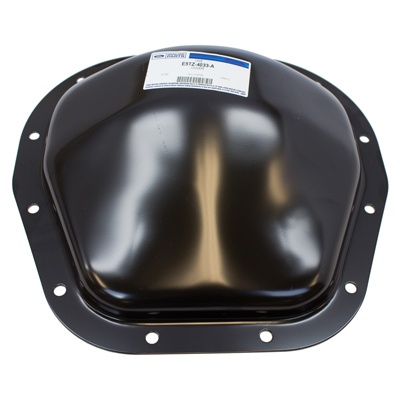
My theory is that the major manufacturers felt an aluminum finned differential cover was needed, it would be installed from the factory. The 2011-2016 SRW with the 10.5 doesn't come with an aluminum finned cover[/SPOILER], nor did the earlier models with DRW's that used the 10.25/10.5 come with an aluminum finned cover.
The 2011-2016 DRW with the Dana rear does come with an aluminum finned cover.
There must be a higher temperature generated with the Dana? Or they figure you will tow larger/heavier loads with a DRW?
I suspect you check the other manufacturers and will find similar to Ford. The engineers felt they were not needed in some applications as did Ford engineers.
JMHO, most people install the aftermarket finned aluminum covers for looks when they are not actually needed for their truck. Same goes with the aftermarket aluminum transmission pans.
That's not true. My 2011 4x4 6.7 with 3.55's came from the factory with an aluminum finned cover
Most mfg say refill with "x" pints or quarts of some fluid type. Ford says tge Dana on a 350 dually gets 8 pints of 85-90 full synthetic; most 250's get 5 pints of 85-140. Presenter is saying that this oem quantity does not necessarily correspond to the level of the oem fill hole. Maybe "instructions" tell you to not fill to the fillcap level of this new cover, but rather specifically how much oil to put into the differential to make up for the larger size reservoir. So my 5015 manual, in both instances says pints - that is not much 8 pints = only 2 quarts; 5 pints (1.25 quarts) seems crazy. Seems like it should be that number of quarts. Is there a misprint in my early 2015 manual?
Sorry, .late night math. If you look at the differential cavity size, ignoring for a moment what is needed in the axle tube, it seems like a typo in the owners manual. Anyone have an older or newer manual? Neither the Ford nor Dana has changed much in size.
Originally Posted by David_ski
8 pints = 4 quarts
5 pints = 2.5 quarts
Quote:
Originally Posted by JohnD333 Most mfg say refill with "x" pints or quarts of some fluid type. Ford says tge Dana on a 350 dually gets 8 pints of 85-90 full synthetic; most 250's get 5 pints of 85-140. Presenter is saying that this oem quantity does not necessarily correspond to the level of the oem fill hole. Maybe "instructions" tell you to not fill to the fillcap level of this new cover, but rather specifically how much oil to put into the differential to make up for the larger size reservoir. So my 5015 manual, in both instances says pints - that is not much 8 pints = only 2 quarts; 5 pints (1.25 quarts) seems crazy. Seems like it should be that number of quarts. Is there a misprint in my early 2015 manual?
I was hoping this was the conclusion to the series, but no. (I'm really enjoying the series, don't get me wrong) I'm expecting the next video (videos?) to provide quantitative results that show MPG and temperature differences. A lot of folks that comment on the video are saying that the pinion and bearings have to be getting some lubricant no matter what. Gale hasn't said they aren't getting any lube. What he is saying is that the aftermarket differential covers may be heating up the lubricant and adding air more than the OEM cover. Adding more fluid and higher fluid levels to work around the problem of not getting as much fluid to the pinion/bearings could impact MPG. The more fluid the ring has to travel through the more work it has to do, so lower MPG. Will it cause enough of a drain on MPG to be measured? Well, we'll see about that in the next video.
A lot of people are going with an aftermarket cover simply to get a drain plug. I can see that. If you keep the OEM cover and use an oil extractor, how effective will that be? If it gets 95% of the oil I would call that good and go that route.
I was hoping this was the conclusion to the series, but no. (I'm really enjoying the series, don't get me wrong) I'm expecting the next video (videos?) to provide quantitative results that show MPG and temperature differences. A lot of folks that comment on the video are saying that the pinion and bearings have to be getting some lubricant no matter what. Gale hasn't said they aren't getting any lube. What he is saying is that the aftermarket differential covers may be heating up the lubricant and adding air more than the OEM cover. Adding more fluid and higher fluid levels to work around the problem of not getting as much fluid to the pinion/bearings could impact MPG. The more fluid the ring has to travel through the more work it has to do, so lower MPG. Will it cause enough of a drain on MPG to be measured? Well, we'll see about that in the next video.
A lot of people are going with an aftermarket cover simply to get a drain plug. I can see that. If you keep the OEM cover and use an oil extractor, how effective will that be? If it gets 95% of the oil I would call that good and go that route.
I keep waiting for the final answer, but I guess it will be in the next video. It seems that an oil extractor and the OEM cover is the right answer. Waiting for the final data.
on my '06 F-350 it originally came with the smooth cover. In '08 ( I think) Ford switched out to a finned cover and a lot of guys who towed heavy (myself included) switched over to that. Interesting that it was cheaper than the aftermarket ones and appears to have done a better job.
I think my '16 also has the finned cover and will check later today...
The morning I posted that, I saw an older Dodge 5.9 dually with a boxed diff cover. Or you could buy a Lube Locker reusable gasket. I've known about them for years, just haven't bought one.
I am curious on the results of this video series. I know in my previous 99 with stock cover I would get some resistane, too much friction, out of the sleep diff when towing, specifically coming down from say 65 to a stop then turn right. This situation you could feel the limited not being so limited, almost like a sharp turn with 4wd locked. Same fluid type(royal purple) with diff cover I did not experience this same symptom again. Gale does have an interesting argument with how much work is going to the fluid.
at 3:27 he has it at 15 (OEM Design) as well. Both have fluid drop, both have spillover to the sides of the ring gear. I will say this with the see through OEM, they never show the 5MPH, where you see the 'paddle action' like they do with the flat back but at 3:12 it certainly looks like the same would have happened.
7:55 and 5:11 at 30MPH, again, what he is showing looks pretty much the same, with the spillover covering most of the diff cover (At this point, how is he determining if lube is going forward to the pinion on either of them?)
At the end, he mentions the aeration of the fluid on both videos, but only points out the negatives of that in the flat back video.
As for the fill level, most sources I have looked at recommend pulling the fill bolt, and pumping in fluid until it back flows out. (ie the fill bolt sets the fill level). If this is done, how does the extra capacity of the aftermarket cover induce extra drag? Keep in mind that in both videos, by the time they are 15MPH, enough of the oil is 'flying around inside the diff' that the axle shafts are not drag gin thought fluid in the sump.
I look forward to their final numbers, on what the 'time to temp', and the 'stead state temp under constant load' will be.
Rezvani's Latest Post-Apocalyptic Monster Is a Ford F-150 Raptor Underneath
Slideshow: Called the Fortress, the 850-horsepower pickup combines Raptor underpinnings with military-inspired features, survival equipment, and a starting price of $285,000.