When you click on links to various merchants on this site and make a purchase, this can result in this site earning a commission. Affiliate programs and affiliations include, but are not limited to, the eBay Partner Network.
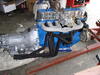
ok, I'm giving up. Been searching all afternoon trying to identify my engine so I can adjust the valves properly. I have to do that because I broke a push Rod (apparently last winter on a -20f morning.)
Here's what I've got so far: I bought this '62 F100 pretty much out of a field last year.
Ran reasonably well until one fateful morning last winter. Truck wouldn't idle well or run long. I thought I had bad fuel, so I've worked on the carb, which is a Carter YF, and adjusted the timing by ear like I used to do with air poles VWs and Thiokol snowcats ( but that's another story). It will at least run now, but won't idle. So Finally I took off the valve cover and discovered the broken push Rod. I have another engine (which until today I assumed was a 300) from which I borrowed a push rod, and put it all together. Now to adjust valves. Right?
well... apparently not. First I discover that the whole distributor is wired one slot off all the way around. And in searching for other clues I tried measuring my stroke to see whether I've got a 263 or 300. Turns out apparently it's neither, because my stroke is neither 3.18 nor 3.98. It's 3.5, spot-on.
- stamped on the passenger side of the block is "F2TE-6015-BA
- stamped (well, embossed) on the front of the head under the valve cover is "6322". Attached is a couple pictures. Note the distributor on the port side (drivers), carb and intake on the starboard side.
F2 would mean 1992. TE=Truck Engine. A 3.5" inch stroke does not exist. My guess is that your piston has about a 1/2" divot/dish, and somehow your measuring device slipped from top to bottom of that dish. There's no way that 'F' could be an 'E' is there? E would stipulate an 82 block.
If it is an efi era block, then someone has converted it to carb. That means they ground through the block where the fuel pump attaches in order to use a manual pump and not the oe electric that was in the tank.
Count the bolt holes for the intake/exhaust manifolds. Iirc, the efi head, which it should be if it's a 92, had an extra hole, I believe 14. The carb head had 13, but verify.
The # you want to look for on the head is under an overhang right behind the thermostat housing. Use a mirror and flashlight.
In the photo it looks as though you have different types of rocker arm studs. Some have a bolt head type base where they screw into the head; others, it appears, do not. If it is an efi head (88-96), then it originally had pedistal type rocker mounts. If I were you I would want to go through that valve train and make sure that some backyard mechanic was not playing fast and loose with anything else.
FWIW, it's pretty common to swap the efi to carb to avoid all the computer stuff. But, I notice you have a V belt on there. Make sure you have a water pump from a non efi year. The efi pump spins the wrong way for use on a v belt system.
- I took several pictures of the number you mentioned under the front edge of the head. A little tough to read, but it appears to say C8AE 6. The 8 might a B.
- i looked at the rocker studs, they appear to be all the same.
- in thinking about your suggestion my piston is dished, I can see where the changing angle of contact could cause a shorter measurement in one scenario, and a longer measurement in two, more likely scenarios. So I guess it sounds most likely I have a 240.
Forgot to include an amplifying picture of the rockers.
oh, and btw, I count 13 manifold bolts on this. My spare engine, which I bought at an auction, has the fuel injectors mounted on it and a very different looking rocker stud.
C=1960's. You may have a 240 head on there. That too, is commom when building the 300. It boosts the cr a half point. The chamber is kidney bean shaped, as opposed to heart shaped for an efi head, and D shaped for a standard 300 head chamber.
Maybe I wasn't clear. Look at the base of your rocker arm studs, where they screw into the bosses. Some have a bolt head collar that you could put a wrench on. Others do not. It is clear as day in the photo.
Ah yeah. I have three that are of the wrenchable type. No idea why.
so... valve adjustment: all my experience is motorcycles and VWs. Do I even need to do a valve adjustment? If so, how? If not, how do I know how tight to torque the rocker nut?
like f250 said, do yourself a favor and go thru the valvetrain to verify you have proper components. I helped a friend out with a 300 that was in a truck that he bought for his son. valves were making all kinds of noise, and couldn't get it to run right. pulled the pushrods. turns out he had 3 different lengths of pushrods. we then took some measurements, bought a new set, and dialed it all in again. got it running, checked for vacuum leaks, set timing, adjusted the carb (yfa.) they've only had to change the oil at regular intervals since....5 yrs ago. still runs great.
this mismatched studs could be an indication of questionable wrenching practice...of course, maybe its just what was on hand at the time of repair. you won't know until you snoop around under the hood and get dirty. put some time into it now, and save yourself a few headaches later.
Rezvani's Latest Post-Apocalyptic Monster Is a Ford F-150 Raptor Underneath
Slideshow: Called the Fortress, the 850-horsepower pickup combines Raptor underpinnings with military-inspired features, survival equipment, and a starting price of $285,000.