When you click on links to various merchants on this site and make a purchase, this can result in this site earning a commission. Affiliate programs and affiliations include, but are not limited to, the eBay Partner Network.
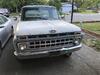
Background.. I bought it less than a week ago, drove it around the first night filled the tank up and parked it. The next morning I drove it 10 miles to work and it died. Replaced the fuel pump still wouldn't start.,Then I played with the timing a little and it fired right up. I drove it home and it dies again right on my street. I replaced the coil still nothing. There is 2 things I'm seeing.. The distributor cap doesn't fit as tight as I think it should (there's about 3 c#&t hairs of play ) and the inside of the carb doesn't seem as wet as it should be (I'm real surprised I haven't flooded it out with all the cranking at WOT). If I turn the distributor (timing) ad far counter clockwise as I can it sounds like it's trying to fire but I'm still leaning towards a fuel problem. Any help would be greatly appreciated.
So other than messing with the timing have you confirmed that there is in fact consistent, healthy spark? How long was the truck sitting before you bought it? I see you put in a new fuel pump, but could the fuel system be blocked up with rust or something from sitting?
It has good spark, I did the whole screwdriver in the plug wire and there was definitely spark and I no longer needed that 2nd cup of coffee. I thought the coil was getting hot and expanding (old coil) so I changed it, pretty cheap part. The fuel filter has gas in it but gas lines are cheap so as soon as it stops raining I'm going to replace everything from the gas tank to the carb. I took the top off the carb and checked the jet and float bowl but my knowledge of carbs is pretty limited. I actually don't mind buying new parts because now I know it's one less problem to deal with in the future.
Truck history.. It was a shop truck for a fuel company and it was used for transferring diesel fuel from one building to trucks in the parking lot, the company closed its doors and it sat for 20 years then the motor was rebuilt and was sold to the guy I bought it from who only drove it on weekends. His girlfriend wanted it but couldn't drive it so here I am. Under 60k miles, it has some rust but it's Michigan and we put salt down on everything. I plan on throwing a CV front end on PS, PB but keeping the body pretty much the same.
Best thing to do with a "new" truck of this vintage is get a copy of the Ford Truck shop manual, they made one every year. Paper copy or CD, they have reproductions for not too much money. Has all the specs and checks to make. First check to make is a cylinder compression test.
Then start from absolute scratch, assume nothing. By that I mean don't take it as a given that even the spark plug wires are installed in the correct order. Bring the #1 piston to top dead center on the compression stroke. This is sort of the mechanical "zero" of the whole shootin' match. Everything downstream should be checked that the engine is indexed or clocked correctly at this point. For example the distributor rotor should be pointed at the #1 terminal on the distributor cap. Then follow plug wires as mentioned for proper firing order.
Set the ignition timing to factory spec for now. It's easy to get way off in the weeds by giving the distributor a big ole twist. One thing common with old Fords is the harmonic balancer or vibration absorber/damper, the outer inertia weight ring is attached to the basket with a rubber sandwich. These are always toast by now and the ring will tend to slip making the timing marks on the ring inaccurate.
Make sure the "0" mark is lined up with the pointer when the #1 piston is at TDC compression. If it isn't, It can get real confusing, esp. when distributor is installed out of phase, wires crossed, etc. A mechanic's vacuum gauge is useful for a checking a bunch of engine derangements and also carb and engine tuning. When compression and ignition, ignition timing is known to be straight, fine or final tuning of the carburetor will get it really purring.
It came with a shop manual and that's exactly what I started doing. It's definitely a spark issue, I'm picking up new cap, rotor, points, wires, and plugs tomorrow. Unfortunately not one store has everything so I'll be running all over. On the plus side I got my blinkers and brake lights working (small victory) and the parking brake unfroze. I'm also pretty much replacing every wire with new ones (I'm replacing with matching colors).
Check wires and their connections in the ignition circuit. The positive coil wire on our 65 project was nearly broken at the connector. Something like this will be intermittent.
There will be a little play in the cap. As long as the clips are snapped closed it should be fine.
Check and or replace points and condenser.
A dirty rusty tank will wreck fuel pumps and carburetors until it's replaced.
This Hennessey Takes the Expedition Tremor's Off-Roading Capability to the Next Level
Slideshow: The VelociRaptor Expedition gains a lift, upgraded suspension, Brembo brakes, and trail-ready equipment while retaining the stock 440-horsepower EcoBoost V6.
Rezvani's Latest Post-Apocalyptic Monster Is a Ford F-150 Raptor Underneath
Slideshow: Called the Fortress, the 850-horsepower pickup combines Raptor underpinnings with military-inspired features, survival equipment, and a starting price of $285,000.