





3.5 EcoBoost Coking Issue

Thread Starter
|
New User
Joined: Jan 2011
Posts: 7
Likes: 0
3.5 EcoBoost Coking Issue
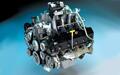
This question is directed to any Ford Engineer or consumer dealing with the coking issues (carbon buildup on the TGDI engines) on the EcoBoost engines (all displacements). Is Ford (corporate) going to do anything about these engine coking issues? If yes, what is it?
I have a 2016 SC FX4 3.5Ecoboost Lariat with ~21K miles on it and I'm starting to experience acceleration hesitation and poorer fuel economy, two specific symptoms of this issue. To make sure the issue wasnt fuel related I have varied the top tier fuel purchases from Shell, Conoco, Philips 66, etc., and I have the same issue.
You can't (shouldn't) use additives (BG K44, Seafoam, Techron, etc.) on these engines due to the Turbo's so (unless you want to burn them up/replace them - and frankly the fuel spray doesnt hit the back of the intake valve to wash the recirculated PCV oils/gases off the valve anyway so an additive doesn't do much for you), other than taking the vehicle into Ford for the "Dealer Service" direct injection cleaning (in severe cases - removing heads and intakes to clean out the carbon deposits by hand) what is Ford doing for take care of the buyer beyond the engine warranty? This was supposed to be my "retirement truck"...and the last thing I want is a vehicle that I "know" is going to give me a big ticket expense every X thousand miles (some buyers are reporting coking issues as early as 5,000 miles).
I have a 2016 SC FX4 3.5Ecoboost Lariat with ~21K miles on it and I'm starting to experience acceleration hesitation and poorer fuel economy, two specific symptoms of this issue. To make sure the issue wasnt fuel related I have varied the top tier fuel purchases from Shell, Conoco, Philips 66, etc., and I have the same issue.
You can't (shouldn't) use additives (BG K44, Seafoam, Techron, etc.) on these engines due to the Turbo's so (unless you want to burn them up/replace them - and frankly the fuel spray doesnt hit the back of the intake valve to wash the recirculated PCV oils/gases off the valve anyway so an additive doesn't do much for you), other than taking the vehicle into Ford for the "Dealer Service" direct injection cleaning (in severe cases - removing heads and intakes to clean out the carbon deposits by hand) what is Ford doing for take care of the buyer beyond the engine warranty? This was supposed to be my "retirement truck"...and the last thing I want is a vehicle that I "know" is going to give me a big ticket expense every X thousand miles (some buyers are reporting coking issues as early as 5,000 miles).
Thread Starter
|
New User
Joined: Jan 2011
Posts: 7
Likes: 0
BigKen...Lets just say that I'm looking for "Corporate corroboration" to what the dealer locally (Colorado) has told me. Frankly, I've been a "new" Ford buyer since '79 and couldnt tell you how many new Fords I've purchased. That said, I'm guilty for not doing my own homework on the Ecoboost, but then again, I didnt think Ford would simply create their own version of a Direct Injection engine without improving it after more than 1million miles of R&D that they claimed to have done when the released the motor in 2011. Shame on me.
Super Moderator


Joined: Aug 2003
Posts: 25,479
Likes: 742
From: Isanti, MN

BigKen...Lets just say that I'm looking for "Corporate corroboration" to what the dealer locally (Colorado) has told me. Frankly, I've been a "new" Ford buyer since '79 and couldnt tell you how many new Fords I've purchased. That said, I'm guilty for not doing my own homework on the Ecoboost, but then again, I didnt think Ford would simply create their own version of a Direct Injection engine without improving it after more than 1million miles of R&D that they claimed to have done when the released the motor in 2011. Shame on me.

Fleet Mechanic

Joined: Dec 2013
Posts: 1,268
Likes: 35
From: Utica, Nebraska
They did address this in the 2nd generation 3.5EB and will be in the 2018 2.7L and the 5.0L V8 with port injection with direct injection. What's the dealer been telling you? There are fixes they can do, since they do know about it.

Moderator

Joined: May 2005
Posts: 8,226
Likes: 1,239
From: San Antonio, TX
Part of the EcoBoost problem is that the sales staff doesn't ask customers how they intend to use the the truck. In my opinion an EcoBoost needs to be used hard at times. It should be used to tow or haul. If not it needs some wide open throttle from time to time. Short trips, stop and go traffic and taking it easy are actually hard on it. That's my opinion.
I don't know how you've used your truck and you haven't told us. Every, and I mean every, engine ever made has had some bad ones in the batch. That's one of the drawbacks to mass production. I do believe from reading here that the EcoBoosts have been pretty damn good overall. As a matter of fact every engine in the F150 line has a strong reliability record.
Sorry to hear yours is one of the relatively few troublesome ones. If the majority of owners were experiencing the problems you're having, this forum would be full of posts like yours. You have a legitimate problem and hopefully it will get worked out.
I don't know how you've used your truck and you haven't told us. Every, and I mean every, engine ever made has had some bad ones in the batch. That's one of the drawbacks to mass production. I do believe from reading here that the EcoBoosts have been pretty damn good overall. As a matter of fact every engine in the F150 line has a strong reliability record.
Sorry to hear yours is one of the relatively few troublesome ones. If the majority of owners were experiencing the problems you're having, this forum would be full of posts like yours. You have a legitimate problem and hopefully it will get worked out.

Fleet Mechanic

Joined: Dec 2008
Posts: 1,911
Likes: 134
From: Burleson, Tx
You can't (shouldn't) use additives (BG K44, Seafoam, Techron, etc.) on these engines due to the Turbo's so (unless you want to burn them up/replace them
Trending Topics

Laughing Gas
Joined: Apr 2017
Posts: 941
Likes: 25
From: Port huron MI
You shouldn't use oil additives because while the products work well they can cause issues with the oil thinning, seal issues, Improper lubrication and may break down when exposed to the heat turbos can generate. Journal bearing turbos need proper lubrication or will damage quickly.
Fuel additives shouldn't be an issue to the turbo unless it significantly raises the egt or you have enough blow by to dilute the oil.
Fuel additives shouldn't be an issue to the turbo unless it significantly raises the egt or you have enough blow by to dilute the oil.
FTE Stories
Ford Trucks for Ford Truck Enthusiasts

Top 10 Most Expensive Ford Trucks Ever Sold on Bring a Trailer
Joe Kucinski
2027 Ford Super Duty Buyer's Guide (Every Model, Engine, & Package)
Brett Foote
Top 10 Ford Truck Tragedies
Joe Kucinski
AEV FXL Super Duty - the Super Duty Raptor Ford Doesn't Make
Brett Foote
Lobo Vs Lobo: Proof the F-150 Lobo Should Be Even Lower!
Michael S. Palmer
Ford's 2001 Explorer Sportsman Concept Looks For a New Home
Verdad Gallardo
10 Best Ford Truck Engines We Miss the Most!
Joe Kucinski
2026 Shelby F-150 Off-Road: Better Than a Raptor R?
Brett Foote
2027 Super Duty Carhartt Package First Look: 12 Things You NEED to Know!
Michael S. Palmer
Cargo Master
Joined: Apr 2010
Posts: 3,274
Likes: 4
From: Seattle area
FordtechMakuloco talks about Techron in at least one of his videos; it's fine in these motors. Can't remember about the others. But the point about it not getting sprayed directly onto the back of the valve where the build up exists is accurate.

Super Moderator
Joined: Aug 2003
Posts: 25,479
Likes: 742
From: Isanti, MN
I would put a connector on the intake and use one of these.
OTC Tools (7448A) Fuel Injection Cleaner Canister https://www.amazon.com/dp/B00GZ0H9VC..._1pHizbASE4Y32
OTC Tools (7448A) Fuel Injection Cleaner Canister https://www.amazon.com/dp/B00GZ0H9VC..._1pHizbASE4Y32
Nope, nope, nope! I wouldn't let that stuff anywhere near my engine, and I wouldn't recommend you do it either.
http://news.pickuptrucks.com/2014/12...t-engines.html
Thread Starter
|
New User
Joined: Jan 2011
Posts: 7
Likes: 0
Big Ken/ALL: sorry for not responding been involved in soccer tournament all weekend...I am just at the beginning of the coking issue. At this point the trouble codes for misfiring (mostly cylinder 1/4) are the issue. I haven't been told of any low compression problems, but then again, I dont know that theyve tested for low compression either-will have to ask for that I guess. So far, there's been no $$ out of pocket for the issue but I'm thinking ahead for when the issue wont be covered under warranty. As for how I drive it...I'm in Colorado so driving varies from stop and go city to pounding it out up/down the mountains...which the EB does extremely well by the way. I do pull a 14' deck over light duty trailer now and then, usually with 3 ATV's on it (4,000lb limit) but nothing extreme. As you can likely guess, with ~21k miles a lot of that driving has been highway driving. The problem as I see it is there really isnt a "good fix"...additives (gas tank, not crankcase) are not the way to go because of the turbos and the catch can setups only delay the issue - and frankly I dont think I should have to spend $400 plus to do that anyway. So, thinking long term...the only path I see is the dealer servicing every X thousand miles and thats not what I call a fix.
Thread Starter
|
New User
Joined: Jan 2011
Posts: 7
Likes: 0
Nope...I'm seeing issues (after a lot of reading) in anything EcoBoost...and from what I gathering, its mostly because of how the PCV system recirculates the unburnt oils, which is basically the same on any engine.

Certified Thread Hijacker

Joined: Aug 2001
Posts: 14,441
Likes: 60

If it was even a minor issue there would be multiple threads on the "other" forum (f150forums) and that also isn't the case.
It's certainly an issue with the smaller EB engines, but not so much with the F150 engines.
If you are having carbon issues, then congrats you have a Unicorn, otherwise there are many many issues that can cause misfire codes unrelated to carbon building.
Josh