





Driveway front end alignment

Thread Starter
|
Lead Driver
Joined: Jan 2003
Posts: 9,893
Likes: 12
From: Ohio

Driveway front end alignment
Well, little back story. 1995 F150 2wd. Had 60K miles on it when I bought it a year ago(73K now). It has eaten front tires since then. Always have to rotate them to keep them from cupping horribly.
Put new I beam bushings and radius arm bushing on the truck(old ones dry rotted). That helped with stability on bumpy roads. Original ball joints and tie rods are tight.
Looking closely at the front tires Saturday night I realized they were both pointed OUTWARD just a touch.
I got some 4x4's out and stacked of them along the edge of the front tires. This got me to the middle point of the tires. I then got my 4ft level and placed it against the tire on one side and a nice straight board for the other side. Pulled my tape measure across both sides of the tires and got 3/4" TOE OUT!!! Ya, that will screw up tires.
Few minutes with wrenches and I had it down to around 1/8" TOE IN. It drives nicer, don't hear the tires "rumbling" as they try to scrub their way down the road. Will keep an eye on the tires and hope to see they stay nice and won't have to rotate them every oil change.
We used to have a few old time alignment shops in town, but they all retired/closed up. Don't want to rely on some rookie at the big box store to really screw it up.
Put new I beam bushings and radius arm bushing on the truck(old ones dry rotted). That helped with stability on bumpy roads. Original ball joints and tie rods are tight.
Looking closely at the front tires Saturday night I realized they were both pointed OUTWARD just a touch.
I got some 4x4's out and stacked of them along the edge of the front tires. This got me to the middle point of the tires. I then got my 4ft level and placed it against the tire on one side and a nice straight board for the other side. Pulled my tape measure across both sides of the tires and got 3/4" TOE OUT!!! Ya, that will screw up tires.
Few minutes with wrenches and I had it down to around 1/8" TOE IN. It drives nicer, don't hear the tires "rumbling" as they try to scrub their way down the road. Will keep an eye on the tires and hope to see they stay nice and won't have to rotate them every oil change.
We used to have a few old time alignment shops in town, but they all retired/closed up. Don't want to rely on some rookie at the big box store to really screw it up.
Thread Starter
|
Lead Driver
Joined: Jan 2003
Posts: 9,893
Likes: 12
From: Ohio
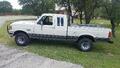
For laying in the wet snow, I did okay....

Lead Driver

Joined: Feb 2002
Posts: 7,968
Likes: 595
From: Greater Austin, Texas
I have not had any of my vehicles on a rack in over 25 years. You are correct that just about every front-end guy who could do TIB/TTB is dead or retired. I learned it back when the Hunter Lite-A-Liner was the new, hi-tech machine for alignment, so I am old-school.
I do mine with a tape measure and a level, too, and have never had a problem. Toe is not that critical (i.e., 1/16" diff) on anything this old. I set mine at 1/4" in and have never had a tire wear issue. The pressure of going down the road is going to push the tires out about 1/8-1/4" depending on how tight your mechanicals are.
I do mine with a tape measure and a level, too, and have never had a problem. Toe is not that critical (i.e., 1/16" diff) on anything this old. I set mine at 1/4" in and have never had a tire wear issue. The pressure of going down the road is going to push the tires out about 1/8-1/4" depending on how tight your mechanicals are.
Thread Starter
|
Lead Driver
Joined: Jan 2003
Posts: 9,893
Likes: 12
From: Ohio
Even with my Carhart coat, water was soaking through the right sleeve(as I laid under the truck) and I was getting "uncomfortable"..... . I just wanted to get it done.
I screwed up in the morning when I first did it, I just cranked the right side in and didn't realize I turned the wheel a bunch(til I drove it later that day). So then I had to readjust it all to get the wheel back centered. I forgot you have to split the difference between both sides to keep the wheel centered. Duh. This isn't a straight axle(last toe in I set was on my Mack truck couple years back)
Since I replaced all the rubber bushings, I know the front end will stay a bit more in line. It really shook the wheel when you hit a bump with the pivot bushings beat out of it. Once I got those in, the steering response was back to normal.
I'm just happy it is back to near normal, more then the 3/4" toe out it had!
. I just wanted to get it done.I screwed up in the morning when I first did it, I just cranked the right side in and didn't realize I turned the wheel a bunch(til I drove it later that day). So then I had to readjust it all to get the wheel back centered. I forgot you have to split the difference between both sides to keep the wheel centered. Duh. This isn't a straight axle(last toe in I set was on my Mack truck couple years back)
Since I replaced all the rubber bushings, I know the front end will stay a bit more in line. It really shook the wheel when you hit a bump with the pivot bushings beat out of it. Once I got those in, the steering response was back to normal.
I'm just happy it is back to near normal, more then the 3/4" toe out it had!
Trending Topics

i ain't rite
Joined: Mar 2005
Posts: 65,564
Likes: 5,601
From: Marlboro Mental Hospital.

Larry, 1/8 toe in will be fine, it is pretty much the same as setting the toe on the B model.
you did drive forward for at least 5 feet before setting it, rite?
you did drive forward for at least 5 feet before setting it, rite?
FTE Stories
Ford Trucks for Ford Truck Enthusiasts

3 Best / 3 Worst Parts of Modern Ford Ownership
Brett Foote
10 Amazing Upgrades That Solve Common Ford Truck Owner Headaches
Pouria Savadkouei
Every 2026 Ford Engine Explained
Brett Foote
10 Ugly Ford Trucks That We Still Kinda Love
Joe Kucinski
10 Things Every Truck Owner NEEDS (2026 Edition)
Michael S. Palmer
Rezvani's Latest Post-Apocalyptic Monster Is a Ford F-150 Raptor Underneath
Verdad Gallardo
Top 10 Most Expensive Ford Trucks Ever Sold on Bring a Trailer
Joe Kucinski
2027 Ford Super Duty Buyer's Guide (Every Model, Engine, & Package)
Brett Foote
Top 10 Ford Truck Tragedies
Joe Kucinski
i ain't rite
Joined: Mar 2005
Posts: 65,564
Likes: 5,601
From: Marlboro Mental Hospital.
ok with ifs you need to pull forward for at least 5 feet without backing up before setting front end to take the "pigeon toe" out of the ifs that happens when you reverse.
not all of them will do it noticeably, but most will be so bad you thing the front end is ready to fall out. this is usually caused by bad bushings, but i have seen some that still did it after every single piece in the front end was changed.
not all of them will do it noticeably, but most will be so bad you thing the front end is ready to fall out. this is usually caused by bad bushings, but i have seen some that still did it after every single piece in the front end was changed.
Thread Starter
|
Lead Driver
Joined: Jan 2003
Posts: 9,893
Likes: 12
From: Ohio
Driving it the last couple days I see the wheel is still just a tick to the right. Need to wait for a sunny/dry day and give each side just an 1/8 turn on the adjusters. It is definitely quieter on the highway. No more rumbling from scrubbing the tires so bad.
I marked the tie rods for thread direction. That helped with chasing my tail a few times turning them the wrong way. Getting up and checking to see that I moved it way out of whack LOL!! Crawl under and start over.
I marked the tie rods for thread direction. That helped with chasing my tail a few times turning them the wrong way. Getting up and checking to see that I moved it way out of whack LOL!! Crawl under and start over.
Fleet Mechanic


Joined: Mar 2009
Posts: 1,856
Likes: 52
From: Sacramento Delta, CA
Thanks to Freightrain for starting this thread!
OK guys, I am going to ask my question here in Freightrain's thread, because this thread already has some of my favorite FTE brothers in it, and my question is spot on with the thread's topic.
I just replaced both "tie rod ball studs" (outer tie rods), the "steering gear sector shaft arm," "the steering gear sector shaft arm drag link," and both tie "rod adjusting sleeves." In other words, I replaced the entire steering linkage with Ford oem parts (items 1 through 4 on the attached diagram) in my '95 E.B. 5.8L 4x4 TTB Bronco.
Using calipers, I measured the exposed threads on the old steering linkage and copied that onto the new steering linkage before I installed it as a unit.
The tires are screeching when I make a low speed right or left turn. So how do I do the "driveway toe in alignment"? I get:
1. tjc's recommendation to drive forward 5 feet prior to taking the measurement.
2. I think I understand why and how to put 2x4s up against and across the front side of the front tires (I assume that they have to be the same tire pressure) (do the 2x4s have to go up half way up the tire?), and then putting a level on top of the 2x4s (but only to be the straight edge support to lay the measuring tape on, right?).
3. And then you do the same on the back side of the front tires.
4. And then have the front measurement be 1/16" to 1/8" less than the back measurement?
What I don't get is how in the heck do you guys know where the middle of the tire are? I mean by 1/16" for goodness sake.
Please let me know.
And if from my recitation above, you think that I may not be understanding something, please clarify.
Thanks Guys!
OK guys, I am going to ask my question here in Freightrain's thread, because this thread already has some of my favorite FTE brothers in it, and my question is spot on with the thread's topic.
I just replaced both "tie rod ball studs" (outer tie rods), the "steering gear sector shaft arm," "the steering gear sector shaft arm drag link," and both tie "rod adjusting sleeves." In other words, I replaced the entire steering linkage with Ford oem parts (items 1 through 4 on the attached diagram) in my '95 E.B. 5.8L 4x4 TTB Bronco.
Using calipers, I measured the exposed threads on the old steering linkage and copied that onto the new steering linkage before I installed it as a unit.
The tires are screeching when I make a low speed right or left turn. So how do I do the "driveway toe in alignment"? I get:
1. tjc's recommendation to drive forward 5 feet prior to taking the measurement.
2. I think I understand why and how to put 2x4s up against and across the front side of the front tires (I assume that they have to be the same tire pressure) (do the 2x4s have to go up half way up the tire?), and then putting a level on top of the 2x4s (but only to be the straight edge support to lay the measuring tape on, right?).
3. And then you do the same on the back side of the front tires.
4. And then have the front measurement be 1/16" to 1/8" less than the back measurement?
What I don't get is how in the heck do you guys know where the middle of the tire are? I mean by 1/16" for goodness sake.
Please let me know.
And if from my recitation above, you think that I may not be understanding something, please clarify.
Thanks Guys!
i ain't rite
Joined: Mar 2005
Posts: 65,564
Likes: 5,601
From: Marlboro Mental Hospital.
1/6 off center of tire is not critical.
the critical part is that you take your measurement from the same height front as you do rear.
whether it is 14 inches off the ground or 16 inches off ground does not matter, as long as the front to back measurement is the same height.
center of the tire just means that the measurement will be smallest and largest at that point.
i tend to not use a "level across the wood" deal because i rarely am on level ground. so that alone will mean i am not measuring from the same place on the tires.
i hope what i just wrote made sense to you.
the critical part is that you take your measurement from the same height front as you do rear.
whether it is 14 inches off the ground or 16 inches off ground does not matter, as long as the front to back measurement is the same height.
center of the tire just means that the measurement will be smallest and largest at that point.
i tend to not use a "level across the wood" deal because i rarely am on level ground. so that alone will mean i am not measuring from the same place on the tires.
i hope what i just wrote made sense to you.
Fleet Mechanic
Joined: Mar 2009
Posts: 1,856
Likes: 52
From: Sacramento Delta, CA
Makes total sense tjc. Because the measurement is a comparison. So measuring from the same height in front compared to same height in back (regardless of what height that actually is) renders a comparison which is a 1/16", 1/8" or 1/4" difference.
It is obvious to me now, but it didn't make sense to me until you said it. I should be able to get this done later today. Thanks buddy!
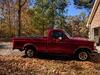
Edit: Great illustration of the tape measure toe in technique incl. creating the measuring line on the tire (no need for line to be in the tire's center):
It is obvious to me now, but it didn't make sense to me until you said it. I should be able to get this done later today. Thanks buddy!
Edit: Great illustration of the tape measure toe in technique incl. creating the measuring line on the tire (no need for line to be in the tire's center):
Senior User
Joined: Dec 2011
Posts: 119
Likes: 0
For measurement of the toe I took a tape measure and pulled it out about 70 inches, then cut it off. I then punched a small hole in the end around the 2 inch mark. Then, take a push pin (the kind you use on a cork bulletin board) and pin the tape measure to the tire. The pin is not long enough to go through the tread. It will hold well enough for you to pull the tape measure and read the other end. Repeat for the other side of the tire to get your measurement.
On the back of the tire on a two wheel drive, route the tape measure over the radius arms to get half way up the tire.
On the back of the tire on a two wheel drive, route the tape measure over the radius arms to get half way up the tire.