






Bouncing Ampere Meter, bad 3g conversion by PO?

Thread Starter
|
Fleet Mechanic

Joined: Jul 2006
Posts: 1,346
Likes: 4
From: Rapid City, SoDak
Bouncing Ampere Meter, bad 3g conversion by PO?
Here is what I normally see when driving down the road, idling, pretty much anytime that it's not recovering from starting the truck.
https://www.youtube.com/watch?v=YFK7nzb3Fns
I ran new battery cables today and a larger block to body ground strap (needed done anyway) and I was hoping this would fix this issue but it didn't. The video was taken after and it looks the same as it always has.
The truck hasn't had any problems running and the battery seems strong after weeks of running this way. The lights, however, pulsate. All lights, headlights, dash lights etc.
I haven't done a 3G conversion. But maybe the PO attempted one and wired it wrong?
Any suggestions?
https://www.youtube.com/watch?v=YFK7nzb3Fns
I ran new battery cables today and a larger block to body ground strap (needed done anyway) and I was hoping this would fix this issue but it didn't. The video was taken after and it looks the same as it always has.
The truck hasn't had any problems running and the battery seems strong after weeks of running this way. The lights, however, pulsate. All lights, headlights, dash lights etc.
I haven't done a 3G conversion. But maybe the PO attempted one and wired it wrong?
Any suggestions?

Senior User

Joined: Jan 2010
Posts: 285
Likes: 1
Have not done it yet, but I would be interested in how the wiring for the alternator was done. Although the ammeter can be used, there are things I understand must be done and not done. Being this is all along the same circuits and sections of the wiring harness, is there a junction that has a problem? Is it being plumbed through portions of the regulator? If you can post some pics of the wiring will help with diagnosis. If the rain holds off here for a couple of days I can finally get started on mine.
Thread Starter
|
Fleet Mechanic
Joined: Jul 2006
Posts: 1,346
Likes: 4
From: Rapid City, SoDak
I don't know anything about ammeters but is there supposed to be a shunt or something in that line?
Senior User
Joined: Jan 2010
Posts: 285
Likes: 1
That looks to be like an aftermarket ammeter. Without knowing what type or how it is supposed to be wired, you may have hit the nail on the head lvin. It may need a shunt to operate, but it may not. The PO of mine had a small aftermarket ammeter gauge wired and had disconnected the factory wires in the alternator harness to stop feeding the factory one. He then wired in the new gauge.
Since yours is not a factory gauge, trace the wires from it to see where they route to and then try and find who made your gauge. You may be able to find info on the interweb about your specific gauge and whether you need to alter the wiring.
If the gauge was wired in well before the newer and larger amp rating 3G alternator, is it possible it may be reacting the the larger output of the alternator? In other words (and I think this is correct), the 3G has a larger output and variance in output as the needs of the system are changing?
Since yours is not a factory gauge, trace the wires from it to see where they route to and then try and find who made your gauge. You may be able to find info on the interweb about your specific gauge and whether you need to alter the wiring.
If the gauge was wired in well before the newer and larger amp rating 3G alternator, is it possible it may be reacting the the larger output of the alternator? In other words (and I think this is correct), the 3G has a larger output and variance in output as the needs of the system are changing?

Logistics Pro

Joined: Jan 2011
Posts: 4,762
Likes: 54
From: Antelope Valley ,CA
Trending Topics

Rabbit-Hole Researcher


Joined: Feb 2004
Posts: 466
Likes: 6
From: Middle of Ohio

Sorry if this is seen as a hijack on the thread, but I think some of it may apply to the thread poster's question. It would apply to any Ammeter set-up.
PLEASE FACT CHECK THIS, AND YELL IF IT IS NOT CORRECT!
Borrowing from another fellow's research on his ford Van, it sounds like the "shunt" is some strategic length of wire in the feed from very near the Battery+ terminal to the starter solenoid+ bolt. The resistance of about .002 ohm is supposed to be just right. This checks the current direction, and amps, going in-and-out of the battery.
Factory did not use a separate "shunt" device. We would see small wires tied in only. These would be left hanging, with no volts, when the battery cable was replaced. And the Ammeter would stop working right as soon as a larger cable was put on, even if they were hooked up correctly.
Operation: Picture a length of wire with resistance, and juice going through it. Feed the 'volts' from both ends to the ammeter. The two will almost be the same, leaving only a few milli-volts of difference as the current goes one way or t' other. An original ammeter was just a sensitive voltmeter, working off the tiny current differential.
His solution was to temporarily use:
"5 feet of stranded 6 AWG wire corresponded to 0.00226 ohms and that a 10 foot length of that same 6 AWG wire could carry 140A without the surface of the insulation exceeding 105 degrees Fahrenheit in open air."
That is my current level of understanding (pun intended).
Without adding a 'real' shunt, and limiting the current to the starter, I don't see how we could get a decent reading from the original dash ammeter.
(Some say using a voltmeter, and checking for 13.2 and greater is the preferred alternative.)
PLEASE FACT CHECK THIS, AND YELL IF IT IS NOT CORRECT!
Borrowing from another fellow's research on his ford Van, it sounds like the "shunt" is some strategic length of wire in the feed from very near the Battery+ terminal to the starter solenoid+ bolt. The resistance of about .002 ohm is supposed to be just right. This checks the current direction, and amps, going in-and-out of the battery.
Factory did not use a separate "shunt" device. We would see small wires tied in only. These would be left hanging, with no volts, when the battery cable was replaced. And the Ammeter would stop working right as soon as a larger cable was put on, even if they were hooked up correctly.
Operation: Picture a length of wire with resistance, and juice going through it. Feed the 'volts' from both ends to the ammeter. The two will almost be the same, leaving only a few milli-volts of difference as the current goes one way or t' other. An original ammeter was just a sensitive voltmeter, working off the tiny current differential.
His solution was to temporarily use:
"5 feet of stranded 6 AWG wire corresponded to 0.00226 ohms and that a 10 foot length of that same 6 AWG wire could carry 140A without the surface of the insulation exceeding 105 degrees Fahrenheit in open air."
That is my current level of understanding (pun intended).
Without adding a 'real' shunt, and limiting the current to the starter, I don't see how we could get a decent reading from the original dash ammeter.
(Some say using a voltmeter, and checking for 13.2 and greater is the preferred alternative.)
FTE Stories
Ford Trucks for Ford Truck Enthusiasts

Top 10 Most Expensive Ford Trucks Ever Sold on Bring a Trailer
Joe Kucinski
2027 Ford Super Duty Buyer's Guide (Every Model, Engine, & Package)
Brett Foote
Top 10 Ford Truck Tragedies
Joe Kucinski
AEV FXL Super Duty - the Super Duty Raptor Ford Doesn't Make
Brett Foote
Lobo Vs Lobo: Proof the F-150 Lobo Should Be Even Lower!
Michael S. Palmer
Ford's 2001 Explorer Sportsman Concept Looks For a New Home
Verdad Gallardo
10 Best Ford Truck Engines We Miss the Most!
Joe Kucinski
2026 Shelby F-150 Off-Road: Better Than a Raptor R?
Brett Foote
2027 Super Duty Carhartt Package First Look: 12 Things You NEED to Know!
Michael S. Palmer


Thread Starter
|
Fleet Mechanic
Joined: Jul 2006
Posts: 1,346
Likes: 4
From: Rapid City, SoDak
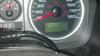
I had it in the shop today and had some time so I traced some wires, cleaned some connections and took the dash cluster out to check those fittings on the back of the gauge.
I don't see any sort of shunt device, even as explained above. There is a thick black wire coming off the back of the alternator that goes right to the back of the gauge. There is another wire, red, that comes off of the always hot side of the starter solenoid and goes directly to the back of the gauge. The connections didn't look great so I cut them off and put new ends on but that didn't seem to change anything.
I did hook a voltmeter to the battery with the truck off and got 14.4v. With the truck running the voltage bounced between 15 and 17, even touching into 18v and this was the case no matter if the truck was at idle or being revved.
With the hood open, headlights on I think I could hear the alternator loading and unloading like Freightrain said, turning on and off.
While tracing wires I discovered the voltage regulator on the radiator core support. My old Fords have been on the fender well and so I hadn't seen this one. Maybe I don't have a 3g conversion at all.
So is this an alternator issue or a voltage regulator issue? And it's been a while since I worked on an electrical system this old but that's a lot of volts isn't it? I would expect 14.4 while the engine was running on a newer car.
Posting Guru
Joined: Mar 2016
Posts: 1,412
Likes: 1
From: Barre Mass
Change the voltage regulator. If the battery is getting to much voltage it will boil and this is bad for the battery. Voltage regulator does exactly as its name. It regulates the voltage to the battery. If there were no voltage being produced then the alternator is suspect.
Rabbit-Hole Researcher
Joined: Feb 2004
Posts: 466
Likes: 6
From: Middle of Ohio
2X what Brian1971f100 said.
Make sure the ground on the Regulator is good. A good sanding, and little white lithium grease on the spots helps.
The battery should rest, off, at 12.6volts, plus some surface charge, which you can bleed off by turning on the headlights for a few seconds. This is required to check the resting voltage, and get a sense of the battery condition.
The perfect case is like this: When the engine starts, it should go up to 14 to 14.8 volts when cold, and then start to drop down to 13.6 volts as the battery recovers from the starting. After a goodly while, it should stay at 13.2-13.5 volts, depending on temperature. More when cold. Even with the lights on.
Consider changing to at least the solid-state style regulator. The relay type is pretty hard on expensive batteries.
Many of us have gone to the 3G replacement alternator, as it has an integral voltage regulator, better cooling, more amps at low RPM, and it has better electrical noise characteristics.
My .05...
Make sure the ground on the Regulator is good. A good sanding, and little white lithium grease on the spots helps.
The battery should rest, off, at 12.6volts, plus some surface charge, which you can bleed off by turning on the headlights for a few seconds. This is required to check the resting voltage, and get a sense of the battery condition.
The perfect case is like this: When the engine starts, it should go up to 14 to 14.8 volts when cold, and then start to drop down to 13.6 volts as the battery recovers from the starting. After a goodly while, it should stay at 13.2-13.5 volts, depending on temperature. More when cold. Even with the lights on.
Consider changing to at least the solid-state style regulator. The relay type is pretty hard on expensive batteries.
Many of us have gone to the 3G replacement alternator, as it has an integral voltage regulator, better cooling, more amps at low RPM, and it has better electrical noise characteristics.
My .05...
Senior User
Joined: Jan 2010
Posts: 285
Likes: 1
Is there a 3 wire plug on the back of the alternator? If so, 3G alternator. If not you have a standard alternator, probably about 60-65 amp if replaced. If the voltage regulator is getting power through it and all the connections appear to being used on the various plugs, my guess is standard 1G alternator. Either way, my bet is on the voltage regulator being bad. Again, snap a couple of pics and post if possible as that eliminates a lot of guess work by the members and we can narrow in on the causes earlier.