





Battery light pulsating

Thread Starter
|
Logistics Pro

Joined: Oct 2008
Posts: 4,818
Likes: 1
From: Avilla, IN
Battery light pulsating
My battery light come on this morning. The volt meter is sitting right where it always has though. I noticed that the battery light is kind of pulsating with rpm and at idle its very very dim.
E99 F-250 PSD
Where should I start?
E99 F-250 PSD
Where should I start?

More Turbo
Joined: May 2016
Posts: 717
Likes: 9
Tests should be performed with Batteries Charged.
WIRING:
Check the condition of the Plug at the Alternator and Wiring. Often, the wire will chafe where it enters the bundle or becomes loose / damaged where the connector is. Clean connection with the KEY OFF,
VOLTAGE OUTPUT TEST:
1. Using a DVOM, at the B(+) Alternator Post and the Battery (-), measure voltage. 13,8 - 14.2 is a normal functioning Alternator at 1k - 1.5k RPM.
2. Perform the same test on the Battery(s) using Battery (+) and (-). 13.6 - 14.2 is acceptable.
RIPPLE VONTAGE:
1. Ripple Voltage Ripple voltage or (AC voltage) can be measured by switching your DMM to AC and connecting the black lead to a good ground and the red lead to the "BAT" terminal on the back of the alternator, (not at the battery).
2. A good alternator should measure less than .5 VAC with the engine running. A higher reading indicates damaged alternator diodes.
ALTERNATOR LEAKAGE TEST:
Alternator Leakage Current to check alternator diode leakage, connect the Multimeter in series with the alternator output terminal when the car is not running. Leakage current should be a couple of milliamps at most; more often, it will be on the order of 0.5 milliamps. Use care when disconnecting the alternator output wire; make sure the battery is disconnected first.
WIRING:
Check the condition of the Plug at the Alternator and Wiring. Often, the wire will chafe where it enters the bundle or becomes loose / damaged where the connector is. Clean connection with the KEY OFF,
VOLTAGE OUTPUT TEST:
1. Using a DVOM, at the B(+) Alternator Post and the Battery (-), measure voltage. 13,8 - 14.2 is a normal functioning Alternator at 1k - 1.5k RPM.
2. Perform the same test on the Battery(s) using Battery (+) and (-). 13.6 - 14.2 is acceptable.
RIPPLE VONTAGE:
1. Ripple Voltage Ripple voltage or (AC voltage) can be measured by switching your DMM to AC and connecting the black lead to a good ground and the red lead to the "BAT" terminal on the back of the alternator, (not at the battery).
2. A good alternator should measure less than .5 VAC with the engine running. A higher reading indicates damaged alternator diodes.
ALTERNATOR LEAKAGE TEST:
Alternator Leakage Current to check alternator diode leakage, connect the Multimeter in series with the alternator output terminal when the car is not running. Leakage current should be a couple of milliamps at most; more often, it will be on the order of 0.5 milliamps. Use care when disconnecting the alternator output wire; make sure the battery is disconnected first.
Thread Starter
|
Logistics Pro
Joined: Oct 2008
Posts: 4,818
Likes: 1
From: Avilla, IN
Well, I charged up both batteries independently last night. Before charging they were each at 12.6 volts, and after each battery was hooked up to the charger on the 40 amp setting for 90 minutes, they read 12.8 volts and 12.9 volts. That seems a little low to me. Especially for two interstate batteries that don't appear to be very old. I've only owned this truck since June.
I'll do the rest of the testing tonight, but I'll add that if it weren't for this light I wouldn't suspect that anything was wrong.
I'll do the rest of the testing tonight, but I'll add that if it weren't for this light I wouldn't suspect that anything was wrong.

Lead Driver
Joined: Sep 2010
Posts: 7,793
Likes: 50
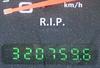
I noticed mine doing the same thing yesterday. I did have my gauge out for radio install and changing the gauge bulbs to led's. Everything seems to be working good with volts reading 14.2 after fired up. So, I stuck a pic of my daughter over it 😉
Lead Driver


Joined: Dec 2006
Posts: 7,092
Likes: 145
From: San Diego, CA
Just because you are reading in the 12VDC range doesn't mean all the cells are working. If you are concerned about the batteries most auto parts stores will test them for free (you just have to take them out of the truck for them to test them).
Of all the electrical issues I've chased over the years only once did my battery light come on (with the engine running) and it was the alternator. Conversely, the only time I've had an alternator problem/issue the battery light came on.
Just my .02
Of all the electrical issues I've chased over the years only once did my battery light come on (with the engine running) and it was the alternator. Conversely, the only time I've had an alternator problem/issue the battery light came on.
Just my .02
Trending Topics

Fleet Mechanic


Joined: Jul 2005
Posts: 1,800
Likes: 52
From: Southern Colorado
12.65 is about the standard reading for a decent (wet lead acid) battery that has not been just freshly charged. When I had the flickering battery light (flickering just like yours), it was my alternator that was bad.
Start the truck, turn on every accessory, and see what kind of voltage reading you get at the battery.
Start the truck, turn on every accessory, and see what kind of voltage reading you get at the battery.
FTE Stories
Ford Trucks for Ford Truck Enthusiasts

10 Things Every Truck Owner NEEDS (2026 Edition)
Michael S. Palmer
Rezvani's Latest Post-Apocalyptic Monster Is a Ford F-150 Raptor Underneath
Verdad Gallardo
Top 10 Most Expensive Ford Trucks Ever Sold on Bring a Trailer
Joe Kucinski
2027 Ford Super Duty Buyer's Guide (Every Model, Engine, & Package)
Brett Foote
Top 10 Ford Truck Tragedies
Joe Kucinski
AEV FXL Super Duty - the Super Duty Raptor Ford Doesn't Make
Brett Foote
Lobo Vs Lobo: Proof the F-150 Lobo Should Be Even Lower!
Michael S. Palmer
Ford's 2001 Explorer Sportsman Concept Looks For a New Home
Verdad Gallardo
10 Best Ford Truck Engines We Miss the Most!
Joe Kucinski
Thread Starter
|
Logistics Pro
Joined: Oct 2008
Posts: 4,818
Likes: 1
From: Avilla, IN
Tests should be performed with Batteries Charged.
WIRING:
Check the condition of the Plug at the Alternator and Wiring. Often, the wire will chafe where it enters the bundle or becomes loose / damaged where the connector is. Clean connection with the KEY OFF,
Wiring looks good
VOLTAGE OUTPUT TEST:
1. Using a DVOM, at the B(+) Alternator Post and the Battery (-), measure voltage. 13,8 - 14.2 is a normal functioning Alternator at 1k - 1.5k RPM.
14.5 Volts @ idle, 14.7 Volts @ 1400 rpm
2. Perform the same test on the Battery(s) using Battery (+) and (-). 13.6 - 14.2 is acceptable.
14.4 Volts @ idle
RIPPLE VONTAGE:
1. Ripple Voltage Ripple voltage or (AC voltage) can be measured by switching your DMM to AC and connecting the black lead to a good ground and the red lead to the "BAT" terminal on the back of the alternator, (not at the battery).
2. A good alternator should measure less than .5 VAC with the engine running. A higher reading indicates damaged alternator diodes.
0 Volts, every once in a while the meter would show a non-zero value, but it would change back to zero so fast I couldn't get a reading.
ALTERNATOR LEAKAGE TEST:
Alternator Leakage Current to check alternator diode leakage, connect the Multimeter in series with the alternator output terminal when the car is not running. Leakage current should be a couple of milliamps at most; more often, it will be on the order of 0.5 milliamps. Use care when disconnecting the alternator output wire; make sure the battery is disconnected first.
I didn't do this test.
WIRING:
Check the condition of the Plug at the Alternator and Wiring. Often, the wire will chafe where it enters the bundle or becomes loose / damaged where the connector is. Clean connection with the KEY OFF,
Wiring looks good
VOLTAGE OUTPUT TEST:
1. Using a DVOM, at the B(+) Alternator Post and the Battery (-), measure voltage. 13,8 - 14.2 is a normal functioning Alternator at 1k - 1.5k RPM.
14.5 Volts @ idle, 14.7 Volts @ 1400 rpm
2. Perform the same test on the Battery(s) using Battery (+) and (-). 13.6 - 14.2 is acceptable.
14.4 Volts @ idle
RIPPLE VONTAGE:
1. Ripple Voltage Ripple voltage or (AC voltage) can be measured by switching your DMM to AC and connecting the black lead to a good ground and the red lead to the "BAT" terminal on the back of the alternator, (not at the battery).
2. A good alternator should measure less than .5 VAC with the engine running. A higher reading indicates damaged alternator diodes.
0 Volts, every once in a while the meter would show a non-zero value, but it would change back to zero so fast I couldn't get a reading.
ALTERNATOR LEAKAGE TEST:
Alternator Leakage Current to check alternator diode leakage, connect the Multimeter in series with the alternator output terminal when the car is not running. Leakage current should be a couple of milliamps at most; more often, it will be on the order of 0.5 milliamps. Use care when disconnecting the alternator output wire; make sure the battery is disconnected first.
I didn't do this test.
Thread Starter
|
Logistics Pro
Joined: Oct 2008
Posts: 4,818
Likes: 1
From: Avilla, IN
Replaced alternator - problem solved.
Rejects at the parts store need to go back to school though. Tested 3 times - belt squealing every time and they think that's an OK way to test.
Rejects at the parts store need to go back to school though. Tested 3 times - belt squealing every time and they think that's an OK way to test.



Thread
Thread Starter
Forum
Replies
Last Post
86AC
1980 - 1986 Bullnose F100, F150 & Larger F-Series Trucks
11
Dec 5, 2018 10:24 PM
Diverdan0430
1961 - 1966 F-100 & Larger F-Series Trucks
10
Jun 19, 2017 02:30 PM
Dan V
1999 - 2003 7.3L Power Stroke Diesel
7
Mar 24, 2015 10:25 PM