When you click on links to various merchants on this site and make a purchase, this can result in this site earning a commission. Affiliate programs and affiliations include, but are not limited to, the eBay Partner Network.
Getting ready to pull the block out of my truck to get machined for a rebuild. I spotted some pitting in the back of the block by the rear intake seal.
Looks like a bad casting, to me... If it's not leaking, I don't think it would be a problem. The bellhousing adds some strength to that area, so I don't think it would break either.
But let's here what the rest of the members say...
I'm amazed how clean the valley area is. Almost looks like it was rebuilt previously, most original high mileage engines don't look that good.. Seeing the sealant on the china wall it's at least had the intake off, maybe cleaned at that time? I wouldn't worry about the pitting in the cast.
Thanks for the comments and guidance. I also thought it to be a cosmetic issue, but didn't think of it being from casting. I'm no expert on engine block quality issues so I figured some here with more knowledge could help.
Originally Posted by hiball3985
I'm amazed how clean the valley area is. Almost looks like it was rebuilt previously, most original high mileage engines don't look that good.. Seeing the sealant on the china wall it's at least had the intake off, maybe cleaned at that time? I wouldn't worry about the pitting in the cast.
Originally Posted by Krewat
Given the black/grey RTV on the manifold seal, it was at least cleaned up at some point in it's life
That would be from me When I bought the truck I swapped out the cast intake for an Edelbrock Performer RPM.
The PO stated the motor had been re-built and never run. Once I finally got the truck together the motor did run but poorly. It was gutless, misfiring, and stumbling under any load. After a lot of tuning there was not much improvement.
I did a compression test and found it to be fairly low, but there was also a lot of variance which is not good. I repeated the compression test wet and did not find much difference so it seemed the rings were OK. I proceeded to do a leak down test and it said leaking exhaust valves.
I took the heads off and had the shop rebuild them for me. After I got everything apart I noticed a significant ridge on most cylinders. I verified the bore is 4.05" so I'm really starting to doubt the motor was freshly rebuilt like was stated. At this point I have no idea of the history of the motor.
In the end I made the decision to pull the motor and rebuild, or have the shop rebuild for me. That's when I started worrying about the pitting.
Thanks for the help
Update: As I was typing this reply got an e-mail back from the machine shop and he says looks like casting flash and shouldn't be a problem.
A "fresh rebuild" is kinda like a "freshening up" - hone the cylinders a little (leaving the ridge is not good though), new rings, bearings, gaskets, and maybe - just maybe - reseat the valves with lapping compound.
Rezvani's Latest Post-Apocalyptic Monster Is a Ford F-150 Raptor Underneath
Slideshow: Called the Fortress, the 850-horsepower pickup combines Raptor underpinnings with military-inspired features, survival equipment, and a starting price of $285,000.


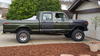





 When I bought the truck I swapped out the cast intake for an Edelbrock Performer RPM.