


New carb leaking problem
Thread Starter
|
Fleet Mechanic

Joined: Jul 2006
Posts: 1,346
Likes: 4
From: Rapid City, SoDak
New carb leaking problem
Very frustrated today as i've been outside all day in about 10 degrees with wind and snow blowing all over working on my truck instead of driving it.
My truck still had a sticking needle issue so that occasionally it would die, I would open the hood to find fuel leaking all over the carb area. I would then tap the bowl and we could go again for a good 15 minutes or so before it happened again.
Now, if you haven't seen my posts, I just rebuilt the carb and aside from this issue it's working great. Also, I installed a clear filter pre-fuel pump. Two days ago I opened up the filter on the pump to find it full of crud. I washed all that out with fresh gas and made sure it was clean. Everything was working, clear filter was empty to 1/4 full of gas but truck ran fine. Heck, I figure if its's leaking all over it's getting plenty of fuel.
So with the recurring sticking needle issue yesterday I decided to open up the fuel pump filter again. Almost the same amount of crud in there. I said that's it! And I got to work today.
Today I: Replaced the fuel pump with a whole new unit. Also bought a replacement filter for it at the same time. Bought another brand new clear filter just in case and reinstalled it before the fuel pump. I replaced all the rubber lines on the truck from the tank to the pump. I blew out the metal lines with compressed air. I took off the top of the carb and cleaned the needle area with carb cleaner yet again.
And what did that get me?
Well now I have a new problem. The carb now consistently leaks whenever there's less demand for fuel. i.e. Idling for a while or idling after revving. It leaks from the bottom of the metering rod and then it starts to come out of the vent tube on top which leaks right down the throat of the carb and kills the engine.
You can keep it from dying by revving it up.
The vent tube thing is new, the consistency is new and another thing that's new is that once the engine dies it spills fuel out for close to 30 seconds. I guess because I did such a good job cleaning everything out, now it's getting too much fuel. My guess is that the new pump is putting out too much pressure for the needle to hold?? The clear filter is now full which it never was with the old pump.
So do I need a fuel pressure regulator or is it something else? What does the fuel pump do when there's no demand for fuel? Where does the excess fuel being created go?
My truck still had a sticking needle issue so that occasionally it would die, I would open the hood to find fuel leaking all over the carb area. I would then tap the bowl and we could go again for a good 15 minutes or so before it happened again.
Now, if you haven't seen my posts, I just rebuilt the carb and aside from this issue it's working great. Also, I installed a clear filter pre-fuel pump. Two days ago I opened up the filter on the pump to find it full of crud. I washed all that out with fresh gas and made sure it was clean. Everything was working, clear filter was empty to 1/4 full of gas but truck ran fine. Heck, I figure if its's leaking all over it's getting plenty of fuel.
So with the recurring sticking needle issue yesterday I decided to open up the fuel pump filter again. Almost the same amount of crud in there. I said that's it! And I got to work today.
Today I: Replaced the fuel pump with a whole new unit. Also bought a replacement filter for it at the same time. Bought another brand new clear filter just in case and reinstalled it before the fuel pump. I replaced all the rubber lines on the truck from the tank to the pump. I blew out the metal lines with compressed air. I took off the top of the carb and cleaned the needle area with carb cleaner yet again.
And what did that get me?
Well now I have a new problem. The carb now consistently leaks whenever there's less demand for fuel. i.e. Idling for a while or idling after revving. It leaks from the bottom of the metering rod and then it starts to come out of the vent tube on top which leaks right down the throat of the carb and kills the engine.
You can keep it from dying by revving it up.
The vent tube thing is new, the consistency is new and another thing that's new is that once the engine dies it spills fuel out for close to 30 seconds. I guess because I did such a good job cleaning everything out, now it's getting too much fuel. My guess is that the new pump is putting out too much pressure for the needle to hold?? The clear filter is now full which it never was with the old pump.
So do I need a fuel pressure regulator or is it something else? What does the fuel pump do when there's no demand for fuel? Where does the excess fuel being created go?
Thread Starter
|
Fleet Mechanic
Joined: Jul 2006
Posts: 1,346
Likes: 4
From: Rapid City, SoDak
My guess is that you're not going to like that answer.
It really looked good in there and I figured the needle and seat are new parts that were in the kit so I thought that would be fine.

Hotshot


Joined: Mar 2013
Posts: 14,255
Likes: 199
From: Phoenix, Az.
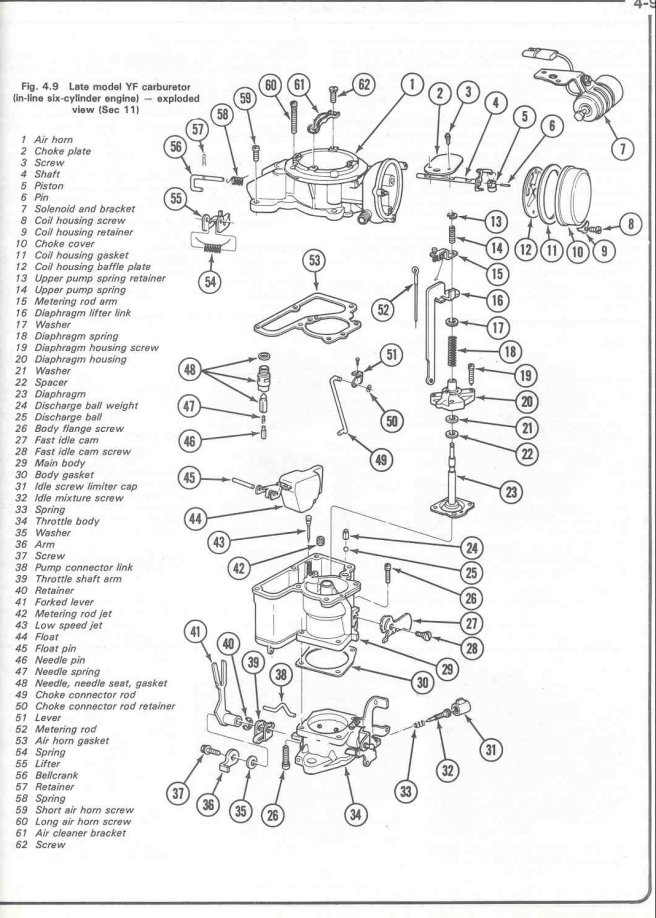
Leaking from the metering rod? 1st, how do you know that? The metering rod is inside the carb. And gas goes In the jet under the metering rod. Now as far as gas coming out the vent tube that is caused by one or more of three things. 1. Needle shot and not sealing up against the seat to stop fuel flow. 2. new fuel pump's internal pressure regulator not working and pressure is too high. 3. Float level adjusted too high. When you rebuilt the carb did you use one of the later (newer) style floats with a notch in it? If so they are adjusted different than the original ones so you have to go by the instructions that should have come with the float. Not the carb kit instructions.
Thread Starter
|
Fleet Mechanic
Joined: Jul 2006
Posts: 1,346
Likes: 4
From: Rapid City, SoDak
Leaking from the metering rod? 1st, how do you know that? The metering rod is inside the carb. And gas goes In the jet under the metering rod. Now as far as gas coming out the vent tube that is caused by one or more of three things. 1. Needle shot and not sealing up against the seat to stop fuel flow. 2. new fuel pump's internal pressure regulator not working and pressure is too high. 3. Float level adjusted too high. When you rebuilt the carb did you use one of the later (newer) style floats with a notch in it? If so they are adjusted different than the original ones so you have to go by the instructions that should have come with the float. Not the carb kit instructions.
Also, when I took the top off the carb today I adjusted the float just a touch lower than level which is where the instructions said to put it. It's the stock float, brass and I checked it for leaks for quite a while. It's light, no noise from inside when shaken, looks nice.
As far as #2. I'm now researching the heck out of mechanical fuel pumps as i've never installed a mechanical before. A video on youtube showed lifting the rod in the engine to make sure it was on top of the lever on the pump. They said it could fall while you had the pump out and then the rod would be on the bottom of the lever and that's not good. Is that the case? I simply made sure my fuel pump lever was at the same angle as the old one and installed it. The video referred to feeling pressure from the spring when lining up the bolt holes. Mine just slipped right on, no spring pressure. Is that the problem?
Hotshot
Joined: Mar 2013
Posts: 14,255
Likes: 199
From: Phoenix, Az.
As far as #2. I'm now researching the heck out of mechanical fuel pumps as i've never installed a mechanical before. A video on youtube showed lifting the rod in the engine to make sure it was on top of the lever on the pump. They said it could fall while you had the pump out and then the rod would be on the bottom of the lever and that's not good. Is that the case? I simply made sure my fuel pump lever was at the same angle as the old one and installed it. The video referred to feeling pressure from the spring when lining up the bolt holes. Mine just slipped right on, no spring pressure. Is that the problem?
Thread Starter
|
Fleet Mechanic
Joined: Jul 2006
Posts: 1,346
Likes: 4
From: Rapid City, SoDak
Trending Topics
Hotshot
Joined: Mar 2013
Posts: 14,255
Likes: 199
From: Phoenix, Az.
I'd remove the carb. Flip it up side down. Once all the gas is out of it blow in to the fuel inlet. If the needle and seat are working correctly (with normal fuel pressure) the needle should be seated and you can't blow any air in there. If you can, swap out for a new needle and seat. If you can't, then they are ruled out. It has to be a defective fuel pump or float adjustment. Note. With the float, needle, and seat installed on the lid of the carb, with it flipped up side down the float should be more or less level.
FTE Stories
Ford Trucks for Ford Truck Enthusiasts

10 Things Every Truck Owner NEEDS (2026 Edition)
Michael S. Palmer
Rezvani's Latest Post-Apocalytic Monster Is a Ford F-150 Raptor Underneath
Verdad Gallardo
Top 10 Most Expensive Ford Trucks Ever Sold on Bring a Trailer
Joe Kucinski
2027 Ford Super Duty Buyer's Guide (Every Model, Engine, & Package)
Brett Foote
Top 10 Ford Truck Tragedies
Joe Kucinski
AEV FXL Super Duty - the Super Duty Raptor Ford Doesn't Make
Brett Foote
Lobo Vs Lobo: Proof the F-150 Lobo Should Be Even Lower!
Michael S. Palmer
Ford's 2001 Explorer Sportsman Concept Looks For a New Home
Verdad Gallardo
10 Best Ford Truck Engines We Miss the Most!
Joe Kucinski
Thread Starter
|
Fleet Mechanic
Joined: Jul 2006
Posts: 1,346
Likes: 4
From: Rapid City, SoDak
I'd remove the carb. Flip it up side down. Once all the gas is out of it blow in to the fuel inlet. If the needle and seat are working correctly (with normal fuel pressure) the needle should be seated and you can't blow any air in there. If you can, swap out for a new needle and seat. If you can't, then they are ruled out. It has to be a defective fuel pump or float adjustment. Note. With the float, needle, and seat installed on the lid of the carb, with it flipped up side down the float should be more or less level.
I will try that.
The float was adjusted level, when I had the top off the carb today I bent it just a little lower, hoping that when the bowl got full it would put more pressure on the needle but that didn't help either.
Hotshot
Joined: Mar 2013
Posts: 14,255
Likes: 199
From: Phoenix, Az.
Yepper. Just your own lungs.

Lead Driver
Joined: Aug 2003
Posts: 7,592
Likes: 10
From: **** hole San Jose ca.
I did not see any where you had removed the gas tank an made sure it was cleaned it out while you added a bunch of other parts.
If you have rubber fuel line and you have a hose clamp try reducing the fuel flow going to the carb an see if the reduced flow helps it to run longer or not die out.
Best if between pump & carb to restrict gas flow.
Orich
If you have rubber fuel line and you have a hose clamp try reducing the fuel flow going to the carb an see if the reduced flow helps it to run longer or not die out.
Best if between pump & carb to restrict gas flow.
Orich
Thread Starter
|
Fleet Mechanic
Joined: Jul 2006
Posts: 1,346
Likes: 4
From: Rapid City, SoDak
I did not see any where you had removed the gas tank an made sure it was cleaned it out while you added a bunch of other parts.
If you have rubber fuel line and you have a hose clamp try reducing the fuel flow going to the carb an see if the reduced flow helps it to run longer or not die out.
Best if between pump & carb to restrict gas flow.
Orich
If you have rubber fuel line and you have a hose clamp try reducing the fuel flow going to the carb an see if the reduced flow helps it to run longer or not die out.
Best if between pump & carb to restrict gas flow.
Orich
This brings me to the question though, theoretically, if you did put a restriction in the line after the pump, what does a mechanical pump do to compensate for this since it doesn't have a return line? Does it just more pressure on it and this leads to premature pump failure? Does it have a way to compensate for this internally?
I really like the theory of the pump putting out too much fuel, it makes sense to me and i've seen this carb run so well after the rebuild. I dunno, just seems like right after a new pump fuel coming out of the vent tube makes me think there's too much fuel. Before, when the needle stuck it just came out the side of the carb, there's pressure in the system now. When I would disconnect the fuel line to the carb before no fuel came out, not any to speak of anyway. Since the new pump there's pressure and it shoots all over when you remove the line.
I watched Mike from Mike's Carburetors rebuild a YF on youtube and he said that if you have fuel coming out and have just replaced your pump be highly suspicious of the pump because their quality control is not good.
Thread Starter
|
Fleet Mechanic
Joined: Jul 2006
Posts: 1,346
Likes: 4
From: Rapid City, SoDak
Well I drove the truck to the shop a couple of miles away. Again, it did great until I came to a stop or slowed down a lot.
I took the carb apart on the bench again and I did find a sizeable hunk of gunk on the seat. It wasn't on the needle side, it was on the other end, hadn't gotten to the needle yet. While I had it apart I did clean everything out again. I had intended on soaking it but I figured it was just crud in there from the tank being dirty so with that hunk removed I assembled it back and installed it on the truck.
Started the truck up and idled it for probably 20 minutes. Every once in a while I would work the throttle, revving it up and then watching it as it idled. Nothing, completely dry. I felt really good, figured I had fixed it and we'd be good now.
I drove it 3/4 of the way home (3-4 miles?) from the shop and it was doing awesome. I stopped at the stoplight a mile from my house. It wanted to die at that light but I was on the road so I revved it up to keep it alive.
Once I could pull off the road I let it idle on it's own and it died right away. Popped the hood and oh yeah, gas everywhere again!
At this point I'll pull the tank and clean it out if you guys think that will solve my problem. My question is how is crud getting to the carb through my clear inline pre-pump AND the canister filter in the fuel pump itself?
Now I can believe that the piece of crud was rubber hose and that it got to the seat on the carb before I installed the clear filter and when the old pump was in with a very dirty filter.
But today I replaced both filters and blew out all lines and replaced all rubber hoses. So when it was overflowing on my way home tonight that would have to have been fresh crud that got through both filters???
I did JEFFAFA's blow test with the carb upside down and again with just the top of the carb upside down and both times I couldn't get any air through the needle.
With the needle passing that test and there being two fresh filters on the line today. I'd like to think the problem isn't the needle and seat but must be something else?
Anyone?
I took the carb apart on the bench again and I did find a sizeable hunk of gunk on the seat. It wasn't on the needle side, it was on the other end, hadn't gotten to the needle yet. While I had it apart I did clean everything out again. I had intended on soaking it but I figured it was just crud in there from the tank being dirty so with that hunk removed I assembled it back and installed it on the truck.
Started the truck up and idled it for probably 20 minutes. Every once in a while I would work the throttle, revving it up and then watching it as it idled. Nothing, completely dry. I felt really good, figured I had fixed it and we'd be good now.
I drove it 3/4 of the way home (3-4 miles?) from the shop and it was doing awesome. I stopped at the stoplight a mile from my house. It wanted to die at that light but I was on the road so I revved it up to keep it alive.
Once I could pull off the road I let it idle on it's own and it died right away. Popped the hood and oh yeah, gas everywhere again!
At this point I'll pull the tank and clean it out if you guys think that will solve my problem. My question is how is crud getting to the carb through my clear inline pre-pump AND the canister filter in the fuel pump itself?
Now I can believe that the piece of crud was rubber hose and that it got to the seat on the carb before I installed the clear filter and when the old pump was in with a very dirty filter.
But today I replaced both filters and blew out all lines and replaced all rubber hoses. So when it was overflowing on my way home tonight that would have to have been fresh crud that got through both filters???
I did JEFFAFA's blow test with the carb upside down and again with just the top of the carb upside down and both times I couldn't get any air through the needle.
With the needle passing that test and there being two fresh filters on the line today. I'd like to think the problem isn't the needle and seat but must be something else?
Anyone?
Lead Driver
Joined: Aug 2003
Posts: 7,592
Likes: 10
From: **** hole San Jose ca.
Unless you've put on all new fuel hard lines you don't know what might be caked up inside them.
But old pieces of flaking off rubber hose can make you crazy looking for crud.
Pull you tank remove sender I used a hand full of pea gravel inside with soapy water shook it back & forth then hosed it out. Some guys use a dog choke chain dump in a bottle of alcoholic to help it dry out faster.
recheck an Blow out lines to carb.
Orich
But old pieces of flaking off rubber hose can make you crazy looking for crud.
Pull you tank remove sender I used a hand full of pea gravel inside with soapy water shook it back & forth then hosed it out. Some guys use a dog choke chain dump in a bottle of alcoholic to help it dry out faster.
recheck an Blow out lines to carb.
Orich